📅 Last updated:
Choosing between a water fountain and a water bowl for cats is less about finding one universally “better” product and more about matching your cat’s habits to your home. A fountain can make water more noticeable, keep it circulating, and encourage some cats to drink more. A bowl is quieter, simpler, easier to place anywhere, and usually far cheaper over several years.
The real decision is whether you want to trade a little extra maintenance, electricity use, and countertop space for moving water—or prioritize low cost and easy cleaning. Your cat’s personality matters, too. A curious cat may enjoy a gentle stream, while a nervous cat may avoid the motor sound. The best choice for 2026 is the one your cat will use consistently and that you will clean often.
As an Amazon Associate we earn from qualifying purchases at no extra cost to you.


📋 Table of Contents
Quick Verdict
Choose a water fountain if your cat prefers running water, ignores a still bowl, drinks too little, or shares water with other pets. Fountains are also useful when you want a larger reservoir that can last through a workday or overnight, although they are not a substitute for daily care.
Choose a water bowl if you want the simplest, quietest, and least expensive setup. Bowls are especially practical in small apartments, rentals, multi-room homes, and households where a pump, cord, or filter would create another cleaning and safety concern.
For many homes, the smartest answer is both: a sturdy bowl as the dependable main station and a fountain as a second option. That arrangement also protects your cat from being left without water if the fountain stops working.
Side by Side
See also: Most Trusted Cat Litter Brands in 2026 and What Each Does Best • How to Introduce a Carrier to Cats (2026): Step-by-Step
| Factor | Water Fountain | Water Bowl for Cats |
|---|---|---|
| Comfort and drinking appeal | Moving water may attract cats that prefer a stream or fresh circulation. | Calm, predictable, and comfortable for cats that dislike noise or motion. |
| Durability | Housing can last for years, but pumps, cords, and sensors eventually wear out. | Stainless steel or ceramic can last 5–10 years with little to fail. |
| Typical price | About $20–$80, with premium models costing more. | About $5–$40 for a single bowl; elevated or specialty sets may cost $50–$100. |
| Maintenance | Refill every 1–3 days, wash the basin weekly, and replace filters about monthly. | Wash daily or every other day; no filter or pump maintenance is required. |
| Space needed | Usually about 8–12 inches wide and 6–10 inches deep, plus cord clearance. | Often about 6–10 inches wide and 6–10 inches deep. |
| Look | Can resemble a small appliance; some are designed to blend with décor. | Available in metal, ceramic, glass, plastic, and elevated designs. |
| Resale and replacement | Limited resale value because used pumps and filters are less appealing. | Simple, undamaged ceramic or stainless bowls may be easy to donate or resell. |
| Best for | Cats attracted to movement, multi-pet homes, and owners who want a larger reservoir. | Budget-conscious owners, quiet rooms, renters, and cats that drink readily from still water. |
| Power requirement | Typically a low-voltage pump using roughly 1–5 watts. | None. |
Where Water Fountain Wins
A fountain’s biggest advantage is visibility. Water that ripples or falls from a spout can catch a cat’s attention more effectively than a bowl sitting quietly in a corner. Some cats naturally seek moving water, and a fountain can make drinking feel more inviting. This does not guarantee increased water intake, but it gives selective drinkers another reason to approach the station.
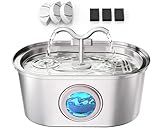
Fountains also offer more capacity. A 95-ounce reservoir, for example, holds nearly three-quarters of a gallon before accounting for the pump and minimum fill line. That can be helpful for two cats or for owners who are away for a normal workday. The Veken Innovation Award Winner 95oz/2.8L Cat Water Fountain, C1 Classic is listed at $19.99, while the 108-ounce Veken Innovation Award Winner Stainless Steel Cat Water Fountain, C1 is listed at $27.99. Those prices illustrate that a larger reservoir does not necessarily require a premium budget.
Circulation may help keep hair, crumbs, and other debris from sitting in one place, but it does not make water self-cleaning. The basin, pump, and intake area still need regular washing. A filter can capture some particles and improve taste, yet it must be replaced on schedule. If a filter becomes dirty, the fountain can be less appealing than a freshly filled bowl.
Fountains can also support a more polished feeding station. A stainless-steel top or neutral housing may look cleaner than a collection of mismatched plastic bowls. Keep the fountain on a waterproof mat, leave a few inches around the cord, and place it away from litter boxes and heavy foot traffic. A fountain that hums, splashes, or vibrates against a wall may create more annoyance than benefit.
Where Water Bowl for Cats Wins
A bowl wins on simplicity. Fill it, wash it, and put it back. There is no pump to prime, filter to order, or cord to hide. That matters in a rental, a compact kitchen, or a home where outlets are already occupied. It also makes a bowl an excellent backup even if your cat normally uses a fountain.
Bowls are often easier to clean thoroughly. Stainless steel and glazed ceramic resist odors better than scratched plastic, and both can usually be washed with ordinary dish soap and hot water. Look for a broad, stable base to reduce tipping and a shallow shape that lets your cat drink without pressing its whiskers against the sides. A bowl holding 24–40 ounces is a practical everyday size for one cat, though it should still be refreshed at least daily.
The downside is that a still bowl can become unappealing quickly. Food particles, dust, hair, and litter can collect on the surface, particularly when the station is near a feeding area. A wide bowl can also lose water faster through evaporation. In a multi-cat home, one small bowl may be inadequate; provide multiple stations rather than expecting one container to serve every animal.
Not every decorative water feature is a cat fountain. The Homedics Tabletop Water Fountain, Home Décor Soothing Sound Machine, listed at $24, is an example of a décor-oriented tabletop product rather than a dedicated pet hydration system. A cat’s water station should be designed for safe, hygienic drinking, stable placement, and easy cleaning—not merely for making a soothing sound.
Cost Over 5 Years
A bowl has the lower ownership cost. Suppose you buy a $15 stainless-steel bowl and replace it once during five years. The total is about $30, before cleaning supplies that you already use around the home.
For a fountain, start with a $20–$80 purchase price. Add replacement filters at roughly $6–$15 per three-pack, depending on the model and brand. Replacing one filter every four weeks means about 13 filters per year, or approximately $26–$65 annually. Over five years, filters alone could therefore cost about $130–$325. A replacement pump may add $10–$30, and electricity is usually modest: a 3-watt pump running continuously uses about 26 kilowatt-hours per year. At $0.16 per kilowatt-hour, that is roughly $4 annually, or $20 over five years.
Using those assumptions, a fountain may cost approximately $170–$455 over five years, including the initial unit, filters, electricity, and one possible pump replacement. Actual costs depend heavily on filter frequency and local electricity rates. A fountain can still be worthwhile, but its purchase price is only part of the budget.
Which One for Your Home
Small apartment
Choose a bowl if counter and floor space are limited or if pump noise will be noticeable in a studio. A 24–32-ounce stainless-steel bowl on a washable mat takes little room and can move easily when you clean. If your cat strongly prefers running water, choose a compact fountain with a low 1–3-watt pump and keep it away from sleeping areas.
Family with kids or pets
A fountain can be useful when several animals share water, but it should not be the only station. Children and dogs may bump or empty it, so use a heavy, nonslip base and keep cords secured. Two or more bowls placed in separate areas may be cheaper and more reliable than one high-capacity fountain.
Rental
Bowls are the least complicated rental-friendly option. They do not need an outlet, reduce the risk of water near electrical connections, and can be relocated without rearranging furniture. If you use a fountain, place it on a waterproof tray and inspect the cord regularly to prevent leaks or floor damage.
Long-term home
A fountain makes sense when you want a permanent hydration station and are comfortable adding filters to your regular shopping list. Plan for an accessible outlet, a washable floor mat, and enough surrounding space to remove the reservoir. If you prefer fewer replacement parts, invest in a quality stainless-steel bowl and keep a second bowl on another floor.
FAQ
Is a water fountain better than a bowl for cats?
Not automatically. A fountain may encourage a cat that likes moving water, while a bowl is better for a cat that prefers quiet and simplicity. Hydration habits, cleaning consistency, and safe placement matter more than the format alone.
How often should I clean a cat water fountain?
Refresh the water at least daily and wash the drinking surface every few days. Deep-clean the basin, pump, and intake area about weekly, following the manufacturer’s instructions. Replace the filter as directed, often every two to four weeks.
Can cats drink only from a bowl?
Yes. Many cats drink perfectly well from a clean, stable bowl. Offer fresh water in a broad stainless-steel or ceramic bowl, keep it away from litter, and consider more than one station if your home has multiple floors.
Should I buy a fountain and a bowl?
For many households, yes. A bowl provides a quiet backup if the pump fails or the fountain needs cleaning, while the fountain gives your cat the option of moving water. Provide both initially and observe which one your cat uses most.
Ready to decide? Our #1 pick for 2026 is the Comfort and drinking appeal.
Live price & availability on Amazon.