📅 Last updated:
Choosing the right litter box for a big cat is less about the label on the package and more about usable floor space. A box marked “large” may still feel cramped for a long-bodied cat, while a high-sided model can have plenty of room but be difficult for an older or less mobile pet to enter.
📋 Table of Contents
The Short Answer
For most large cats, choose a litter box with an interior floor area of at least 22 by 17 inches (56 by 43 cm). Extra-large cats, including many cats over 15 pounds, usually do better with an interior measuring about 24 by 18 inches (61 by 46 cm) or larger.
As an Amazon Associate we earn from qualifying purchases at no extra cost to you.
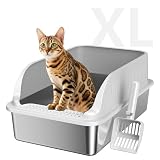


The box should be approximately 1.5 times your cat’s body length, measured from the nose to the base of the tail. Your cat should be able to enter, turn around, squat, dig, and cover waste without pressing against the sides. For a large cat, a box around 8 to 12 inches high (20 to 30 cm) works well, although the entry should be lower if your cat is elderly, arthritic, injured, or overweight.
In general, an open-top box provides the most usable space. High-sided stainless steel boxes can help contain litter and urine spray, but check that the entry is wide and low enough for comfortable access.
Standard Sizes
See also: Most Trusted Cat Litter Brands in 2026 and What Each Does Best • How to Introduce a Carrier to Cats (2026): Step-by-Step
Cat litter box dimensions vary by brand, and exterior measurements may include thick walls, rims, or a lid. Use the interior floor dimensions whenever they are available. The following ranges are useful shopping benchmarks:
| Box size | Typical exterior dimensions | Approximate dimensions in cm | Best for |
|---|---|---|---|
| Small | 17 x 13 x 5-7 in | 43 x 33 x 13-18 cm | Kittens and petite cats |
| Standard | 19 x 15 x 7-9 in | 48 x 38 x 18-23 cm | Average-size adult cats |
| Large | 22 x 17 x 9-11 in | 56 x 43 x 23-28 cm | Large cats and spacious single-cat setups |
| Extra-large | 24 x 18 x 10-12 in | 61 x 46 x 25-30 cm | Very large, long-bodied, or multiple cats |
As a practical reference, the Amazon Basics Large Cat Litter Box with High Sides measures 19 by 15 by 11.75 inches, or approximately 48 by 38 by 30 cm. Its footprint may work for a medium-to-large cat, but a particularly long or heavy cat may need more floor space than this size provides.
Large stainless steel models often cost about $18 to $30, depending on the height, lid, finish, and included accessories. Examples in this range include the Kirecoo Large High Sided Stainless Steel Cat Litter Box at about $17.99, the Tevila XL Open Top Stainless Steel model at about $29.69, and a stainless steel XL high-sided box with lid at about $29.99. Price does not guarantee a better fit, so compare the interior dimensions and entry height first.
For litter depth, start with about 2 to 3 inches (5 to 8 cm) of litter. Some cats prefer a deeper layer for digging, but filling a box to the top reduces usable space and increases tracking. A larger box may require more litter to maintain an even surface, so check the bag’s coverage instructions rather than estimating by weight alone.
How to Measure Your Space
- Measure the cat first. Measure from the tip of the nose to the base of the tail while your cat is standing naturally. Multiply that length by 1.5 to estimate the minimum box length. For example, a 16-inch body length calls for a box at least 24 inches long.
- Record the available floor area. Measure the width and depth of the intended location, then subtract clearance for walls, furniture, and nearby doors. Leave at least 2 to 3 inches of open space around the box when possible.
- Check the doorway and route. Measure the narrowest doorway, hallway, stairway, or cabinet opening between the delivery point and the final location. A 24-inch box may not fit through a tight cabinet opening even if the room has enough floor space.
- Measure vertical clearance. For a covered or lidded box, measure from the floor to the lowest shelf, counter, or cabinet above it. Add at least 3 inches of clearance over the box so the lid can be removed and your cat does not feel trapped.
- Measure the entrance. A high-sided box can have a generous interior but a small doorway. Look for an entry at least 8 to 10 inches wide for a large cat, with a low step-in height when mobility is a concern.
- Account for the cleaning area. You need room to lift the box, scoop from both ends, and sweep around it. Keep at least 12 inches of working space on one accessible side if possible.
By Room or Use Case
Bathroom
A bathroom can accommodate a large open-top box, but measure around the toilet, vanity, and door swing. A 22-by-17-inch box is a reasonable starting point; an extra-large 24-by-18-inch model may fit better beside a vanity than inside a narrow cabinet. Keep the box away from the toilet’s splash zone and provide ventilation to reduce odor and humidity.
Laundry Room
Laundry rooms are useful for high-sided boxes because hard floors are easy to sweep. Avoid placing the box directly beside a loud washer or dryer. Sudden vibration and noise may cause a cat to avoid the box. Leave enough room to open appliance doors and remove a stainless steel insert for washing.
Bedroom or Office
Prioritize odor control and quiet access. An open-top box is usually more comfortable for a large cat than a small covered box, but a high-sided stainless steel model can reduce scatter. A washable mat extending at least 24 inches in front of the entrance helps catch litter without shrinking the cat’s usable space.
Small Apartment
In a compact home, measure the full footprint rather than relying on the “large” label. A tall, narrow box may save width but still be too short for a long-bodied cat. Consider a location beside a utility area or in a ventilated corner, while keeping the box away from food and water. If you have two cats, two boxes are preferable to one oversized box whenever space allows.
Senior or Mobility-Limited Cat
Choose a box with a low entry of approximately 3 to 5 inches (8 to 13 cm), even if the back and side walls are 8 to 12 inches high. A cut-down entry, ramp, or senior-friendly design can provide access without sacrificing interior floor space. Avoid tall steps, narrow openings, and heavy lids that must be lifted for entry.
Common Sizing Mistakes
- Trusting the word “large.” Brand categories are not standardized. Compare actual length, width, and height in inches.
- Measuring only the outside. A thick rim, sloped wall, or molded base can reduce the interior floor area by several inches.
- Choosing height over floor space. High walls help contain urine spray and kicked litter, but they cannot compensate for a box that is too short or narrow.
- Using a covered box to hide odor. A lid may contain some litter but can also trap smells and make the interior feel cramped. Scoop at least once daily and wash the box regularly.
- Forgetting the cat’s posture. A cat that can enter but cannot turn comfortably may stop using the box. Watch whether your cat can rotate without touching the walls.
- Adding too much litter. A deep layer can make the box feel smaller and may cause an anxious cat to avoid it. Start with 2 to 3 inches and adjust based on digging behavior.
- Putting the box in a dead end. Cats often prefer an escape route. Avoid locations where a cat can be cornered by another pet or where a closing door blocks access.
FAQ
Is a 19-by-15-inch litter box big enough for a large cat?
It may work for a compact adult cat, but it is close to the minimum for many large cats. If your cat is long-bodied, weighs more than about 15 pounds, or frequently touches the sides while turning, move up to a box with at least 22 by 17 inches of interior space.
What size litter box does a 20-pound cat need?
Start with an extra-large box measuring roughly 24 by 18 inches or more. Focus on the interior floor dimensions and choose sides around 10 to 12 inches high if your cat is comfortable stepping in. A lower entrance may be necessary for a senior or overweight cat.
Are stainless steel litter boxes better for large cats?
Stainless steel can be a useful choice because it is nonporous, durable, and less likely to retain odors than scratched plastic. It is not automatically larger, however. Select the model with the biggest usable floor area and a suitable entry, rather than choosing it solely for the material.
How many litter boxes should I provide?
The common recommendation is one box per cat, plus one extra. For one large cat, two boxes can reduce waiting and give the cat a choice of locations. If space is limited, provide the largest comfortable box possible and scoop it at least once a day.
Ready to decide? Our #1 pick for 2026 is the Small.
Live price & availability on Amazon.