Our Short List of 3

- Wood type: Natural driftwood, mopani style
- Piece length: 14-18 inches each
- Pieces: 2
- Pack weight: Approximately 1.8 lb
- Wood type: Natural coral driftwood
- Piece length: 6-10 inches
- Pieces: 3
- Brand: majoywoo

- Wood type: Handmade driftwood bonsai tree
- Dimensions: 8 inches high x 6 inches long
- Model: BS01
- Weight: Approximately 14.1 oz
All 4 Picks at a Glance
| Product | Specs | Action |
|---|---|---|
| 2. Jorewood Natural Large Aquarium Driftwood, 14-18 Inch, 2 Pieces — Big Wood for Long Tanks |
| Check price on Amazon |
| 3. majoywoo Natural Coral Driftwood, 6-10 Inch, 3 Pieces — The Mid-Size Assortment |
| Check price on Amazon |
| 4. Thatuwood Bonsai Driftwood Aquarium Tree, 8 Inch — The Instant Focal Point |
| Check price on Amazon |
 5. Vmiapxo Natural Driftwood, 8 Pieces, 4-6 Inch — Spider Wood for Nano Tanks |
| Check price on Amazon |
📅 Last updated:
Driftwood is the piece of hardscape that turns a glass box of water into something that looks like a riverbank. A well-chosen piece gives fish shelter and sight-line breaks, offers shrimp and snails a grazing surface where biofilm grows, anchors moss and rhizome plants, and releases tannins that gently soften the water for species from leaf-stained streams. This guide covers wood only. The site also carries a combined driftwood-and-stone aquascaping guide for readers planning a full rock-and-wood layout; every pick below is a wood product, and none repeats that earlier slate.
One expectation matters more than any other: every piece of natural driftwood is unique, so the listing photo is a shape promise, not the exact piece of wood that will arrive. Sellers grade by size range and general form — a branching spider wood, a chunky mopani slab — and the curves and branch angles in your box will differ from the picture. That is the nature of a harvested natural product, not a defect. The tannins that tint the water tea-colored are also chemistry, not dirt: the same compounds stain forest streams, and for many fish they are a benefit. Finally, most driftwood floats until it waterlogs, so soaking time is part of the purchase.
Disclosure: As an Amazon Associate, I earn from qualifying purchases.
📋 Table of Contents
- How to Choose Aquarium Driftwood
- 1. Fluval Mopani Natural Driftwood, Large — The Branded Centerpiece
- 2. Jorewood Natural Large Aquarium Driftwood, 14-18 Inch, 2 Pieces — Big Wood for Long Tanks
- 3. majoywoo Natural Coral Driftwood, 6-10 Inch, 3 Pieces — The Mid-Size Assortment
- 4. Thatuwood Bonsai Driftwood Aquarium Tree, 8 Inch — The Instant Focal Point
- 5. Vmiapxo Natural Driftwood, 8 Pieces, 4-6 Inch — Spider Wood for Nano Tanks
- Comparison Table
- FAQ
- Conclusion
How to Choose Aquarium Driftwood
Start with the wood type. Mopani is a dense, two-toned African hardwood with dramatic grain. It is heavy for its size, sinks faster than most woods, and releases a strong tannin tint, which makes it a favorite for blackwater setups and a poor match for anyone who wants gin-clear water on day one. Spider wood is the opposite character: fine, tangled branching roots that build airy, tree-like structures. It is light, floats the longest, and usually needs to be weighed down or attached to rock or slate while it waterlogs. Assembled bonsai trees are handmade from driftwood branches fixed into a trunk-and-canopy shape, an instant focal point that aquascapers dress with moss. Assorted branch packs are the flexible option for keepers who want to arrange several small pieces themselves.
Match size to the footprint, not the gallon count. A long piece in a tall, narrow tank crowds the swimming space, while the same piece looks lost in a wide layout. Measure the inside length and depth of the tank, then choose wood that leaves open water in front and room to clean around it. A centerpiece spanning roughly half to two-thirds of the tank length usually reads as intentional rather than accidental.
Plan for sinking before the wood arrives. Boiling speeds up both tannin release and waterlogging, and a long soak in a bucket — changed when the water darkens — does the same job more slowly. Pieces that still bob can be tied or glued to slate or rock until they stay down alone.
Decide how you feel about tannins. The amber tint lowers pH slightly and softens the water, which tetras, rasboras, bettas, and many dwarf cichlids handle well. If the look bothers you, partial water changes dilute it and chemical filter media can pull the color out; the tint also fades on its own over weeks. The white or grey fuzzy film that often coats new wood in its first weeks underwater is a harmless bloom feeding on sugars in the wood. It looks alarming and then disappears, and shrimp, snails, and otocinclus graze on it eagerly.
Buy aquarium-sold wood only. Wood collected outdoors can carry pesticides, road runoff, or parasites, and softwoods such as pine and cedar release resins that do not belong in a closed tank. Commercial driftwood is sold dry, untreated, and identified by type, which removes the guesswork.
1. Fluval Mopani Natural Driftwood, Large — The Branded Centerpiece
See also: Best Automatic Transmission Floor Shifter: Ratchet, Gated and Detent Shifters Compared • Best Automatic Floor Shifter for Truck: Tall, Tough Picks for Pickups and Bench Seats
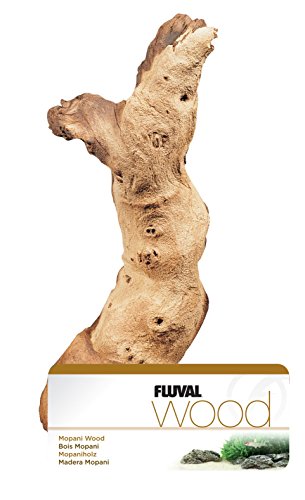
Fluval’s mopani is the pick for a keeper who wants one substantial piece from an established aquarium brand rather than an assorted grab bag. Mopani is a dense African hardwood with a two-tone grain — dark chocolate streaks through a lighter tan body — and this Large size suits mid-size and larger aquariums as a single centerpiece or the anchor of a wood-and-plant layout. The density works in the buyer’s favor twice: the piece resists floating sooner than lightweight branch woods, and the hard surface holds up for years underwater without going soft.
Expect a strong tannin release in the first weeks; this is the wood to choose when a warm amber tint is part of the plan, as in blackwater and biotope tanks. A long pre-soak or boiling session takes the edge off first. The smooth, water-worn surfaces give plecos wood to rasp on, and the grain pockets shelter small catfish and shrimp.
Specs
- Wood type: Mopani hardwood
- Size: Large, approximately 30 x 45 cm
- Pieces: 1
- Model: 11819
- Manufacturer: Rolf C. Hagen (Fluval)
- See it on Amazon
2. Jorewood Natural Large Aquarium Driftwood, 14-18 Inch, 2 Pieces — Big Wood for Long Tanks
- Wood type: Natural driftwood, mopani style
- Piece length: 14-18 inches each
- Pieces: 2
- Pack weight: Approximately 1.8 lb
Most driftwood packs top out under a foot long, which leaves owners of four-foot and longer tanks stacking small pieces that never quite read as one composition. This Jorewood pack answers that gap with two pieces in the 14 to 18 inch range, enough length to build a fallen-log layout or matching anchor points at either end of a long scape. The listing describes mopani-style pieces, dense and sink-oriented, with the natural variation in shape that the size grade implies.
Because these are assorted natural pieces, the shape promise applies in full: the two pieces will follow the general form shown, with their own curves and proportions. The pack’s combined weight also helps the wood settle faster than featherweight branch packs, though a soak is still part of the process.
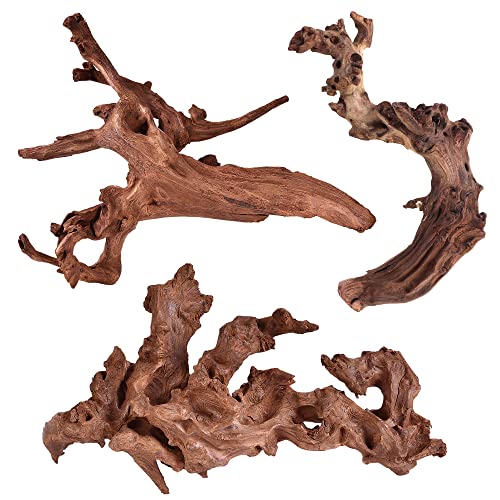
3. majoywoo Natural Coral Driftwood, 6-10 Inch, 3 Pieces — The Mid-Size Assortment
- Wood type: Natural coral driftwood
- Piece length: 6-10 inches
- Pieces: 3
- Brand: majoywoo
This three-piece pack from majoywoo covers the middle ground most community tanks actually need: chunky pieces in the 6 to 10 inch range, big enough to anchor a layout in a standard rectangular tank and small enough to rearrange without draining the aquarium. The coral-style form — knotted and weathered, with pockets and ledges — gives bottom dwellers hiding spots and gives moss and anubias textured surfaces to grip. Three pieces allow a triangle composition instead of a single log dropped in the middle.
The seller’s guidance is honest about preparation: rinse and boil or soak the wood before use, and expect tannins to tint the water early on. That candor matches how mopani-type wood behaves, and the pieces’ density means they waterlog faster than fine branch wood. Note that this is a different majoywoo product from the same brand’s spider wood branches — solid, sculptural chunks rather than tangles of thin roots.
4. Thatuwood Bonsai Driftwood Aquarium Tree, 8 Inch — The Instant Focal Point
- Wood type: Handmade driftwood bonsai tree
- Dimensions: 8 inches high x 6 inches long
- Model: BS01
- Weight: Approximately 14.1 oz
A bonsai driftwood tree skips the arranging entirely. Thatuwood hand-builds each tree from driftwood pieces into a trunk with a spreading canopy, about 8 inches tall and 6 inches across — proportions that fit nano and small desktop aquariums where a loose branch would overwhelm the layout. The bare canopy is the starting point, not the finished look: aquascapers tie or glue moss, anubias, or bucephalandra along the branches until the tree greens up.
The maker is direct about the wood’s chemistry: the driftwood carries tannic acid, which softens the water and lowers pH, and the care instructions call for soaking the tree completely for at least three days before it goes into the aquarium. That soak matters doubly here, because an assembled tree traps air in its joints and will bob like a cork if placed dry. Each tree is handmade, so the canopy silhouette varies within the stated dimensions.
5. Vmiapxo Natural Driftwood, 8 Pieces, 4-6 Inch — Spider Wood for Nano Tanks
- Wood type: Spider wood branches
- Piece length: 4-6 inches
- Pieces: 8
- Brand: Vmiapxo
Nano tanks and shrimp colonies need wood at a smaller scale, and this Vmiapxo pack delivers eight pieces of spider wood in the 4 to 6 inch range. Spider wood’s fine, interlaced branches build the airy, root-tangle structures that shrimp graze through and that suggest a flooded forest floor. Eight small pieces give options: cluster them into one dense thicket, spread them as accents around a larger feature, or split the pack between two small tanks.
The seller describes the pieces as sinkable and states they will not discolor the water, with guidance to soak or rinse them several times before use. Spider wood is the lightest common aquarium wood, so patience still applies — thin branches hold air and may need a rock resting on them for the first days underwater. The lack of a strong tannin tint suits keepers who want the branching structure without the blackwater look.
Comparison Table
| Product | Wood Type | Pieces | Size | Best For |
|---|---|---|---|---|
| Fluval Mopani Driftwood, Large | Mopani | 1 | Approx. 30 x 45 cm | Branded centerpiece, blackwater tanks |
| Jorewood Natural Large Driftwood | Mopani style | 2 | 14-18 in each | Long tanks, fallen-log layouts |
| majoywoo Natural Coral Driftwood | Coral driftwood | 3 | 6-10 in each | Mid-size community tanks |
| Thatuwood Bonsai Driftwood Tree | Assembled driftwood | 1 | 8 in H x 6 in L | Nano tanks, moss tree scapes |
| Vmiapxo Natural Driftwood | Spider wood | 8 | 4-6 in each | Nano and shrimp tanks |
FAQ
Why does my driftwood keep floating, and how long will it take to sink?
Dry wood holds air in its pores, and until water replaces that air the piece stays buoyant. Fine, lightweight woods such as spider wood can float for weeks, while dense mopani usually settles within days of soaking. Boiling speeds the process. If a scape cannot wait, tie or glue the piece to a slate tile or rock and remove the anchor once the wood stays down on its own.
Is the tea-colored water from driftwood harmful to fish?
No. The tint comes from tannins, natural compounds that leach from the wood and gently lower pH while softening the water. Many popular species, including tetras, rasboras, and bettas, come from tannin-stained waters and handle it well. The color is a cosmetic choice: water changes dilute it, chemical filter media can remove it, and it fades on its own as the wood ages.
What is the white fuzzy film growing on my new driftwood?
It is a harmless bloom of bacteria and fungi feeding on sugars in the fresh wood, and it appears on most new driftwood within the first weeks underwater. It resolves on its own, and shrimp, snails, and algae-eating fish graze on it, so in a stocked tank it usually vanishes faster than in an empty one.
Can I use wood I find outdoors instead of buying aquarium driftwood?
Collected wood is a gamble. It can carry pesticide residue, road runoff, insect eggs, or fungal spores, and resinous softwoods such as pine and cedar release compounds that do not belong in a closed aquarium. Aquarium-sold driftwood is identified by type and sold untreated, which is why it remains the reliable route for a stocked tank.
Conclusion
The right driftwood is the piece whose size fits the tank’s footprint and whose chemistry fits the keeper’s plan. Choose the Fluval mopani for a single branded centerpiece with a real blackwater tint, the Jorewood pair when a long tank needs wood with genuine length, or the majoywoo three-pack for flexible mid-size arrangements. The Thatuwood bonsai tree hands nano-tank owners a finished focal point ready for moss, and the Vmiapxo pack builds fine branching structure for shrimp and small scapes. Whichever wood makes the shortlist, keep the three honest facts in view: the photo promises a shape rather than the exact piece, tannins are chemistry rather than dirt, and soaking time is part of the purchase.