📅 Last updated:
Weimaraners have tight, webbed, well-arched feet that serve them well in fields and water. Yet the same dogs come home from winter city walks licking cracked pads, or limp off a summer trail after running across hot rock. Boots are not something every Weimaraner needs daily, but for de-icing salt, extreme heat, rough terrain and injury recovery they can make a real difference. This guide explains when boots help, how to measure those compact paws, which designs stay on an active dog, and how to train a reluctant wearer.
📋 Table of Contents
When a Weimaraner benefits from boots
The breed’s pads are tough, but four situations push them past their limits. Rock salt and chemical de-icers on sidewalks dry and crack pads and can irritate skin between the toes, and dogs may lick the residue. Snow and ice can cut pads, especially on crusted surfaces. In summer, asphalt and sand can be 40-60°F hotter than the air, enough to burn pads on a sunny afternoon. And long hikes on shale, lava rock or gravel can abrade pads on an energetic dog that runs several times the distance you walk. Senior dogs with weak grip on floors, and dogs with a pad injury your vet wants protected, also benefit.

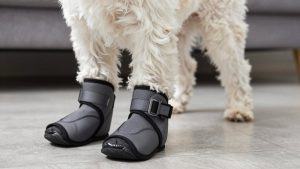
Furrtripsy Dog Boots,Rugged Anti-Slip Sole Paw Protectors for Medium Large Dogs,Boots & Paw Protectors with Adjustable Straps,Waterproof Dog Booties for Hot Pavement,Snow,Hiking(Red,#10)
Included for 'Best dog boots for weimaraner 2026' because the listing specifies Rugged Anti-Slip Sole Paw Protectors for Medium Large Dogs and Boots & Paw Protectors with Adjustable Straps, details this guide uses to compare options.
View on Amazon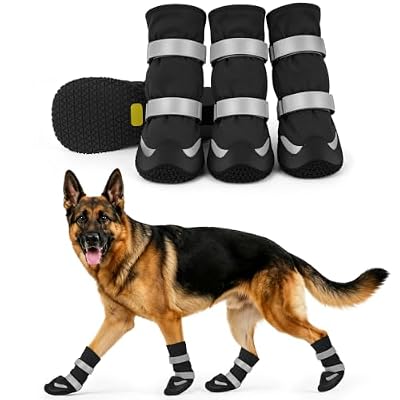
LUCKYPAW Dog Shoes for Winter Snow Waterproof Dog Boots with Fleece Lining
Included for 'Best dog boots for weimaraner 2026' as a relevant option in this category; details come from the product listing.
View on Amazon
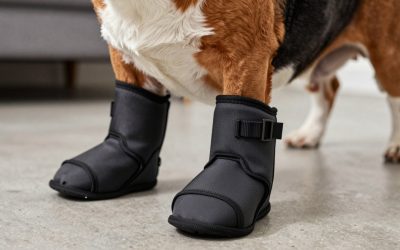
QUMY Dog Shoes for Hot Pavement, Dog Snow Boots & Paw Protectors for Winter
Included for 'Best dog boots for weimaraner 2026' because the listing specifies Dog Snow Boots & Paw Protectors for Winter, details this guide uses to compare options.
View on Amazon
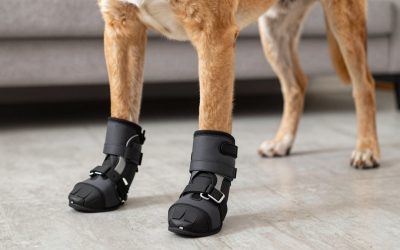
XSY&G Dog Shoes for Hot Pavement, Dog Snow Booties for Medium to Large Dogs
Included for 'Best dog boots for weimaraner 2026' because the listing specifies Dog Snow Booties for Medium to Large Dogs, details this guide uses to compare options.
View on AmazonMeasuring Weimaraner paws
See also: Best Electric Dog Fences for Reliable, Humane Containment • Best Dog Boots for Basset Hound
Stand your dog on a sheet of paper with its weight on the paw, trace around it, and measure the width at the widest point and the length from the back of the pad to the tip of the longest nail. Many adult Weimaraners measure roughly 2.5-3.25 inches wide on the front paws. Rear paws are often slightly narrower, so some owners buy two sizes. If your dog is between sizes, compare the brand’s chart for both width and length; a boot that is too long will twist, and one too narrow will squeeze the toes.
Boot types compared
Rubber balloon-style booties
Thin, flexible, disposable-feel boots that stretch over the paw. They keep salt and slush off and give a natural feel, so many dogs accept them quickly. They wear out fast on rough ground.
Soft-soled fabric boots
Neoprene or fabric uppers with a thin rubber sole. Good for city winters and indoor grip for seniors.
Rugged trail boots
Rigid rubber soles with tread and a wide opening that secures with one or two straps. These are the choice for hiking, hot surfaces and long runs.
Medical or recovery boots
Padded, breathable boots designed to keep a bandage clean and dry. Use them under your vet’s guidance.
| Boot type | Best situation | Durability | Typical price (set of 4) |
|---|---|---|---|
| Rubber balloon booties | Salt, slush, short walks | Low | Check on Amazon |
| Soft-soled fabric | City winter, indoor grip | Medium | Check on Amazon |
| Rugged trail boots | Hiking, hot pavement | High | Check on Amazon |
| Recovery boot (single) | Bandage protection | Medium | Varies |
Keeping boots on a fast dog
Weimaraners run hard and change direction sharply, which pops loose boots off in seconds. Choose boots with a strap that wraps above the wrist (the carpal pad on the front legs) and a wide opening that you can pull fully over the paw. Tighten the strap until snug but able to fit one finger. Before trusting boots on a long hike, test them in the yard with some play and zoomies. Trim the fur between the pads and keep nails short; long nails push boots forward and cause rubbing.
Training a Weimaraner to accept boots
Expect the classic high-stepping “boot walk” at first. Start with one boot for a few seconds indoors, reward heavily, then remove it. Build to all four over several short sessions, then go straight out for a walk or play so the dog is distracted by something fun. Weimaraners are sensitive and can become wary if forced, so keep sessions positive and short. Most dogs adapt within a week of regular practice.
Paw care alongside boots
After salty walks, rinse paws with lukewarm water and dry between the toes, whether or not your dog wore boots. A dog-safe paw balm can help dry pads in winter. Check pads after hikes for cuts, and see your vet for deep cuts, limping that lasts more than a day or two, or swelling between the toes.
FAQ
Do Weimaraners need boots in snow?
Not always. Healthy pads cope with clean snow, but boots help on salted sidewalks, icy crusts and very long snowy outings.
How do I stop my Weimaraner’s boots from falling off?
Choose boots with a strap above the wrist, size by both width and length, trim paw fur and nails, and test fit during active play before long outings.
Bottom line
For a Weimaraner, boots are a targeted tool: rubber booties or soft-soled boots for salty winter streets, rugged trail boots for hot pavement and rough hikes, and recovery boots when your vet advises. Measure each paw, choose secure straps that stay on a fast-moving dog, and train with patience and treats.