📅 Last updated:
The best litter for long haired cats in 2026 is a large-particle, low-dust clumping litter like Fresh Step Clean Paws, Boxiecat Extra Strength, or Sustainably Yours Large Grains, because bigger, rounder granules are less likely to wedge between toes or cling to belly fur and britches than fine sand-like clay.
Long hair does not need a special scent or formula. It needs physics: granules too large to stick, clumps firm enough to scoop without crumbling into gritty powder, and low static so dust does not glue litter to the coat. The 7 picks below are organized by situation, not ranked best-to-worst, because a Maine Coon in a high-traffic home needs something different than a senior Persian in a small apartment.

Dr. Elsey's Ultra UnScented Clumping Clay Cat Litter 40 lb. Bag
Included for 'Best Litter for Long Haired Cats in 2026: 7 Low-Stick Picks That Prevent Mats' as a relevant option in this category; details come from the product listing.
View on Amazon
Dr. Elsey's® Clean Tracks Clumping Clay Cat Litter 40 lb. Bag
Included for 'Best Litter for Long Haired Cats in 2026: 7 Low-Stick Picks That Prevent Mats' as a relevant option in this category; details come from the product listing.
View on Amazon
Precious Cat Classic Premium Clumping Cat Litter, 40 lb Bag
Included for 'Best Litter for Long Haired Cats in 2026: 7 Low-Stick Picks That Prevent Mats' because the listing specifies 40 lb Bag, details this guide uses to compare options.
View on Amazon
Dr. Elsey's Crystal Attract Silica Cat Litter, 8lbs
Included for 'Best Litter for Long Haired Cats in 2026: 7 Low-Stick Picks That Prevent Mats' because the listing specifies 8lbs, details this guide uses to compare options.
View on Amazon📋 Table of Contents
7 Low-Stick Picks for Long Haired Cats
1. Fresh Step Clean Paws Triple Action – Best for paw-track reduction
Designed specifically for less tracking with larger particles than standard fine clay. The granules are angular but oversized, so fewer pieces catch in long toe tufts. Clumping is firm with sodium bentonite clay plus carbon for odor. Good default choice for Persians, Ragdolls, and Maine Coons that scatter litter down the hallway. Typically sold in 22.5 lb bags and boxes. Low-dust but scented, so avoid if your cat rejects fragranced litter.
2. Boxiecat Extra Strength Premium Clumping Clay – Best for firm clumps
Boxiecat uses a flat-top, larger bentonite granule that scoops as a solid sheet rather than breaking into crumbs. That matters for long hair because crumbly clumps create damp fines that stick to rear feathering. Very hard clumps, low dust, unscented. Usually available in 16 lb and 28 lb bags. Heavier to carry, but you use less per scoop because the clump stays intact.
3. Dr. Elsey’s Precious Cat Ultra Unscented – Best unscented clay baseline
A medium-grain bentonite clay with a mix of particle sizes. Not as large as Clean Paws, but the low-dust coating and very hard clump reduce the wet residue that causes litter to cement on paw pads. Good if you want unscented, predictable scooping, and easy local availability.
4. Sustainably Yours Large Grains – Best plant-based low-stick option
Made from cassava and corn with intentionally large grains, about 2 to 3 times larger than fine corn litter. The large, smooth, off-round grains roll off fur instead of embedding, and clumping is surprisingly firm for a plant litter when kept at 3 to 4 inches depth. Available in 10.8 lb and 26 lb bags. Lighter than clay and flushable in small amounts where local rules allow, but needs more frequent topping off because cats displace the larger grains.
5. World’s Best Cat Litter Multiple Cat Clumping – Best for soft paws and dust sensitivity
Corn-based, with larger pressed granules and very low silica dust. It does not clump as rock-hard as bentonite, but it forms a softer whole clump with less powdery breakage if you wait 15 to 20 minutes before scooping. Common sizes include 14 lb, 28 lb, and 32 lb bags. Better for cats that lick paws frequently, since there is no clay dust. Requires a deeper fill and a gentle scoop technique.
6. okocat Less Mess Long Hair – Best wood-based low-track
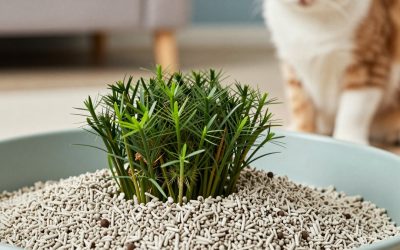
Made from reclaimed pine formed into small pellets and larger chips rather than sand. The particle shape is too large and too light to mat into belly fur, and most pieces fall off at the box mat. It does not form a hard scoopable clump like clay; urine is absorbed and solids are scooped. Sold in pellet-style bags around 9.9 lb to 19.8 lb, which last longer by volume than the weight suggests. Natural pine scent, no synthetic fragrance.
7. Purina Tidy Cats Free & Clean Unscented – Best for odor control without fragrance
A traditional clay blend with charcoal and no added fragrance. Granules are medium-fine, so it tracks more than Clean Paws or Boxiecat, but it stays popular for long-haired households with odor sensitivity because it controls ammonia without perfume that can irritate cats. Often sold in 20 lb pails, 24 lb jugs, and 35 to 40 lb bags. Pair it with a high-sided box and a litter mat to offset the smaller granule size.
Spec Comparison: Granule Shape, Clump Firmness, and Stickiness
See also: Washable Kitten Bed With Removable Cover: 7 Easy-Wash Picks • Cat House for Outdoor Cats: Insulated Shelters and Straw Bedding
Manufacturers rarely publish exact granule diameters, but particle type predicts stickiness. Fine sand under 0.8 mm packs into toe fur. Large granules over 1.5 mm and pellets over 3 mm mostly bounce off.
| Product | Material | Granule Shape / Approx. Size | Clump Type | Dust Level | Common Bag Sizes |
|---|---|---|---|---|---|
| Fresh Step Clean Paws | Bentonite clay | Large angular, 1.5-2.5 mm | Firm, fast | Low | 22.5 lb |
| Boxiecat Extra Strength | Bentonite clay | Flat-top large, 1.2-2.0 mm | Very firm, flat | Very low | 16 lb, 28 lb |
| Dr. Elsey’s Ultra | Bentonite clay | Medium mixed, 0.7-1.5 mm | Very firm | Very low | 18 lb, 40 lb |
| Sustainably Yours Large Grains | Cassava + corn | Large smooth, 2.0-3.5 mm | Firm if deep | Low | 10.8 lb, 26 lb |
| World’s Best Multiple Cat | Whole-kernel corn | Pressed grain, 1.0-2.2 mm | Medium-soft, whole | Very low | 14 lb, 28 lb, 32 lb |
| okocat Less Mess | Pine wood | Pellets + chips, 3.0-8.0 mm | Absorbent, non-clumping | Very low | 9.9 lb, 19.8 lb |
| Tidy Cats Free & Clean | Clay + charcoal | Medium-fine, 0.6-1.2 mm | Firm | Low-moderate | 20 lb, 35 lb |
Rule of thumb: if litter sticks to your damp fingertip and stays stuck when you shake your hand, it will stick to damp paws and rear fur. Large, hard, smooth granules release with one shake. Fine, soft, or powdery litter does not.
Decision Matrix: Match Litter to Your Situation
| Your Situation | Choose | Why |
|---|---|---|
| Litter cemented in toe tufts and tracked everywhere | Fresh Step Clean Paws or okocat Less Mess | Largest effective particle size, falls out before hallway |
| Clumps crumble and smear on britches | Boxiecat Extra Strength or Dr. Elsey’s Ultra | Hardest bentonite clumps, less wet crumb |
| Cat sneezes, you see dust film, or cat over-grooms paws | World’s Best or Sustainably Yours Large Grains | Plant-based, very low silica dust |
| You want unscented plus strong odor control | Boxiecat, Dr. Elsey’s Ultra, or Tidy Cats Free & Clean | No perfume, carbon or charcoal odor system |
| Small apartment, litter box near living space | Boxiecat or Sustainably Yours | Hard clump plus low dust keeps box fresher between scoops |
| Senior longhair with low entry box and soft stool risk | World’s Best Multiple Cat, deep fill | Softer on joints, less likely to adhere hard when soiled |
How Much You Actually Use: A Worked Calculation
Long-haired cats need deeper litter than short-haired cats, because shallow litter lets urine hit the bottom and create sticky paste that coats feet. Aim for 3.5 to 4 inches.
Example for a standard large box, 18 x 24 inches inside:
- Volume needed: 18 x 24 x 3.5 inches = 1,512 cubic inches, or about 0.88 cubic feet.
- Clay litter density is about 55 to 65 lb per cubic foot. You need roughly 12 to 14 lb for the first fill.
- A 28 lb bag therefore gives one full fill plus about 14 lb for top-offs over 3 to 4 weeks with daily scooping for one cat.
- Plant and pine litters are lighter, about 25 to 35 lb per cubic foot. A 10.8 lb bag of cassava-corn litter provides a similar volume to 18 to 20 lb of clay, which is why the bag looks small but fills the box.
For cost planning in general market ranges, large clay bags typically work out to the lowest cost per week for multi-cat homes, while large-grain plant litters cost more per pound but use less weight per fill. If you scoop twice daily and top off to maintain depth, most single-cat homes use 20 to 30 lb of clay per month or 10 to 15 lb of lightweight plant litter per month.
Setup That Prevents Mats More Than Litter Alone
Litter choice cuts sticking by half. Setup and coat care do the rest:
- Maintain 3.5 to 4 inches depth. Top off every 3 to 4 days, do not just let it get shallow. Shallow litter is the number one cause of paw-caking.
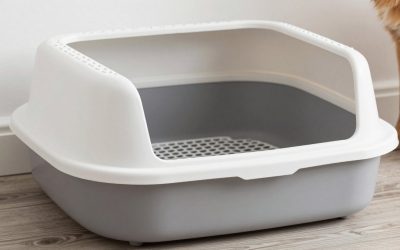
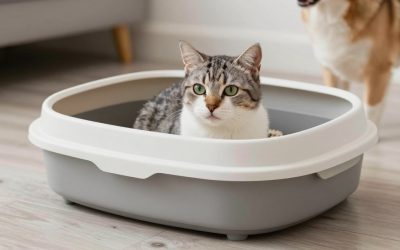
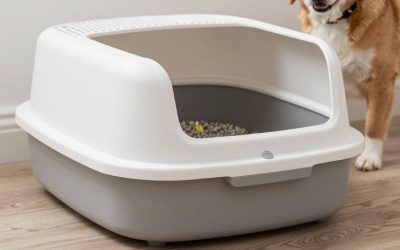
- Use a large, high-sided or top-entry box for cats over 12 lb. Small boxes force long belly fur to drag through the wet spot.
- Scoop clumps twice daily and wait 15 minutes after use for corn and cassava litters. Early scooping breaks soft clumps into sticky fines.
- Place a dual-layer or deep-groove mat extending 24 inches from the exit. Shake it out every 2 days. A saturated mat re-deposits dust on fur.
- Trim paw tufts flush with pads every 3 to 4 weeks and keep a sanitary trim around the rear. Long toe hair acts like Velcro for clay. If you are unsure, ask a groomer or veterinarian to demonstrate safe trimming.
- Comb britches and belly 2 to 3 times per week with a steel comb. Litter caught early combs out. Litter left 48 hours felts into a mat that must be cut out.
Durability and Ownership Realities
What wears first is not the litter, it is clump integrity. Bentonite stays scoopable for 3 to 4 weeks with topping off, then the base accumulates micro-fines and starts smelling despite scooping. Plant litters break down faster in humidity and need full changes every 2 to 3 weeks. Pine pellets disintegrate into sawdust and need sifting or partial replacement weekly.
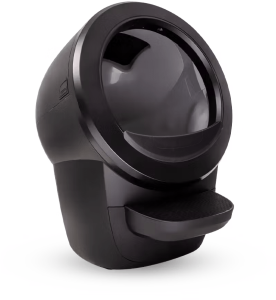
Common mistakes for longhair owners: switching to ultra-fine lightweight litter for easier carrying, which dramatically increases paw packing; adding scented deodorizer powder, which adds fine dust that sticks to damp fur; washing the box with strong citrus cleaner and refilling while still damp, which causes the first layer to gum up; and overfilling a self-cleaning box past the fill line, which leaves wet litter on the rake that then presses into fur.
Clean the empty box monthly with hot water and unscented dish soap, dry completely, then refill. Replace plastic boxes yearly if the bottom is scratched. Scratches trap urine paste that no litter can overcome and will transfer odor and residue to long coats.
FAQ
Should long haired cats use pellet litter or clumping litter?
Pellets track and stick less, but do not contain urine in a removable clump, so odor control depends on frequent sifting. Clumping large-grain litter contains urine better for multi-cat homes. If mats are the main problem, try large-grain cassava or pine pellets first. If odor is the main problem, try large-particle clumping clay.
Does crystal litter work for long hair?
Silica crystals are low-dust and do not clump, so urine drains to the bottom. Some longhair owners like the low sticking, but saturated crystals become sharp and can cling to toe fur. It also requires stirring and scheduled full changes rather than scooping clumps. It can work in a well-ventilated single-cat box, but is not usually the lowest-maintenance choice.
When should I see a vet or groomer about litter mats?
General information only, not medical advice. If litter is constantly stuck to stool on rear fur, if the cat stops using the box, strains, has diarrhea, or develops tight mats against the skin, redness, or odor, talk to a veterinarian or professional groomer. Do not pull tight mats or cut close to skin with scissors, as skin tents up easily under mats in long-haired cats.