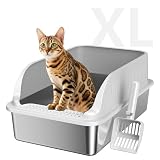
- Top Pick: Henkelion Cat Carriers Dog Carrier Pet Carrier For Small / Medium Cats Dogs Puppies (Up To 15lbs), TSA Airline Approved Small Dog Carrier Soft Sided, Collapsible Waterproof Travel Puppy Carrier – Grey
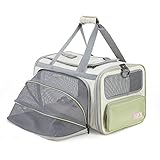
- Best Value: Cat Dog Carriers Soft-Sided Pet Carrier Large Cats for Medium Big Cat Small Dog Puppy up to 16lbs TSA Airline Approved Animal Collapsible Cat Carrier Carriers Travel Carrier Cat Bag (17x11x11)
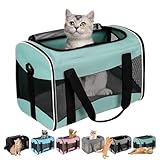
- Premium Choice: Henkelion Cat Carriers Dog Carrier Pet Carrier for Small / Medium Cats Dogs Puppies (Up To 15lbs), TSA Airline Approved Small Dog Carrier Soft Sided, Collapsible Waterproof Travel Puppy Carrier -Black
📅 Last updated:
Choosing a carrier for a flight is less about finding the largest bag and more about matching your cat’s size to the airline’s under-seat space. The right carrier should be large enough for your cat to turn around, sit, stand, and lie down in a natural position, yet compact enough to fit beneath the seat in front of you.
Airline rules are not universal. Each carrier sets its own maximum dimensions, and aircraft equipment can change the available space. Before buying, check the airline’s current pet policy and confirm the accepted carrier measurements for your specific flight. The guide below explains common cat carrier dimensions for airline travel, how to measure your cat, and which size works best for different situations.
As an Amazon Associate we earn from qualifying purchases at no extra cost to you.


📋 Table of Contents
The Short Answer
For most cats traveling in the cabin, a soft-sided carrier measuring about 17 to 18 inches long, 10 to 11 inches wide, and 10 to 11 inches high is a practical starting point. In centimeters, that is approximately 43 to 46 cm long, 25 to 28 cm wide, and 25 to 28 cm high.
Some airlines allow a slightly smaller carrier, such as 16 x 10 x 9 inches, while others permit bags close to 18 x 11 x 11 inches. Soft carriers are often preferred because they can compress slightly under a seat, but the frame must not collapse onto your cat or block ventilation.
Measure your cat before choosing a bag. A carrier that fits the airline’s maximum dimensions is not automatically suitable if your cat cannot comfortably change position inside it. Also account for the carrier’s interior dimensions, which can be smaller than its exterior measurements because of padding, mesh panels, and structural supports.
Standard Sizes
See also: Most Trusted Cat Litter Brands in 2026 and What Each Does Best • How to Introduce a Carrier to Cats (2026): Step-by-Step
The table below shows common carrier categories rather than guaranteed airline limits. Always compare the product’s outside dimensions with your airline’s rules.
| Carrier type | Typical outside dimensions | Approximate size in centimeters | Best suited for |
|---|---|---|---|
| Compact cabin carrier | 16 x 10 x 9 inches | 41 x 25 x 23 cm | Small cats and short flights |
| Standard soft-sided cabin carrier | 17 x 11 x 11 inches | 43 x 28 x 28 cm | Most average-size cats |
| Roomier cabin carrier | 18 x 11 x 11 inches | 46 x 28 x 28 cm | Larger cats, when the airline permits it |
| Expandable cabin carrier | 17 x 11 x 10 inches closed; approximately 30 x 17 x 10 inches expanded | 43 x 28 x 25 cm closed; approximately 76 x 43 x 25 cm expanded | Waiting areas and airport use; closed for boarding |
| Large ground-transport carrier | 24 x 16 x 16 inches | 61 x 41 x 41 cm | Car trips, trains, or home use—not typical cabin travel |
Many soft-sided models in the $20 to $40 range advertise airline approval and support cats weighing up to 15 or 16 pounds. Weight capacity is only one part of the fit, however. A 16-pound cat with a long body may need a larger interior than a compact, heavily built cat of the same weight. Look for a firm base, locking zippers, several ventilation panels, and a safety tether that can attach to a harness rather than a collar.
How to Measure Your Space
- Measure your cat’s length. With your cat standing naturally, measure from the tip of the nose to the base of the tail. Do not include the full tail length.
- Measure height. Measure from the floor to the top of the head or the highest point of the ears, whichever is taller. A cat should not be forced to keep its ears folded down.
- Measure width. Measure across the widest part of the body, usually the chest or hips. Add enough room for your cat to turn around without wedging against the sides.
- Compare the measurements with the interior. Use the carrier’s interior dimensions when they are listed. If only exterior dimensions are provided, allow for approximately 1 to 2 inches of lost space from padding and framing.
- Check the airline limit. Write down the maximum length, width, and height allowed for in-cabin pet carriers. Check whether the airline requires the bag to fit fully beneath the seat without forcing it.
- Test the carrier at home. Place a thin washable pad inside and let your cat enter voluntarily. Confirm that the carrier remains stable when lifted and that the zippers cannot be opened by pawing.
A small amount of extra room is useful, but oversized is not always better. Excess space can allow a nervous cat to slide around during movement. For a flight, prioritize a secure, well-ventilated fit over a roomy carrier designed for extended housing.
By Room or Use Case
Under-Seat Air Travel
A standard soft-sided carrier around 17 x 11 x 11 inches is a common choice for cabin travel. Its flexible top and sides may help it fit beneath the seat, but do not rely on squeezing it into a space that is clearly too small. A carrier that bulges, blocks ventilation, or presses against your cat is not a safe fit.
Before purchase, verify whether the airline measures the carrier at check-in or requires specific dimensions listed in its policy. Some carriers accept only one pet carrier per passenger, and some limit the number of pets in the cabin. Your cat’s weight, carrier weight, and any required reservation may also matter.
Airport Waiting and Layovers
An expandable carrier can provide more floor space during a layover when it is permitted outside the aircraft. A model may measure about 17 x 11 x 10 inches when closed and expand to roughly 30 x 17 x 10 inches. Keep it closed while passing through security, boarding, and the aircraft cabin unless airline staff specifically direct otherwise.
Expansion panels should have sturdy mesh, reinforced seams, and zippers that can be secured. More expansion does not replace a litter plan, water access, or a secure harness routine.
Car Trips to and From the Airport
For a car ride, safety and stability are more important than airline dimensions. A carrier measuring 18 x 12 x 12 inches can be comfortable for many cats if it fits securely on the vehicle seat. Use the vehicle’s seat belt according to the carrier manufacturer’s instructions, and keep the carrier closed throughout the trip.
If your cat is large or the journey is long, a rigid carrier measuring about 24 x 16 x 16 inches may provide better ventilation and usable interior space. That size is generally unsuitable for the cabin, so it may require a separate travel plan.
Home, Vet Visits, and Temporary Use
A carrier used mainly for veterinary visits can be compact, but it should still allow your cat to turn around and lie down. Top-loading doors are helpful for anxious cats, while removable pads make cleanup easier. For cats near the upper end of a carrier’s weight range, choose based on body measurements rather than the advertised pound limit.
Common Sizing Mistakes
- Buying by weight alone: A 15-pound limit does not describe the carrier’s usable length or height.
- Using exterior measurements as interior space: Padding and framing reduce the area your cat can occupy.
- Ignoring the airline’s exact limit: “Airline approved” is a marketing description, not a universal certification.
- Choosing a rigid carrier for a tight cabin space: Hard-sided carriers usually have less flexibility beneath the seat.
- Forgetting the carrier’s empty weight: Some airlines include the cat and carrier in one combined cabin-pet weight limit.
- Testing fit only once: A cat may gain weight or become uncomfortable with a thick travel pad inside.
- Assuming expanded dimensions apply during boarding: Expandable sections normally must be folded away for the flight.
FAQ
What are the best cat carrier dimensions for airline travel?
A soft carrier around 17 x 11 x 11 inches, or 43 x 28 x 28 cm, works for many average-size cats. The correct maximum depends on the airline and aircraft, so confirm the exact allowance before purchasing.
Can a cat carrier be too big for a plane?
Yes. If it cannot fit completely beneath the seat, it may be refused at boarding even if your cat fits comfortably inside. A larger carrier may be appropriate for car travel but not for in-cabin flights.
Should I choose a hard or soft cat carrier?
Soft-sided carriers are often more practical for cabin travel because they can flex slightly and usually weigh less. Hard-sided carriers can offer strong protection and easier cleaning, but their fixed dimensions may not work under an airline seat.
How much do airline-approved cat carriers cost?
Basic soft-sided models commonly cost about $20 to $30, while expandable or more structured designs often cost approximately $30 to $60. Price does not guarantee airline acceptance. For 2026 travel, check the airline’s current pet policy, measure the carrier, and verify the reservation requirements before your departure date.
Ready to decide? Our #1 pick for 2026 is the Compact cabin carrier.
Live price & availability on Amazon.