📅 Last updated:
A cat carrier should not be something that appears only before a vet visit, move, or emergency. When it is brought out at the last minute, many cats learn to associate it with being chased, trapped, and taken somewhere unfamiliar. That can lead to hiding, scratching, vocalizing, accidents outside the litter box, or a cat that becomes difficult to handle when time matters most.
The goal is to make the carrier feel like a normal, safe piece of furniture—more like a covered bed than a travel crate. With a few short practice sessions and the right setup, most cats can learn to enter willingly. This approach works for kittens, adult cats, and many wary rescues, though very fearful cats may need a slower pace.
As an Amazon Associate we earn from qualifying purchases at no extra cost to you.

📋 Table of Contents
Quick answer: Our top pick in 2026 is the Appropriately sized carrier — our #1 rated choice. See the full ranked comparison, alternatives and buying advice below.
What You Need
| Item | Why | Optional? |
|---|---|---|
| Appropriately sized carrier | Your cat should be able to stand, turn around, and lie down comfortably. | No |
| Familiar blanket or small towel | Adds a familiar scent and makes the base less slippery. | No |
| High-value treats | Builds a positive association with approaching and entering the carrier. | No |
| Favorite toy or wand toy | Encourages relaxed exploration without forcing the cat inside. | Yes |
| Cat pheromone spray | May help some cats settle when used on bedding or the carrier interior before travel. | Yes |
| Small washable pee pad | Useful for long drives, anxious cats, or veterinary trips. | Yes |
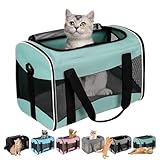
Choose a carrier before training begins. For many average-size cats, a soft-sided model around 17 to 17.5 inches long, 11 inches wide, and 11 inches high is a practical everyday size. Models in that range commonly suit cats up to about 16 pounds, but measure your cat rather than relying on a weight label alone. A larger cat may need a roomier hard-sided crate, especially if they cannot turn around without crouching.
Soft carriers are lightweight and easy to store; many cost about $20 to $35. Hard carriers are often easier to sanitize and can be a better choice for cats that claw, chew, or panic during transport. Whichever style you select, check that the zipper, door, seams, handles, and ventilation panels are secure.
Step-by-Step
See also: Most Trusted Cat Litter Brands in 2026 and What Each Does Best • How to Get a Cat Into Carrier (2026): Step-by-Step
-
Leave the carrier out in a calm room (2 minutes to set up; 3 to 7 days)
Place the carrier in a room where your cat already rests, ideally away from the litter box and food bowls. Keep the door fully open or remove the top half of a hard carrier if possible. Put a familiar blanket or towel inside, with the opening facing into the room rather than toward a wall.
Do not point the carrier at your cat, carry your cat toward it, or close the door during this stage. The first lesson is simple: the carrier is safe even when nothing happens around it. Some confident cats will investigate within hours; cautious cats may need a week or more.
-
Reward curiosity near the entrance (3 to 5 minutes, once or twice daily for 2 to 4 days)
Place one treat a few inches outside the entrance. When your cat eats it comfortably, place the next treat just inside the doorway. Continue only as long as your cat looks relaxed: normal ears, unhurried movements, and no retreating or crouching.
Use tiny treats so the practice does not replace meals. For a food-motivated cat, reserve a portion of daily kibble or use pea-sized pieces of a favorite soft treat. If food is not motivating, toss a small toy near the carrier or use gentle praise and a petting session if your cat enjoys touch.
-
Make the inside rewarding (5 minutes daily for 3 to 7 days)
Move treats farther inside until your cat steps fully into the carrier. Put the best reward at the back, but never block the exit with your body. Let your cat enter, eat, and leave freely. You can also serve a small portion of a favorite meal just inside the carrier, gradually moving the dish farther back over several sessions.
If the carrier has a top opening, leave it closed at first. A cat that is comfortable walking through the front door is more likely to accept other forms of handling later.
-
Practice resting with the door open (5 to 10 minutes daily for about 1 week)
Once your cat enters readily, scatter a few treats on the bedding and sit quietly nearby. Encourage a brief pause inside rather than immediately luring the cat out. Some cats will begin napping in the carrier. That is excellent progress, but do not rush to shut the door just because your cat is resting there.
Refresh the blanket regularly, especially if it has been washed with strongly scented detergent. Familiar, neutral smells are usually more helpful than perfumes.
-
Close the door for very short intervals (5 minutes daily for 4 to 10 days)
When your cat can enter comfortably, give a treat inside, gently close the door for one second, then reopen it and offer another treat. Repeat two or three times. Build slowly: 3 seconds, 10 seconds, 30 seconds, then 1 minute.
Stay close and speak calmly. If your cat struggles, pants, throws their body against the door, or stops accepting treats, reopen the carrier and return to an easier duration at the next session. Progress is not linear; the correct speed is the one that keeps your cat below their panic threshold.
-
Introduce movement indoors (5 to 10 minutes, every other day for 1 week)
With your cat calmly enclosed, lift the carrier just an inch off the floor for two to three seconds, then set it down. Reward. Over several sessions, carry it across one room, then walk calmly through the house. Keep the carrier level and support it from underneath; do not swing it by a single handle.
A towel draped loosely over part of a soft carrier can reduce visual stimulation for some cats, provided it does not block ventilation.
-
Take a short car practice trip (10 to 20 minutes total, once or twice before a real trip)
Start by sitting in a parked car with your cat secured in the carrier. Then take a brief drive around the block. Keep the carrier on the vehicle floor behind a front seat or secure it with a seat belt according to the carrier manufacturer’s instructions. Never allow a loose carrier, and never let a cat ride outside it.
After the drive, bring your cat home, open the carrier in a familiar room, and offer a treat or meal. Avoid making every practice trip end at the veterinary office.
Mistakes to Avoid
- Only bringing out the carrier before appointments. This teaches your cat that its appearance predicts stress.
- Forcing the cat through the front door. Chasing and pushing can undo several days of trust-building. If time is urgent, a top-loading or removable-top carrier may be easier to use safely.
- Advancing too quickly. A cat that tolerates 10 seconds inside is not necessarily ready for a 30-minute drive.
- Using a carrier that is too small or unstable. Tight quarters, weak flooring, broken zippers, and poor ventilation can make travel more frightening.
- Washing away all familiar scent right before travel. Clean soiled bedding, but retain one familiar towel when possible.
- Opening the carrier outdoors or in a parking lot. Even calm indoor cats can bolt when frightened.
How Often
Keep the carrier accessible year-round, not stored in a basement or closet. For maintenance, offer a treat inside two or three times a week and do a one- to five-minute door-closed practice once or twice a month. Before a planned move, boarding stay, flight, or veterinary procedure, restart short daily sessions about two weeks ahead.
In 2026, many households use soft-sided carriers because they are collapsible and convenient, but convenience should not replace practice. A carrier becomes useful only when your cat can tolerate it safely and calmly.
When to Call a Pro or Replace
Contact your veterinarian if your cat drools heavily, pants, vomits repeatedly, injures themselves trying to escape, urinates from distress, or cannot complete even very short carrier sessions after gradual training. Your vet can rule out pain, motion sickness, or illness and discuss travel-anxiety options. Do not give human sedatives or over-the-counter calming products without veterinary guidance.
Replace the carrier if its door no longer latches reliably, zippers separate, mesh is torn, the base sags, handles are frayed, or the interior cannot be cleaned after repeated accidents. Replace it as your cat grows if they can no longer stand and turn comfortably. For airline travel, verify the specific airline’s current under-seat dimensions and pet rules before purchasing or packing.
FAQ
How long does it take to train a cat to like a carrier?
Many cats show improvement in one to two weeks, while fearful cats may need several weeks. Focus on relaxed behavior rather than a calendar deadline. A slower plan is usually faster than repeatedly forcing a frightened cat inside.
Should I feed my cat in the carrier?
Yes, if your cat is comfortable approaching it. Start with food near the entrance and move it inward gradually. Do not withhold meals to force cooperation; use especially appealing food in small amounts instead.
Is a hard or soft carrier better for cats?
Either can work. Hard carriers are durable and easy to clean, while soft-sided carriers are lighter and often easier to store. Choose a secure model with adequate ventilation, a stable base, and enough room for your cat’s body size.
What if my cat hides when they see the carrier?
Stop trying to capture them with it. Leave the carrier out with the door open, add familiar bedding, and reward calm investigation from a distance. For an unavoidable appointment, call the veterinary office in advance for handling advice and scheduling options.
Ready to decide? Our #1 pick for 2026 is the Appropriately sized carrier.
Live price & availability on Amazon.