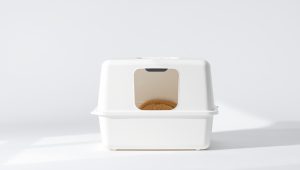
- Top Pick: Vceoa 17.5"x11"x11" Pet Carrier for Cats
- Best Value: Cat Dog Carriers Soft-Sided Pet Carrier Large Cats for Medium Big Cat Small Dog Puppy up to 16lbs TSA Airline Approved Animal Collapsible Cat Carrier Carriers Travel Carrier Cat Bag (17x11x11)
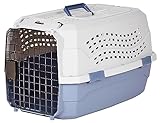
- Premium Choice: Amazon Basics Sturdy Portable 2-Door Top-Load Hard-Sided Pet Travel Carrier with Secure Ventilation, Handle, Front & Top Entry for Dogs, Cats, 22.8"L x 15"W x 13"H, Gray & Blue
📅 Last updated:
When shopping for a cat carrier, many people focus first on color, price, or whether the bag is labeled “airline approved.” Those details matter, but ventilation is easier to overlook—and poor airflow can make a stressful trip much harder on a cat. A carrier may have several mesh panels yet still feel stuffy if the openings are covered by fabric, blocked when the carrier is placed against a seat, or concentrated on only one side.
The goal is not simply to find the carrier with the most mesh. You want steady cross-ventilation, secure construction, enough interior room, and protection from drafts, heat, and escape attempts. The following guide explains what to look for in cat carrier ventilation, including how to compare soft-sided bags with hard-sided kennels and how much to expect at different prices in 2026.
As an Amazon Associate we earn from qualifying purchases at no extra cost to you.


📋 Table of Contents
- Decide These 3 Things First
- Size: Buy for Airflow and Posture, Not Just Weight
- Material: Mesh, Hard Plastic, and Breathable Panels
- Construction: Look for Cross-Ventilation and Unblocked Openings
- Comfort and Performance: Manage Heat, Drafts, and Stress
- Price Tiers: What Ventilation Features Cost
- Warranty and Returns: Protect the Fit
- Delivery and Assembly: Inspect Before Travel Day
- Spec Checklist
- Red Flags
- FAQ
Decide These 3 Things First
- How long will your cat be inside? A 15-minute drive requires less than a full-day road trip, airport journey, or veterinary hospitalization. Longer trips call for ventilation on multiple sides, a stable base, and room for the cat to change position.
- Where will the carrier travel? A soft carrier can be convenient for walking and under-seat use, while a hard carrier is usually easier to clean and less likely to collapse against a cat’s breathing space. A carrier used in a car should also remain upright and secure.
- How does your cat behave when confined? Calm cats may do well with mesh-heavy soft sides. Cats that claw, chew, push, or panic generally need a rigid frame, strong fasteners, and ventilation openings that cannot be torn or unzipped from inside.
Size: Buy for Airflow and Posture, Not Just Weight
See also: Most Trusted Cat Litter Brands in 2026 and What Each Does Best • How to Introduce a Carrier to Cats (2026): Step-by-Step
A cat should be able to stand without pressing its back against the roof, turn around, and lie down in a natural position. As a practical starting point, measure your cat from the tip of the nose to the base of the tail and from the floor to the top of the head while standing. Add approximately 3 to 6 inches to the length and 3 to 4 inches to the height. For example, a cat measuring 16 inches long and 10 inches tall generally needs a carrier around 19 to 22 inches long and at least 13 to 14 inches high.
Do not solve a ventilation problem by buying an oversized carrier. Excess space can allow a frightened cat to slide around during transport, while a very large soft bag may sag and reduce usable air volume. Many compact soft carriers measure about 17.5 by 11 by 11 inches and are intended for smaller cats. A cat near the stated 16-pound limit may technically fit but still need a larger, more rigid option for comfort.
Check the interior dimensions rather than relying only on exterior measurements. Padding, curved walls, storage pockets, and a thick base can reduce usable width and height by an inch or more.
Material: Mesh, Hard Plastic, and Breathable Panels
Mesh provides the most visible ventilation, but its type matters. Look for tightly woven, claw-resistant mesh with openings on at least two sides, ideally including one long side and part of the front or rear. Large mesh panels generally promote better passive airflow than a few small grommets, but oversized holes may catch claws or allow a cat to bite through the material.
Soft-sided carriers should combine mesh with a frame that holds the sides open. A bag that folds inward when lifted can cover ventilation panels and reduce the cat’s breathing room. Examine whether the mesh is sewn into the body rather than attached with a weak-looking strip of fabric.
Hard-sided carriers typically use plastic walls with slotted openings. These are easy to wipe clean and resist claw damage, but the slots should extend across multiple sides. A carrier with ventilation only at the front can become poorly ventilated when the door faces a wall, vehicle seat, or luggage. Avoid placing blankets over the entire kennel; use a partial cover that leaves the ventilation slots clear.
Construction: Look for Cross-Ventilation and Unblocked Openings
The most important construction feature is airflow from more than one direction. Look for ventilation on three or four sides, with openings positioned high enough to remain clear when the carrier sits on its base. Side panels are especially valuable because a front door can be blocked by a person’s legs, a car seat, or another item.
Count the usable ventilation areas, not just the number printed on the package. A decorative mesh strip measuring 2 inches high may contribute little compared with a full side panel. On a hard carrier, continuous rows of slots should occupy a meaningful portion of the side and rear walls without making the shell flimsy.
Inspect the door, seams, and frame for gaps. Ventilation openings should allow air through without creating escape points. Zippers should close fully, and zipper pulls should be difficult for a cat to reach from inside. For a soft carrier, a rigid base of roughly 1 inch or more of firm padding helps keep the floor level and prevents the sides from collapsing.
Comfort and Performance: Manage Heat, Drafts, and Stress
Good ventilation is not the same as unrestricted exposure. A cat needs air exchange without direct blasts of hot or cold air. Never place the carrier in a closed trunk, directly under a vehicle air-conditioning vent, or in full sun. Even on a mild day, a parked car can heat rapidly. Keep the carrier in the passenger cabin, secure it so it cannot tip, and maintain a comfortable room temperature.
Interior comfort also affects airflow. A thick blanket can absorb spills and provide security, but it should not cover every mesh panel. Use a towel or thin washable pad sized to the floor, leaving the side vents open. A familiar-smelling cloth can help reduce stress without obstructing ventilation.
For trips longer than a few hours, consider a carrier that can accommodate a small absorbent pad and, if appropriate, a compact water option that will not spill. A carrier is not a substitute for a larger travel crate for extended confinement. Watch for rapid breathing, excessive drooling, weakness, or unusual lethargy, and stop for veterinary guidance if symptoms appear.
Price Tiers: What Ventilation Features Cost
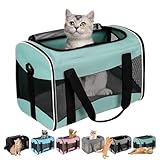
At roughly $18 to $30, basic soft carriers commonly measure about 17 to 18 inches long and include mesh on the front and sides. The Vceoa 17.5-by-11-by-11-inch carrier and a similarly sized 17-by-11-by-11-inch soft carrier are examples of the compact budget format, listed around $19.98 to $19.99. These can work for smaller cats and short trips, but inspect frame stiffness, zipper quality, and the actual size of the mesh panels.
The $30 to $60 range generally offers stronger frames, better padding, more reliable doors, and hard-sided designs. A product such as the Amazon Basics two-door hard-sided carrier, listed around $49.98 in the example selection, adds front and top entry along with slotted ventilation. Multiple doors can make loading easier, but confirm that both openings latch securely.
Above $60, you may find larger carriers, upgraded hardware, reinforced mesh, smoother wheels, or specialized travel features. A higher price does not automatically mean better airflow. Pay for a stable structure, washable materials, and well-placed openings rather than decorative details or excess pockets.
Warranty and Returns: Protect the Fit
A carrier is a fit-sensitive purchase, so a clear return period can matter more than a long marketing warranty. Look for at least 30 days to check whether your cat can stand, turn, and lie down comfortably. Confirm whether the item must be unused, whether return shipping is deducted, and whether stains or fur affect eligibility.
For a carrier costing $50 or more, a one-year limited warranty is a reasonable benchmark for manufacturing defects. It may cover broken zippers, failed stitching, or a cracked shell, but it usually will not cover claw damage, chewing, or an incorrect size. Save the receipt and inspect the carrier before the first trip.
Delivery and Assembly: Inspect Before Travel Day
Soft carriers may arrive folded, while hard carriers can arrive with doors, handles, or fasteners that need attachment. Allow at least 24 to 48 hours for the carrier to regain its shape after unpacking. Check every zipper, buckle, latch, seam, and ventilation panel before introducing your cat.
Set the carrier on a flat surface and apply gentle pressure to the roof and sides. The frame should remain open rather than bowing into the interior. Measure the finished carrier, not only the box dimensions, and verify that it fits your intended vehicle space. Let your cat explore it at home with the door secured open before the first appointment.
Spec Checklist
| Spec | Budget | Mid | Premium |
|---|---|---|---|
| Typical price | $18–$30 | $30–$60 | $60+ |
| Typical length | 17–18 in. | 19–23 in. | 22–30+ in. |
| Ventilation | Two mesh sides | Three or four sides | Four-sided airflow with reinforced panels |
| Structure | Basic soft frame | Firm soft frame or hard shell | Reinforced shell, frame, or travel system |
| Entry points | One or two | Front plus top or side | Multiple secure openings |
| Cat capacity | Usually up to 12–16 lb | Often 16–25 lb | Varies; prioritize interior dimensions |
| Base | Removable pad | Firm, washable insert | Rigid, non-slip, or replaceable system |
Red Flags
- Ventilation appears on the product photo but is covered by a closed flap or storage pocket.
- The carrier has mesh on only one side or openings that sit directly against the floor.
- The roof collapses when lifted, reducing the cat’s breathing space.
- Zippers, seams, or mesh feel easy to pull apart with light pressure.
- The advertised weight limit is high, but the interior is too short for the cat to turn around.
- A hard carrier has a door that flexes, a latch that does not click firmly, or sharp plastic around the openings.
- The instructions suggest covering the carrier completely in hot weather.
- There is no clear return policy, warranty information, or finished-product measurement.
FAQ
How much ventilation does a cat carrier need?
Choose a carrier with usable openings on at least two sides, preferably three or four. A single front door is less dependable because it can be blocked during transport. The openings should remain clear when the carrier is placed on its base and should not be covered by a blanket or pocket.
Is a soft or hard cat carrier better for ventilation?
Neither material is automatically better. A soft carrier can provide large mesh panels and may be lighter, but its frame must stay rigid. A hard carrier resists collapse and is easier to clean, but it needs well-distributed slots on multiple sides. Choose based on structure, opening placement, and your cat’s behavior.
Can I cover a cat carrier to calm my cat?
Yes, but cover only part of it. A lightweight towel over the roof or one side can reduce visual stimulation while leaving all major ventilation panels open. Check the carrier regularly and remove the cover if the interior becomes warm, damp, or stuffy.
What carrier size is right for a 16-pound cat?
Weight alone is not enough. Measure the cat’s length and standing height, then add about 3 to 6 inches of length and 3 to 4 inches of height. A compact 17-by-11-by-11-inch carrier may be too restrictive for a large 16-pound cat, even if the label lists that weight limit. Choose the smallest carrier that allows natural standing, turning, and lying down.
Ready to decide? Our #1 pick for 2026 is the Typical price.
Live price & availability on Amazon.