- Top Pick: Vceoa 17.5"x11"x11" Pet Carrier for Cats
- Best Value: Cat Dog Carriers Soft-Sided Pet Carrier Large Cats for Medium Big Cat Small Dog Puppy up to 16lbs TSA Airline Approved Animal Collapsible Cat Carrier Carriers Travel Carrier Cat Bag (17x11x11)
- Premium Choice: Henkelion Cat Carriers Dog Carrier Pet Carrier For Small / Medium Cats Dogs Puppies (Up To 15lbs), TSA Airline Approved Small Dog Carrier Soft Sided, Collapsible Waterproof Travel Puppy Carrier – Grey
📅 Last updated:
📋 Table of Contents
The Short Answer
For most adult cats, choose a carrier with an interior measuring about 18 to 20 inches long, 11 to 12 inches wide, and 11 to 13 inches high. The right carrier should let your cat stand without pressing against the roof, turn around, and lie down in a natural position. It should not be so large that your cat slides around during a car ride.
For a small cat or kitten, a carrier around 17.5 inches long by 11 inches wide by 11 inches high can work well. Larger cats may need a 22- to 24-inch hard-sided carrier, although that size can be too large for some airline cabins. Always measure your cat and check the carrier’s interior dimensions, not only its outside measurements.
As an Amazon Associate we earn from qualifying purchases at no extra cost to you.

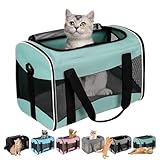

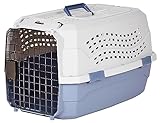
As a practical buying range, soft carriers commonly cost about $20 to $45, while larger hard-sided models generally cost about $40 to $70 or more. Prices change by brand, size, and features, so treat those figures as a budgeting guide for 2026 rather than a guarantee.
Standard Sizes
See also: Most Trusted Cat Litter Brands in 2026 and What Each Does Best • How to Introduce a Carrier to Cats (2026): Step-by-Step
Carrier sizes are not completely standardized. A listed length may include the frame, handles, or exterior pockets, which reduce the usable interior space. The following ranges are a useful starting point:
| Carrier size | Typical exterior dimensions | Approximate centimeters | Best for |
|---|---|---|---|
| Small | 16–18" L × 10–11" W × 10–12" H | 41–46 × 25–28 × 25–30 cm | Kittens, petite cats, and short vet trips |
| Medium | 17–20" L × 11–12" W × 11–13" H | 43–51 × 28–30 × 28–33 cm | Most average adult cats |
| Large | 21–24" L × 14–16" W × 13–15" H | 53–61 × 36–41 × 33–38 cm | Large breeds, long-bodied cats, or extra room in a vehicle |
A popular medium soft carrier measures about 17.5 by 11 by 11 inches, or approximately 44.5 by 28 by 28 centimeters. Similar 17 by 11 by 11-inch models are often advertised for cats weighing up to 15 or 16 pounds. Those weight limits are useful screening numbers, but body shape matters just as much. A long, lean cat can need more length than a heavier, compact cat.
For comparison, a hard-sided carrier measuring 22.8 by 15 by 13 inches is approximately 58 by 38 by 33 centimeters. It provides more floor area and structure, but it is heavier and may not fit beneath an airplane seat. Hard carriers are often easier to clean and can be more stable in a car, while soft carriers are lighter and more forgiving when fitting through tight spaces.
Do not select a carrier based on weight capacity alone. A 16-pound limit does not mean every 16-pound cat will fit comfortably. Look for a carrier whose inside length is at least the cat’s nose-to-base-of-tail measurement, whose width is at least the cat’s shoulder width, and whose height allows the cat to stand normally.
How to Measure Your Space
- Measure your cat’s length. With your cat standing, measure from the tip of the nose to the base of the tail. Do not measure to the end of the tail, which can exaggerate the required length.
- Measure shoulder width. Measure across the widest part of the shoulders or chest. Add a little clearance so your cat is not squeezed when turning around.
- Measure standing height. Measure from the floor to the top of the head or ears, depending on how your cat naturally holds its head. The interior height should allow standing without the back or ears touching the roof.
- Add room for movement. Compare those measurements with the carrier’s interior dimensions. Your cat should be able to stand, turn around, sit, and lie down. For a long trip, allow enough floor space for a small bed or absorbent pad without eliminating movement.
- Measure the destination. Check the opening of your front door, the space behind a car seat, the airline’s under-seat area, or the shelf where you plan to store the carrier. Measure height, width, and depth; a carrier that fits one dimension may fail on another.
- Check the usable interior. Look for tapered sides, thick padding, wheels, door frames, and interior supports. When possible, compare your cat’s measurements with the manufacturer’s interior measurements rather than the advertised outside size.
By Room or Use Case
Vet visits
A medium carrier is the best all-purpose choice for most cats visiting the veterinarian. A 17- to 20-inch length usually gives an adult cat enough room without becoming awkward to carry. Choose a wide door or top opening if your cat resists being placed inside. A removable, washable liner is valuable for accidents, and a firm base helps the carrier stay level.
Car travel
For car rides, prioritize stability over maximum floor space. The carrier should sit securely on the vehicle seat or floor and should not tip when the car turns. A hard-sided model around 22.8 by 15 by 13 inches may suit a large cat if your vehicle has room, but a medium soft carrier is easier to position in a smaller car. Keep the carrier secured according to the vehicle and carrier instructions; never allow a cat to ride loose.
Air travel
Airline requirements vary by carrier, aircraft, route, and seat. Many cabin carriers are approximately 17 to 18 inches long, 10 to 12 inches wide, and 10 to 11 inches high, but those figures are not universal. A soft-sided carrier can compress slightly to fit under a seat, while a hard carrier generally cannot. Confirm the airline’s current under-seat dimensions, pet policy, and combined pet-and-carrier weight limit before buying a ticket.
Large or long-bodied cats
Large breeds and long-bodied cats may need a carrier at least 21 inches long and 14 inches wide. Measure carefully because a carrier marketed for a high weight limit may still have a short interior. If the cat can stand but cannot turn around, size up. For transport in a car, a larger hard carrier may be more comfortable; for air travel, cabin restrictions may require a smaller option or a different travel plan.
Home use and storage
If the carrier will stay assembled at home, choose the largest comfortable size that fits the intended location. A carrier left open can function as a familiar resting place and may make future trips less stressful. For closets or small apartments, a collapsible soft carrier saves space, but inspect the frame, zippers, and ventilation panels regularly before use.
Common Sizing Mistakes
- Using the cat’s weight as the only measurement. Weight limits do not show whether the cat has enough length, height, or shoulder room.
- Buying the smallest airline-approved carrier automatically. Airline approval concerns fit and safety rules, not necessarily your cat’s comfort. Verify both the carrier and the cat’s measurements.
- Measuring the outside only. Handles, fabric padding, plastic walls, and door hardware can reduce interior space by several inches.
- Choosing an oversized carrier for a nervous cat. Too much open space can allow a cat to slide during braking or make it feel exposed. Use a properly fitted pad or towel rather than selecting a dramatically larger carrier.
- Forgetting the door opening. A roomy carrier can still be difficult to use if the door is too small or the opening is poorly positioned.
- Ignoring ventilation and access. Adequate mesh or vents, secure fasteners, and easy-clean materials matter as much as dimensions.
FAQ
What size carrier do I need for a 10-pound cat?
Many 10-pound cats fit a medium carrier around 17 to 20 inches long, 11 to 12 inches wide, and 11 to 13 inches high. Confirm the fit by measuring the individual cat. A short, compact cat may be comfortable in a smaller model, while a long-bodied cat may need additional length.
Is a 17.5-by-11-by-11-inch carrier big enough for an adult cat?
It can be, especially for a petite or average-sized adult cat. Compare the interior length with the cat’s nose-to-tail-base measurement and check standing height. If the cat cannot turn around without folding its body, choose a larger carrier.
Should a cat carrier be tall enough to stand in?
Yes. Your cat should be able to stand, sit, turn around, and lie down without the roof pressing on its back. Some cats crouch when traveling, but a carrier should not require them to remain crouched because it is too short.
Is a hard or soft carrier better for cats?
Neither is best for every situation. Soft carriers are lightweight, easier to store, and often more suitable for cabin travel. Hard carriers provide a rigid base, stronger protection, and simpler cleanup. Choose the type that matches the trip, then verify the interior dimensions, ventilation, closures, and weight limit.
Ready to decide? Our #1 pick for 2026 is the Small.
Live price & availability on Amazon.