📅 Last updated:
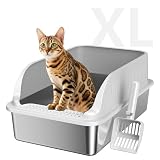
If you are tired of scooping litter, two names dominate the self-cleaning litter box conversation: the Litter-Robot 4 and the PetSafe ScoopFree. They take very different approaches and sit at very different price points, so the right choice depends on your budget, your cats, and how hands-off you want to be. This head-to-head breaks down how each works, what they cost, and which cats they suit.
📋 Table of Contents
Quick Verdict
The Litter-Robot 4 is the premium pick: a rotating globe that sifts clumping litter automatically, with a large capacity, a strong app, and the best odor control, at a premium price. The PetSafe ScoopFree is the value pick: a raking system that is much cheaper up front but uses disposable crystal trays that add ongoing cost. Choose the Litter-Robot for the best experience and multiple cats; choose the ScoopFree to automate litter cleaning on a tighter budget.
Litter-Robot 4 vs PetSafe ScoopFree: Side by Side
See also: Most Trusted Cat Litter Brands in 2026 and What Each Does Best • How to Introduce a Carrier to Cats (2026): Step-by-Step
| Feature | Litter-Robot 4 | PetSafe ScoopFree |
|---|---|---|
| Cleaning method | Rotating globe sifts clumps | Rake sweeps waste into tray |
| Litter type | Any clumping litter | Crystal (or clumping on newer models) |
| Capacity / cats | Large — great for multiple cats | Best for 1–2 cats |
| App & sensors | Full app, weight tracking, alerts | Basic app on connected models |
| Odor control | Excellent (sealed drawer) | Good (crystals absorb odor) |
| Typical price | $600–$700 | $150–$250 |
Prices are approximate and change frequently; check the live listing for current pricing.
Litter-Robot 4 — Best Overall
The Litter-Robot 4 is the box most owners upgrade to once and keep. Its globe rotates to sift clumps into a sealed, carbon-filtered drawer, so odor is minimal and you empty it roughly once a week for a single cat. It works with any clumping litter (so no proprietary refills), tracks each cat’s weight and litter-box visits in the app, and has the capacity to handle multiple cats. The downside is simply the price — it is a serious investment — but for hands-off convenience and odor control it sets the benchmark.
PetSafe ScoopFree — Best Value
The PetSafe ScoopFree Ultra automates scooping for a fraction of the Litter-Robot’s price. A rake sweeps waste into a covered tray, and crystal litter absorbs moisture and odor well. The trade-off is ongoing cost and a bit more hands-on management: traditional models use disposable trays and crystal litter you replace periodically, and capacity suits one or two cats rather than a full household. For owners who want to stop scooping without a premium outlay, it is the sensible starting point.
Also Worth Considering
If you want alternatives, the Casa Leo Loo Too offers automatic sifting with a lower price than the Litter-Robot, and the PETKIT Pura Max is a popular mid-priced automatic box with strong odor control. Both are worth a look if you want something between the ScoopFree and the Litter-Robot.
Which Should You Buy?
Buy the Litter-Robot 4 if you have multiple cats, want the best odor control and app features, prefer to use your own clumping litter, and the budget allows. Buy the PetSafe ScoopFree if you have one or two cats and want to automate litter cleaning affordably, accepting the ongoing cost of crystal trays. Both dramatically cut daily scooping; the decision really comes down to budget and how many cats you are cleaning up after.
Running Costs Compared
The sticker price is only half the story. The Litter-Robot 4 costs far more upfront but works with any standard clumping litter, so ongoing costs are just litter and the occasional carbon filter. The PetSafe ScoopFree is cheap to buy but traditionally relies on disposable crystal trays that you replace every few weeks, which adds up over a year, especially with two cats. Over two to three years of ownership the gap narrows, so factor refills into your decision rather than judging on the purchase price alone.
Setup and Helping Cats Adjust
Both boxes are easy to set up, but cats can be wary of a moving litter box at first. Ease the transition by placing the new automatic box next to the old one for a week before removing the original, keeping it in the same familiar location, and letting your cat investigate it switched off before enabling the cycle. Most cats adapt within a few days. Keep the unit on a level floor and away from noisy appliances, and clean the sensors and rake or globe periodically so it keeps running reliably.
The Bottom Line
Both boxes end daily scooping; the decision comes down to budget and household size. Spend more once on the Litter-Robot 4 for the best odor control, capacity, and app features across multiple cats, or start with the more affordable PetSafe ScoopFree for one or two cats and accept the ongoing tray cost. Whichever you choose, introduce it gradually so your cats accept it, and factor in refills and litter when comparing the true long-term price.
Frequently Asked Questions
Is the Litter-Robot or PetSafe ScoopFree better?
The Litter-Robot 4 is better overall for capacity, odor control, app features, and using your own clumping litter, which suits multiple-cat homes. The PetSafe ScoopFree is better for buyers on a budget with one or two cats, automating scooping at a much lower upfront price. The Litter-Robot costs several times more.
Which self-cleaning litter box is best for multiple cats?
The Litter-Robot 4 is the stronger choice for multiple cats thanks to its large capacity, sealed odor-controlled drawer, and per-cat tracking. The ScoopFree is better suited to one or two cats, as its tray capacity fills faster in a busy household.
Does the Litter-Robot use special litter?
No — one of its advantages is that it works with any standard clumping litter, so there are no proprietary refills. The PetSafe ScoopFree traditionally uses crystal litter and disposable trays, which adds ongoing cost, though newer ScoopFree models support clumping litter.
Are self-cleaning litter boxes worth it?
For many owners, yes. They eliminate daily scooping, reduce odor with sealed or crystal-based systems, and can track litter-box habits that flag health issues early. The main downsides are upfront cost and, for crystal-based models, ongoing refill costs. Cats usually adapt within days.
How often do you empty a Litter-Robot 4?
For a single cat, the sealed waste drawer typically needs emptying about once a week; with multiple cats, every few days. The app notifies you when the drawer is getting full, so you are not guessing.