Our Short List of 3

- Brand: Vitakraft
- Form: Crunchy baked rings, roughly 300 per bag
- Bag size: 10.6 oz
- Main ingredients: Wheat and alfalfa, with added vitamins and minerals
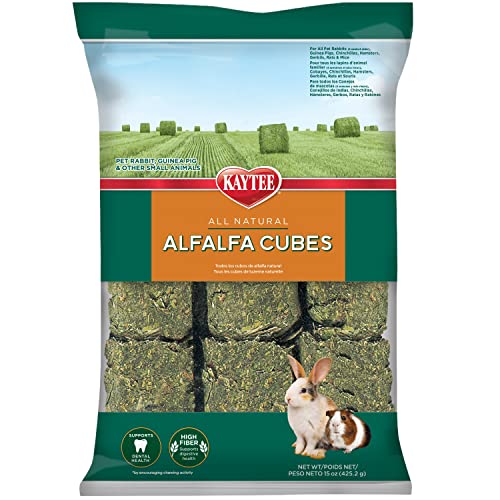
- Brand: Kaytee
- Form: Tightly compressed hay cubes
- Bag size: 15 oz
- Main ingredient: Sun-cured alfalfa hay

- Brand: Kaytee
- Form: Loose dried foraging medley
- Bag size: 1 oz
- Main ingredients: Dehydrated carrot, marigold, rose petal, spinach, freeze-dried strawberry
All 4 Picks at a Glance
| Product | Specs | Action |
|---|---|---|
| Vitakraft Nibble Rings |
| Check price on Amazon |
| Kaytee Alfalfa Cubes |
| Check price on Amazon |
| Kaytee Food from The Wild Natural Snack |
| Check price on Amazon |
 Vitakraft Slims with Carrot |
| Check price on Amazon |
📅 Last updated:
A rabbit’s diet should rest on unlimited grass hay, measured pellets, and a daily handful of leafy greens. Treats sit on top of that foundation and should stay small: a tablespoon or two a day is plenty for most adults. The problem is that the treat aisle is full of seed sticks, sugary drops, and colorful mixes that work against a rabbit’s sensitive digestive system. The best rabbit treats are built on hay and fiber, keep added sugar low or absent, and come in pieces you can portion without guesswork.

Disclosure: As an Amazon Associate, I earn from qualifying purchases.
This guide compares five rabbit treats with different approaches, from certified organic baked biscuits to plain compressed alfalfa cubes and a loose foraging medley. Each pick lists its ingredients and format honestly, including the drawbacks, so you can match a treat to your rabbit’s age, weight, and habits.
📋 Table of Contents
How to Choose Rabbit Treats
Start with the base ingredient. Hay-based treats fit a rabbit’s fiber-first diet best. Baked biscuits made from hay and grain flours are acceptable in small amounts, while treats built on seeds, nuts, corn, or dried fruit should be rare or skipped, because rabbits handle starch and sugar poorly.
Match alfalfa to life stage. Alfalfa is richer in calcium and protein than grass hay. That makes alfalfa-based treats useful for young, growing, pregnant, or underweight rabbits, but a poor daily choice for healthy adults, who can develop excess calcium in the urine when the diet runs rich for months.
Check the sugar story. Fruit, honey, molasses, and cane sugar appear in many small animal treats. A strawberry piece inside a dried flower mix is a minor concern; a treat held together by syrup is a different matter. Read the ingredient list from the top, because the first entries make up most of what your rabbit eats.
Think about portion control. Small, uniform pieces make it easy to hand out one or two during training and stop there. Loose medleys are better scattered through hay for foraging enrichment than poured into a bowl, where a rabbit picks out the sweetest bits first.
Plan for freshness. Hay-based treats stale once opened. Resealable bags help; store treats in a cool, dry cupboard.
Oxbow Organic Rewards Barley Biscuits
See also: Best Automatic Transmission Floor Shifter: Ratchet, Gated and Detent Shifters Compared • Best Automatic Floor Shifter for Truck: Tall, Tough Picks for Pickups and Bench Seats
Oxbow is the brand many rabbit veterinarians stock in their own clinics, and the Organic Rewards are its most careful treat recipe. The biscuits are baked from certified organic barley flour and organic hay, with organic fruits and vegetables in the mix, and nothing artificial added for color or flavor. The result is a crunchy, earthy-smelling biscuit that most rabbits take to quickly despite the absence of sugar coating.
The feeding guidance is unusually strict and worth following: one to two biscuits a day, with treats kept to roughly two percent of the total diet. That restraint suits these biscuits, because the barley flour base makes them more energy-dense than a pure hay treat. Break a biscuit in half for training and a bag lasts a respectful while.
Specs
- Brand: Oxbow Animal Health
- Form: Oven-baked barley and hay biscuits
- Bag size: 2.64 oz, pack of 2
- Main ingredients: Organic barley flour, organic hay, organic fruits and vegetables
- Certification: Made with USDA certified organic ingredients
- Feeding guide: 1 to 2 biscuits per day
Pros
- Certified organic ingredient list with no artificial colors or flavors
- Hay-forward recipe from a brand focused on small herbivores
- Clear, conservative portion guidance printed by the maker
- Firm crunch gives rabbits something to work their teeth on
Cons
- Barley flour base means the biscuits are richer than pure hay treats
- Small bags, so the cost per treat runs higher than basic options
- Biscuits can crumble in the bag, leaving dust at the bottom
Who it suits: Owners who want the cleanest label they can find and are happy paying a little more for organic ingredients and strict portioning.
Vitakraft Nibble Rings
- Brand: Vitakraft
- Form: Crunchy baked rings, roughly 300 per bag
- Bag size: 10.6 oz
- Main ingredients: Wheat and alfalfa, with added vitamins and minerals
Nibble Rings are the training treat of this group. Each bag holds roughly three hundred small, crunchy rings made from wheat and alfalfa with added vitamins and minerals, and no artificial flavors. Their size is the selling point: one ring is a genuine bite for a rabbit, so you can reward a litter-training success or a nail-trim session ten times over without handing out a meaningful amount of food.
The trade-off sits in the recipe. Wheat is the base, so these are grain treats wearing a hay-friendly hat, and the alfalfa adds calcium healthy adults do not need in quantity. Used as intended, a few rings a day as rewards, they are a sensible tool. Poured into a bowl as a snack mix, they push the diet in the wrong direction.
Pros
Cons
Who it suits: Anyone actively training a rabbit, or hand-taming a shy rescue, who needs a low-value-per-piece reward they can offer repeatedly.
Kaytee Alfalfa Cubes
- Brand: Kaytee
- Form: Tightly compressed hay cubes
- Bag size: 15 oz
- Main ingredient: Sun-cured alfalfa hay
This is the simplest product in the guide: sun-cured alfalfa, compressed into dense cubes, and nothing else. No binder syrup, no coloring, no flavor dust. A cube is effectively a serving of hay in brick form, giving rabbits a long, fibrous chew that wears teeth and occupies time far better than a biscuit that vanishes in four bites.
The honest caveat is the alfalfa itself. Its calcium and protein are a benefit for rabbits under seven months, nursing mothers, and animals regaining condition, but more than a healthy adult needs daily. For adults, treat cubes as an occasional chew, perhaps one a few times a week, and lean on grass hay products for everyday rewards. The cubes are also hard and large for dwarf rabbits, so break them apart before serving.
Pros
Cons
Who it suits: Owners of young, growing, or recovering rabbits, and anyone who wants a single-ingredient chew with zero mystery additives.
Kaytee Food from The Wild Natural Snack
- Brand: Kaytee
- Form: Loose dried foraging medley
- Bag size: 1 oz
- Main ingredients: Dehydrated carrot, marigold, rose petal, spinach, freeze-dried strawberry
Food from The Wild takes a different route from every baked product here. It is a loose medley of dehydrated carrot, dried marigold and rose petals, dehydrated spinach, and freeze-dried strawberry, designed to be scattered rather than served. Sprinkled through a hay pile or hidden in a forage box, it turns treat time into ten minutes of searching, exactly the kind of work a rabbit’s brain and gut are built for.
Portion discipline matters more with this mix than with the others. The strawberry pieces are the sweetest element, and rabbits learn fast, digging for fruit first and leaving the spinach behind. A pinch scattered thinly beats a tablespoon in a dish. Also note the bag: at one ounce, it is the smallest package in this guide, and regular foraging sessions empty it quickly.
Pros
Cons
Who it suits: Owners focused on enrichment, especially for indoor rabbits that need more occupation, who will scatter small pinches rather than bowl-feed.
Vitakraft Slims with Carrot
- Brand: Vitakraft
- Form: Thin baked nibble sticks
- Bag size: 1.76 oz
- Main ingredients: Grain-based dough with carrot
Slims are thin, crisp baked sticks with a mild carrot flavor, at the everyday-snack end of this guide. The texture is light rather than dense, closer to a cracker than a biscuit, so a rabbit finishes one quickly and looks for the next. That cuts both ways: the sticks work well as a bribe for coaxing a rabbit back into its pen, but deliver little chewing time for the calories involved.
The recipe is grain-based, and the bag is small at under two ounces, so these are best treated as an occasional novelty rather than a pantry staple. Rabbits that enjoy them really enjoy them, which makes self-control the owner’s job. Store the bag sealed, because the thin sticks stale fast.
Pros
Cons
Who it suits: Owners of fussy rabbits who refuse hay-based treats, as a gateway snack used sparingly while better habits are built.
Comparison Table
| Product | Form | Bag size | Base | Best for |
|---|---|---|---|---|
| Oxbow Organic Rewards | Baked biscuits | 2.64 oz, pack of 2 | Organic barley flour and hay | Cleanest ingredient label |
| Vitakraft Nibble Rings | Crunchy rings | 10.6 oz | Wheat and alfalfa | Training rewards |
| Kaytee Alfalfa Cubes | Compressed cubes | 15 oz | Sun-cured alfalfa hay | Young or underweight rabbits |
| Kaytee Food from The Wild | Loose dried medley | 1 oz | Dried vegetables, flowers, fruit | Foraging enrichment |
| Vitakraft Slims with Carrot | Baked sticks | 1.76 oz | Grain dough with carrot | Picky eaters |
FAQ
How many treats can a rabbit have each day?
For a healthy adult rabbit, treats of all kinds together should stay around one to two tablespoons a day. Hay-based options can sit at the top of that range, while grain or fruit treats should sit well below it. When in doubt, feed less.
Are yogurt drops a safe treat for rabbits?
They are best avoided. Rabbits are strict herbivores, and dairy-based drops add sugar and milk products their digestive systems are not built to handle. If your rabbit loves drop-style treats, a hay-based biscuit broken into pieces gives the same hand-feeding ritual without the dairy.
Can young rabbits eat the treats in this guide?
Rabbits under twelve weeks should stick to hay and pellets, with treats introduced slowly after that age. Alfalfa-based options such as the Kaytee cubes suit growing rabbits well, because youngsters need the extra calcium and protein that adults should limit.
What ingredients should I avoid in rabbit treats?
Skip treats listing added sugar, honey, or molasses near the top, and avoid seed and nut mixes, corn pieces, and brightly colored puffs. Also pass on anything with dairy. A short list led by hay or vegetables is the pattern to look for.
Conclusion
The right rabbit treat depends on the job you give it. Oxbow Organic Rewards offer the most careful recipe for owners who read labels first. Vitakraft Nibble Rings earn their place as a training tool, one tiny ring at a time. Kaytee Alfalfa Cubes are the honest single-ingredient chew, ideal for young rabbits and occasional adult use. Kaytee Food from The Wild turns a pinch of dried flowers and vegetables into real enrichment, while Vitakraft Slims with Carrot remain a sparing-use bribe for picky eaters. Whichever you choose, keep portions small and let hay stay the main event.