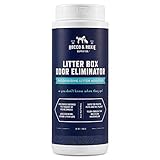
- Top Pick: ANDOLL HOME Automatic Cat Feeder, 4L Cat Food Dispenser with 10s Voice Recorder, Pet Feeder up to 8 Meals per Day, Timed Dog Feeder with Dry Food Sealed Ring
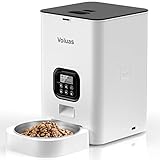
- Best Value: VOLUAS Automatic Cat Feeder, 4L Timed Dry Food Dispenser for Cats & Dogs
- Premium Choice: Automatic Dog Feeder – 8L/34 Cups Large Capacity Automatic Cat Food Dispenser with LCD Screen, Large Food Tray, Battery Operated, Timed Cat Feeder, Up to 50 Portions 6 Meals Per Day, Keeps Fresh
📅 Last updated:
Automatic feeders are usually sold by hopper volume, measured in liters or cups. The most common sizes hold between 3 and 8 liters of dry food, but the amount dispensed per meal depends on kibble shape, density, portion settings, and the feeder’s dispensing wheel. In practical terms, a 4-liter feeder generally holds about 16 to 17 cups of dry food by volume, while an 8-liter model holds about 34 cups.
📋 Table of Contents
The Short Answer
For most cats and small dogs, a 3- or 4-liter automatic feeder is large enough for several days of meals. A 3-liter hopper holds approximately 12.7 cups of dry food; a 4-liter hopper holds approximately 16.9 cups. A large 8-liter feeder holds approximately 33.8 cups and is better suited to large dogs, households with multiple pets, or owners who want less frequent refilling.
As an Amazon Associate we earn from qualifying purchases at no extra cost to you.



Do not treat the cup number as an exact weight. A cup of small, dense kibble may weigh considerably more than a cup of large, airy pieces. As a rough planning estimate, many dry foods weigh around 3.5 to 4.5 ounces per cup, but the nutrition label or a kitchen scale is the best source for your specific food.
For example, a cat eating three-quarters of a cup per day could use a 4-liter feeder for roughly 22 days in theory. In everyday use, however, it is sensible to leave room for the dispensing mechanism, avoid filling above the marked line, and inspect the hopper regularly. A practical refill interval may be shorter than the maximum mathematical capacity.
Standard Sizes
See also: How to Remove Litter Box Odor Buildup (2026): Step-by-Step • How to Fix a Jammed Automatic Feeder (2026): Step-by-Step
The table below compares common feeder capacities, approximate food volume, representative exterior dimensions, and the type of household each size suits. Dimensions are shown as width × depth × height. Actual measurements vary by brand, bowl design, lid shape, and whether the food tray is included.
| Feeder size | Approximate food volume | Representative dimensions | Dimensions in centimeters | Best for |
|---|---|---|---|---|
| Small, 1.5–2L | 6.3–8.5 cups | 8 × 7 × 10 in | 20.3 × 17.8 × 25.4 cm | One cat, short trips, compact spaces |
| Medium, 3L | About 12.7 cups | 9 × 8 × 12 in | 22.9 × 20.3 × 30.5 cm | One or two cats, small dogs |
| Standard, 4L | About 16.9 cups | 10 × 8 × 13 in | 25.4 × 20.3 × 33 cm | Most cats and small-to-medium dogs |
| Large, 6L | About 25.4 cups | 11 × 9 × 14 in | 27.9 × 22.9 × 35.6 cm | Multiple pets or longer refill intervals |
| Extra-large, 8L | About 33.8 cups | 12 × 10 × 15 in | 30.5 × 25.4 × 38.1 cm | Large dogs and multi-pet homes |
A typical 4-liter feeder, such as the many timed cat and small-dog models priced around $30 to $45, is the middle-ground choice. An 8-liter, 34-cup feeder generally costs about $50 to $90 and takes up noticeably more floor space. Smaller 3-liter models commonly cost about $30 to $45 and can be easier to place beside a wall, cabinet, or litter area.
Capacity is only one part of the measurement. Check the tray width, the height of the food outlet, and the clearance needed to remove the lid. Some models also require space behind the unit for a power cord. Basic plug-in units often use a low-power adapter in the approximate 3- to 5-watt range, while battery-operated models may not have a meaningful continuous wattage specification. Confirm the included adapter and battery requirements before planning the location.
How to Measure Your Space
- Measure the available floor width. Use a tape measure to find the distance between walls, furniture, or nearby pet equipment. Add at least 2 inches, or 5 centimeters, of side clearance if the feeder has a removable bowl or side access.
- Measure front-to-back depth. Include the food tray, not just the hopper. A unit listed as 8 inches deep may extend 2 to 4 additional inches once the bowl is attached.
- Check vertical clearance. Measure from the floor to the lowest shelf or cabinet. Leave enough room to lift off the lid. For a feeder that is 13 inches tall, 16 to 18 inches of open height is more comfortable.
- Mark the eating zone. The pet should be able to stand in front of the bowl without pushing the feeder into a wall. Allow roughly 12 to 18 inches of open space in front of a cat feeder and more for a large dog.
- Locate the outlet or battery compartment. Keep the cord away from chewing pets and avoid placing the feeder where a door can catch the cable. If using batteries, leave access for opening the compartment.
- Check the bowl height. A tall feeder may be convenient for some dogs but uncomfortable for small cats. Measure from the floor to the bowl rim and compare it with your pet’s shoulder height and eating posture.
By Room or Use Case
Kitchen or Dining Area
A 3- or 4-liter feeder usually works well in a kitchen because it balances capacity with a manageable footprint. Look for a unit about 9 to 10 inches wide and 8 to 9 inches deep. Place it away from the dishwasher, sink splash, stove heat, and direct sunlight. A sealed lid and removable bowl are especially useful in this high-traffic location.
Small Apartment
Choose the smallest hopper that covers your refill schedule. A compact 1.5- to 3-liter model can fit beside a refrigerator or under a console, but measure the lid clearance first. If floor space is limited, prioritize a narrow footprint over extra capacity. A 4-liter feeder may hold more food, but its additional height and depth can make a small feeding corner feel crowded.
Multi-Cat Household
A 4- or 6-liter hopper provides more practical capacity for two cats, but a single feeder does not necessarily prevent one pet from eating another pet’s portion. Consider two units, separate feeding areas, or a feeder with pet identification if controlled access matters. For shared feeding, check that the tray is wide enough for comfortable access from both sides.
Large-Dog Feeding Station
Large dogs can consume several cups of food daily, so an 8-liter model is often more convenient than a 3- or 4-liter unit. Confirm that the tray can hold a full meal without spilling and that the feeder will not tip when nudged. A broader base, a heavier body, or a non-slip mat matters as much as hopper capacity.
Travel, Workdays, and Short Absences
For a single cat or small dog, a 3- or 4-liter feeder can cover multiple days, depending on the programmed portions. Capacity should not replace human care: pets still need fresh water, monitoring, and attention. Test the feeder with the intended kibble before relying on it during an absence, especially if the machine uses a narrow chute or anti-jam system.
Common Sizing Mistakes
- Confusing liters with pounds. Liters measure volume, while pounds measure weight. The same hopper can hold different weights of different kibble.
- Ignoring the bowl footprint. The listed product dimensions may exclude the tray, which is often the part that projects farthest into the room.
- Buying the largest model automatically. An oversized hopper can be awkward to clean, difficult to lift when full, and unnecessarily bulky for one cat.
- Filling to the top without testing. First run several dispensing cycles. Verify that the food drops consistently and that the programmed portion matches your pet’s diet plan.
- Forgetting kibble size. Very large, irregular, or soft pieces may bridge inside the chute. Check the manufacturer’s recommended food size.
- Leaving no service clearance. A feeder needs room for lid removal, cleaning, battery replacement, and access to the power connection.
FAQ
How many cups fit in a 4-liter automatic feeder?
A 4-liter hopper holds approximately 16.9 U.S. cups by volume. The usable amount may be slightly lower because of the fill line, internal mechanism, and the space needed for the lid. Food weight varies by kibble density.
Is a 3-liter feeder big enough for one cat?
Usually, yes. A 3-liter model holds about 12.7 cups of dry food, which can last one cat many days. Calculate the interval using the cat’s daily food amount, then shorten it if the feeder’s instructions recommend frequent cleaning or refilling.
What size automatic feeder does a large dog need?
An 8-liter, approximately 34-cup model is generally the most practical starting point for a large dog, particularly when the dog eats several cups daily. Check the tray size, dispensing capacity per meal, and stability—not just the hopper volume.
Should I choose a larger feeder for 2026?
Choose based on your pet’s daily intake, the number of animals sharing it, available floor space, and how often you want to refill. A 4-liter feeder remains a versatile choice for many homes, while 8 liters makes more sense when capacity and fewer refills outweigh the larger footprint.
Ready to decide? Our #1 pick for 2026 is the Small, 1.5–2L.
Live price & availability on Amazon.