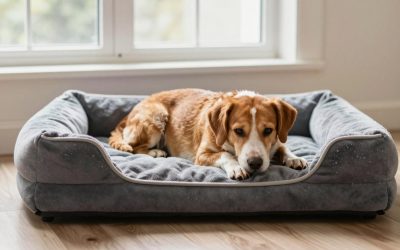
- Top Pick: EHEYCIGA Orthopedic Extra Large Dog Bed, Waterproof Washable XL Pet Bed 44"
- Best Value: Spotted Play Orthopedic Dog Bed with Sides – Dog Sofa Beds for Medium Dogs, Supportive Foam Pet Couch Bed with Washable Removable Cover, Waterproof Lining and Non-Slip Bottom, Grey – M
- Premium Choice: Bedsure Orthopedic Dog Bed Medium Washable Original Design, 28" Grey
📅 Last updated:
Choosing an orthopedic pet bed looks simple until you compare foam densities, removable covers, bolsters, waterproof liners, and a dozen different size charts. Many buyers make the same mistakes: they measure the pet while it is standing, choose a bed based on the breed label instead of actual dimensions, assume “memory foam” always means high quality, or buy a plush bed that cannot be cleaned properly.
The right bed should support your pet’s joints without making it difficult to get in and out. It should also fit the sleeping position your pet actually uses, tolerate regular washing, and remain practical for your budget and home. The advice below focuses on what matters when comparing an orthopedic pet bed in 2026, including realistic specifications and price expectations.
As an Amazon Associate we earn from qualifying purchases at no extra cost to you.


📋 Table of Contents
- Decide These 3 Things First
- Size: Prioritize the Usable Sleep Surface
- Material: Know What “Orthopedic” Actually Means
- Construction: Examine Seams, Edges, and Entry Points
- Comfort and Performance: Match the Bed to the Pet
- Price Tiers: Compare What You Get for the Money
- Warranty, Delivery, and Assembly
- Spec Checklist
- Red Flags
- FAQ
Decide These 3 Things First
- Measure the sleeping space, not just the pet. Note your dog or cat’s length from nose to the base of the tail, then add 6 to 12 inches. Also measure while your pet is stretched out, curled up, and lying on its side. The longest position determines the minimum usable surface.
- Choose the entry style. A flat mattress is easiest for pets with arthritis, weakness, or limited mobility. Bolsters can provide a headrest and a feeling of security, but at least one side should have a low entry of approximately 3 to 6 inches.
Size: Prioritize the Usable Sleep Surface
See also: How to Set Up Timed Pet Feeder (2026): Step-by-Step • Water Fountain Buying Guide for Multiple Pets in 2026: What Actually Matters
Look for the interior dimensions rather than the outside dimensions. A bed advertised as 44 inches long may have only 34 to 38 inches of flat sleeping space after thick bolsters are deducted. For a dog that stretches out to 36 inches from nose to rump, target at least 42 inches of usable length and roughly 30 inches of usable width.
As a general starting point, pets under 15 pounds often need a sleep surface around 18 by 14 inches. Pets from 15 to 35 pounds commonly fit 24 by 18 inches, while a 35- to 60-pound dog may need at least 30 by 22 inches. Dogs over 60 pounds often require 36 by 28 inches or more. Giant breeds may need a 44- by 32-inch or larger surface.
Measure doorways, crates, and the intended floor area before ordering. A bed that fits the pet but blocks a walkway will be moved, and a bed that cannot fit through the washing machine opening will be difficult to maintain. If your pet is between sizes, choose the larger option unless it has trouble climbing into an oversized bed.
Material: Know What “Orthopedic” Actually Means
“Orthopedic” is not a regulated performance grade. It generally means the bed uses a supportive foam layer, often memory foam, solid foam, egg-crate foam, or a combination. Ask how thick the base is and whether the foam is one solid slab or several thinner pieces.
For most adult dogs, a base of 3 to 4 inches is a sensible minimum. Large, heavy, or older dogs usually benefit from 4 to 6 inches, particularly on hard floors. A thin layer of memory foam over ordinary fiberfill may feel soft at first but can compress quickly under a heavier pet.
High-density foam generally provides better resistance to flattening, but sellers do not always publish density. If the specification is available, a base density around 2.5 to 4 pounds per cubic foot is a useful comparison range for a supportive pet mattress. Avoid treating density as a guarantee of durability; cover construction, pet behavior, humidity, and use also matter.
For pets prone to accidents, select a waterproof inner liner or a sealed foam encasement. A water-resistant outer cover slows spills but may not protect the foam from urine. Look for a cover that can be removed without wrestling the entire bed apart and that is machine washable.
Construction: Examine Seams, Edges, and Entry Points
Construction often matters more than decorative fabric. Examine product photos for reinforced seams, tightly stitched corners, a zipper that is protected from chewing, and a nonslip base. A cover with a zipper on the underside is less exposed than one placed on the sleeping surface.
Bolstered beds typically use a lower mattress with raised sides filled with foam, fiber, or a mixture. Foam-filled sides tend to retain their shape better than loose polyester stuffing, although they can still flatten. If your pet leans heavily against a bolster, look for side walls at least 4 to 6 inches high and a bottom mattress that remains level rather than sloping toward the edge.
Check the entry height carefully. A low opening of 3 to 5 inches is easier for a small, elderly, or arthritic pet. A 7- to 10-inch wall may be comfortable for a healthy dog that likes to nest but can become a barrier for a pet with hip, knee, or back problems.
Foldable or vacuum-packed beds are convenient to ship, but allow them to expand according to the manufacturer’s instructions. Do not judge the finished shape immediately after opening. If the bed remains lumpy, uneven, or undersized after the stated expansion period, use the return policy rather than attempting to repair the foam yourself.
Comfort and Performance: Match the Bed to the Pet
Comfort is personal. A pet that sleeps curled up may prefer a smaller, cushioned bed with a bolster. A pet that sprawls, overheats, or changes positions frequently may do better on a flat mattress with breathable fabric and more floor area.
For joint support, the key is even weight distribution and a surface that does not allow the body to sink directly onto the floor. Press the mattress with your hand and then compare how quickly it regains its shape. This is only a basic check, not a laboratory test, but a base that bottoms out easily is unlikely to suit a large dog.
Consider climate and coat type. Plush sherpa or fleece can be inviting in a cold room, while canvas, microfiber, or quilted polyester may be more comfortable for warm-weather use. A cooling-gel panel can be useful for some pets, but it should not replace a supportive base and should be inspected for punctures.
A nonslip bottom is especially valuable on hardwood, tile, and laminate. Rubber dots or a textured fabric can reduce sliding, but they do not make a bed completely stable. Place the bed away from stairs and use a rug underneath if your pet has difficulty standing.
Price Tiers: Compare What You Get for the Money
At this level, expect basic foam or layered filling, a removable washable cover, and sometimes a waterproof liner. The tradeoff may be thinner foam, limited sizing, or fewer replacement-cover options.
They are more likely to offer a 3- to 5-inch supportive base, better-shaped bolsters, sturdier zippers, and a separate waterproof liner. Brands such as Bedsure, Spotted Play, and EHEYCIGA frequently appear in the value-to-midrange category, depending on size and sale pricing.
You are paying for more consistent foam specifications, stronger fabrics, replaceable covers, improved fit and finish, and sometimes longer warranties. A higher price is worthwhile when replacement parts are available or when your pet needs a very large, genuinely supportive sleeping surface. It is not worthwhile solely because the label says “orthopedic.”
Warranty, Delivery, and Assembly
Before ordering, read the warranty terms for foam compression, torn covers, stains, and pet damage. A warranty of 90 days to 1 year is common for lower-priced beds; premium products may offer 2 to 10 years on the foam, with separate or shorter cover coverage. Many warranties exclude normal flattening, chewing, washing errors, and damage caused by claws.
Check whether the bed ships compressed. A large bed may arrive in a box that weighs 10 to 25 pounds, while an extra-large foam bed can weigh 20 to 40 pounds. Allow 24 to 72 hours for expansion when the instructions call for it. Do not wash the cover until you have confirmed that the foam reaches its intended dimensions and that you want to keep the product.
Assembly should normally involve unzipping the cover, inserting the foam, and closing the zipper. If the cover is difficult to fit, take photos before forcing it; overstretching can damage seams. Confirm the return window, return-shipping cost, and whether the seller accepts a bed that has been expanded or tested by a pet.
Spec Checklist
| Spec | Budget | Mid | Premium |
|---|---|---|---|
| Typical price | Check on Amazon | Check on Amazon | Varies |
| Base thickness | 2–4 inches | 3–5 inches | 4–6 inches |
| Usable surface | 18 × 14 to 36 × 28 inches | 24 × 18 to 44 × 32 inches | Custom or oversized options |
| Cover | Removable, machine washable | Washable with protected zipper | Durable fabric plus replacement covers |
| Water protection | Water-resistant cover or liner | Separate waterproof inner liner | Sealed encasement or advanced waterproof system |
| Entry height | 3–8 inches | 3–6 inches on one side | Low-entry or configurable design |
| Warranty | 90 days–1 year | 1–3 years | 2–10 years, often foam-specific |
Red Flags
- No interior dimensions: Outside measurements do not tell you how much room your pet gets.
- “Memory foam” without thickness or composition: The phrase alone does not establish support or durability.
- Permanent covers: A bed that cannot be washed is a poor choice for shedding pets, puppies, seniors, or pets with accidents.
- Only a water-resistant exterior: Confirm whether the foam itself has a waterproof barrier.
- Very tall walls and no low entry: This can create a tripping or climbing problem for pets with limited mobility.
- Unclear return terms: Pay attention to compressed-product restrictions and return-shipping charges.
- Unusually low pricing for a giant bed: Check whether the listed dimensions describe the outside, whether filling is included, and whether the product is sold in multiple size variants.
FAQ
What thickness is best for an orthopedic pet bed?
Choose at least 3 to 4 inches for most adult dogs and 4 to 6 inches for large, heavy, or older dogs. The foam should support the pet without allowing its hips or shoulders to bottom out on the floor.
Is memory foam better than an egg-crate foam bed?
Not automatically. Memory foam can contour to the body, while egg-crate foam can provide cushioning and airflow at a lower price. Compare the full base thickness, foam density when listed, waterproof protection, and cover quality rather than relying on the foam name alone.
Should an older dog use a bolster bed?
It can, provided the bed has a low entry. A bolster offers a headrest and may help a dog feel secure, but a raised wall of 7 inches or more can be difficult for a pet with arthritis. A flat mattress is the safer default when mobility is limited.
How often should an orthopedic pet bed be replaced?
Inspect it monthly for permanent dips, exposed foam, broken zippers, slipping fabric, and odors that washing cannot remove. A bed should be replaced when the base no longer springs back, your pet touches the floor through it, or the cover can no longer be cleaned adequately. The calendar matters less than the bed’s condition.