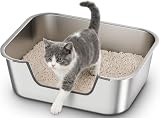
- Top Pick: Qiuma Stainless Steel Cat Litter Box with Low Entry, Metal Kitty Litter Box for Senior or Injured Cats, Odor-Free, Non-Stick, Easy to Clean, 17.5"x13.6"x5.9", Litter Pan for Medium and Small Cats
- Best Value: Stainless Steel Cat Litter Box, 15.6" L x 11.6" W x 6" H
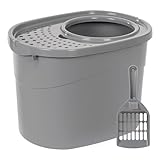
- Premium Choice: Amazon Basics Large Cat Litter Box with High Sides, Top Entry, Odor Control, Includes Scoop, 20.5 x 14.75 x 14.38 inches, Grey
📅 Last updated:
Choosing a litter box by height alone is one of the most common buying mistakes. A pan that looks “easy entry” in a product photo may still have a tall threshold, while a box labeled “high-sided” may be comfortable for an agile cat but difficult for a senior, injured, or overweight one. Shoppers also confuse overall box height with the height your cat must step over, overlook usable floor space, and assume stainless steel automatically means better performance.
The right approach is to match the entry height to your cat’s mobility, then confirm that the interior is large enough for turning and digging. This guide explains how to choose litter box entry height in 2026, with practical measurements for small apartments, multi-cat homes, kittens, and older cats.
As an Amazon Associate we earn from qualifying purchases at no extra cost to you.


📋 Table of Contents
- Decide These 3 Things First
- Size: Entry Height Is Only Half the Measurement
- Material: Choose Between Easy Cleaning and Lower Weight
- Construction: Inspect the Lip, Walls, and Stability
- Comfort and Performance: Match the Design to Your Cat
- Price Tiers: Know What Extra Money Buys
- Warranty: Look for Practical Coverage
- Delivery and Assembly: Check the Real Setup
- Spec Checklist
- Red Flags
- FAQ
Decide These 3 Things First
- Measure your cat’s mobility. Can your cat comfortably lift a paw 3 to 4 inches, or does it need a near-floor opening? Cats with arthritis, injuries, short legs, or balance problems typically do best with an entry around 2 to 3 inches high.
- Measure the available floor area. A box should usually be at least 1.5 times your cat’s body length, measured from nose to the base of the tail. A 20-inch cat therefore needs roughly 30 inches of usable length, although a 23- to 24-inch box can work if the cat is compact and the interior is unobstructed.
- Decide how much scatter and odor control you need. Low-entry pans are accessible but can allow more litter to escape. High-sided or top-entry designs contain scatter better, but they demand more climbing ability and may discourage nervous, senior, or larger cats.
Size: Entry Height Is Only Half the Measurement
See also: How to Remove Litter Box Odor Buildup (2026): Step-by-Step • How to Fix a Jammed Automatic Feeder (2026): Step-by-Step
Product listings often advertise dimensions such as 17.5 by 13.6 by 5.9 inches. That final number is the box’s maximum height, not necessarily the front entry height. Check the listing photos and specifications for the lowest lip, ramp height, or opening size.
For kittens, small cats, and cats with limited mobility, look for a front entry of approximately 2 to 3 inches. A 4-inch threshold is a reasonable middle ground for many healthy adult cats. High-sided pans commonly rise 8 to 12 inches, while top-entry models may reach 14 inches or more and require a full jump or climb.
Interior floor space matters just as much. A small pan around 15.6 by 11.6 inches may suit a kitten or very small cat, but it can be cramped for an adult. A 17.5 by 13.6-inch pan is more practical for a small or medium cat, while a jumbo box around 23.6 by 15.7 inches gives a larger cat more room to turn.
Leave at least 2 to 3 inches of clearance around the box so your cat can approach without squeezing between walls or furniture. If the box sits inside an enclosure, measure the doorway separately; a large pan is useless if the cabinet opening is too narrow.
Material: Choose Between Easy Cleaning and Lower Weight
Plastic is inexpensive, lightweight, and widely available, but it can absorb odors and develop scratches over time. Those scratches make it harder to remove residue completely. A plastic box is a sensible budget choice when you expect to replace it periodically, provided the surface is smooth and the plastic is thick enough not to flex.
Stainless steel is nonporous, resists odor absorption, and is less likely to retain clumps in scratches. It is especially useful for owners who want a box that can be washed thoroughly. Stainless pans in this category often cost about $20 to $45, depending on size and wall design. They can be heavier than plastic, so check the empty weight if you need to lift the box for cleaning.
Look for a rolled or rounded rim rather than a sharp cut edge. A smooth rim is safer for cats stepping in and out and more comfortable to handle. Avoid painted or coated interiors that are already chipped in the package; exposed metal or peeling finishes can make cleaning more difficult.
Construction: Inspect the Lip, Walls, and Stability
A useful low-entry design has a clearly lowered front wall, not merely a shallow box with a tall rear section. The transition should be wide enough for your cat to enter straight on. A narrow notch can force an older cat to twist or lift its legs awkwardly.
For scatter control, side walls around 6 to 8 inches high are a practical compromise. A pan with a 5.9-inch overall height may provide access without making a healthy cat climb, while a high-sided box can reduce tracking around the room. Some designs combine a low front opening with taller sides and back; this is often more useful than a uniformly low pan.
Stability is equally important. A box that slides when a cat jumps out may create fear and future avoidance. Look for a broad base, nonslip feet, or enough weight to remain planted. Place it on a washable litter mat and test whether the box rocks when you press each corner. For a multi-cat home, avoid lightweight pans that can shift during repeated use.
Comfort and Performance: Match the Design to Your Cat
Entry height should never be considered separately from your cat’s behavior. A kitten may manage a taller wall but still prefer a shallow open pan during training. A senior cat may need an entry no higher than 2 to 3 inches, with a stable approach and no lid. Cats recovering from surgery may need an even lower threshold temporarily, but follow your veterinarian’s instructions if movement is restricted.
Open boxes are generally easier to enter and allow you to monitor urine and stool. They also make scooping simpler. Covered boxes can give privacy and contain some odor, but the opening may be too small, and the enclosed interior can discourage cats that dislike confined spaces.
Top-entry boxes are most appropriate for confident, agile cats that already accept that style. Models around 14 inches high may work well for reducing litter scatter, but they are poor choices for cats with arthritis, weakness, or a history of avoiding enclosed boxes. Never trade accessibility for odor control without considering the cat’s age and health.
For odor management, prioritize daily scooping, adequate ventilation, and enough litter depth—usually about 2 to 3 inches for a standard clumping litter. No box shape can compensate for a box that is too small or cleaned infrequently.
Price Tiers: Know What Extra Money Buys
Budget, about $15 to $25: Expect a basic plastic pan or compact stainless-steel model, usually between 15 and 18 inches long. These can be excellent for kittens and small cats, but inspect the entry height and usable floor area carefully. A stainless box priced around $22 to $26 may offer better odor resistance than a similarly priced plastic pan, though it may have limited wall height.
Mid-range, about $26 to $45: This tier commonly includes larger stainless-steel pans, low-entry jumbo boxes, rounded rims, stronger walls, and better scatter control. A box around 23.6 by 15.7 inches and 5.9 inches high is more suitable for a large cat than a compact pan, assuming the entry itself is low enough.
Premium, about $46 to $90 or more: Premium pricing may add modular covers, ramps, furniture-style cabinets, specialized liners, or heavier construction. These features are worthwhile only if they solve a specific problem. A decorative enclosure that reduces the doorway to 6 inches can be less useful than a simple open pan for a mobility-limited cat.
Do not pay extra for a scoop, odor-control claim, or decorative finish if the box fails the basic tests: accessible entry, adequate interior length, stable construction, and easy cleaning.
Warranty: Look for Practical Coverage
Simple litter pans often have limited warranty coverage, but a seller should still provide a clear return window, commonly 30 days. For a more expensive enclosure, automatic system, or powered odor-control unit, look for at least a one-year warranty and a stated process for replacing damaged parts.
Read exclusions before buying. A warranty may cover manufacturing defects but not rust caused by harsh cleaners, damage from scratching, or normal coating wear. Keep the packaging until you confirm that the pan sits flat and the entry dimensions match the listing. Photograph dents, bent rims, or cracked plastic immediately after delivery.
Delivery and Assembly: Check the Real Setup
Basic pans usually arrive ready to use, but large or covered models may require 10 to 30 minutes of assembly. Confirm that the assembled dimensions—not only the shipping-box dimensions—fit your intended location. For a top-entry or furniture-style box, measure the doorway, hallway, and turning space.
Check the delivered weight when ordering a jumbo stainless model or enclosed cabinet. A box that weighs 8 to 15 pounds before litter is difficult to move once filled. If you clean the box in a bathtub or sink, verify that it can be carried there safely and that the largest dimension fits through the bathroom door.
Spec Checklist
| Spec | Budget | Mid | Premium |
|---|---|---|---|
| Typical price | $15–$25 | $26–$45 | $46–$90+ |
| Entry height | 2–4 in. | 2–4 in. low front | 2–4 in. or ramped access |
| Overall height | 5–8 in. | 6–10 in. | 8–15+ in. |
| Usable length | 15–18 in. | 18–24 in. | 24–30+ in. |
| Best material | Thick plastic or basic steel | Stainless steel or reinforced plastic | Heavy stainless steel or furniture-grade construction |
| Assembly | None | Usually none; occasional rim attachment | 10–30 minutes is common |
Red Flags
- The listing gives only overall height and never states the front entry height.
- The pan is shorter than your cat’s body length or narrower than about 12 inches for an adult cat.
- The “low entry” is a small side cutout that forces a senior cat to twist.
- The base flexes, rocks, or slides when pressed.
- Sharp metal edges, rough welds, peeling coatings, or exposed screws are visible.
- A top-entry box is recommended for a cat with arthritis, weakness, or recent surgery.
- Odor-control promises replace basic information about ventilation, cleaning, or litter depth.
- Replacement parts, returns, or warranty terms are impossible to find.
FAQ
What is the best litter box entry height for a senior cat?
Start with an entry of about 2 to 3 inches. Choose a wide, open approach and a stable base. If your cat has significant pain or weakness, a veterinarian can help determine whether a temporary lower setup or ramp is appropriate.
Is a 4-inch litter box entry too high?
Not necessarily. Many healthy adult cats can use a 4-inch threshold comfortably. It may be too high for a kitten, short-legged cat, or cat with arthritis, especially if the lip is narrow or the box slides.
Are high-sided litter boxes better?
They are better for containing litter and urine spray, but not automatically better for every cat. A high-sided design works best when it includes a genuinely low front entry and enough interior space. Otherwise, it can create an accessibility problem.
How large should a litter box be?
Aim for a usable interior about 1.5 times your cat’s body length, with enough width for turning. In practice, small cats may manage 17 by 13 inches, while many large cats need approximately 23 by 15 inches or more. Measure the inside floor, not just the outside dimensions.
Ready to decide? Our #1 pick for 2026 is the Typical price.
Live price & availability on Amazon.