📅 Last updated:
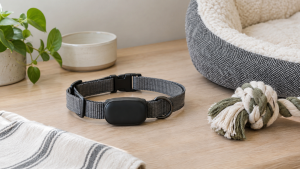
Remote training collars that rely exclusively on vibration have become a preferred communication tool for handlers who want distance control without static stimulation. Whether you are conditioning a deaf dog, reinforcing off-leash recall, or establishing an attention cue for a distracted pet, a vibration-only collar delivers a distinct tactile signal directly to the animal’s neck. However, choosing the right collar requires looking past superficial marketing claims and understanding how motor mechanics, receiver weight, and transmitter ergonomics perform in real-world environments.
Many dog owners evaluate vibration collars using criteria designed for traditional e-collars, such as hunting-grade range numbers or dozens of micro-intensity levels. In 2026, the market offers a wide variety of haptic collars, but practical success depends on signal consistency and tactile clarity rather than raw power. Focusing on functional hardware criteria—such as motor acceleration speed, receiver housing stability, strap material, and low-latency activation—ensures you purchase a device that enhances training communication while keeping your dog comfortable.
As an Amazon Associate we earn from qualifying purchases at no extra cost to you.

📋 Table of Contents
Motor Quality and Vibration Pattern Customization
The motor inside the collar receiver is the core component of any vibration system. Cheap vibration collars rely on basic eccentric rotating mass motors similar to those found in low-cost mobile phones. These motors take a fraction of a second to spin up to full intensity, creating a delayed, sluggish signal that can confuse a dog during time-sensitive behavioral marking. High-performance collars utilize rapid-response linear or micro-rotary motors that deliver instant haptic feedback the moment you push the transmitter button.
Intensity level counts can be misleading. A device offering 100 levels of vibration sounds impressive, but dogs rarely distinguish between level 42 and level 43 of identical mechanical buzzing. What matters far more is pattern differentiation and distinct amplitude options. Look for collars that allow you to switch between continuous vibration, rapid pulsed bursts, and ascending frequencies. Having distinct sensation patterns allows you to assign specific meanings to different signals—such as a continuous buzz for an emergency recall and a short double-pulse for a directional change—which provides far greater training utility than incremental power adjustments.
Receiver Sizing, Weight, and Contact Ergonomics
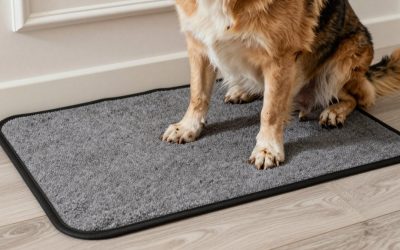
See also: 7 Best Refillable Frozen Dog Treat Toys for Long-Lasting Licks • Best Dog Door Mat for Muddy Paws: Sizing, Materials and Picks by Entryway
Because vibration relies entirely on physical contact against the skin or fur, proper receiver fit is critical. However, unlike static shock collars, vibration collars do not require sharp metal contact points to pierce through the coat. Instead, look for flat or gently contoured conductive plates that distribute mechanical force across a wider surface area without causing skin irritation or pressure necrosis.
Pay close attention to total receiver weight relative to your dog’s size. For toy and small breeds under 15 pounds, a heavy receiver will pull the collar strap downward, causing the unit to hang loosely under the throat where vibration perception is diminished. Aim for receiver units that weigh under 2 ounces for small dogs, while larger breeds can comfortably carry 3 to 4-ounce receivers. Ensure the collar strap itself is made from non-porous biothane or coated nylon, which prevents receiver shifting, resists moisture buildup, and allows for precise micro-adjustments.
Real-World Signal Range vs. Advertised Specs
Manufacturers typically test remote collar range under ideal conditions—open pasture with direct line-of-sight and zero electromagnetic interference. In suburban neighborhoods, heavily wooded trails, or park settings, signal range drops dramatically. A collar advertised with a 300-yard range may fail at just 75 yards when obstructed by trees, fences, or residential structures.
When selecting a collar, calculate your actual space requirements and multiply by three. If you plan to work your dog at a distance of 100 yards in field settings, look for a system rated for at least 300 to 500 yards. Additionally, inspect the physical design of the remote transmitter. The transmitter should feature raised, textured buttons that can be identified by touch alone, allowing you to keep your eyes on your dog rather than looking down at a screen to locate the correct control.
Waterproof Ratings and Build Durability
Dogs frequently encounter mud, wet grass, streams, and rain during outdoor training sessions. A water-resistant rating is insufficient for a training collar; you need a device that is genuinely waterproof. Examine the Ingress Protection (IP) rating on the receiver housing before purchasing.
An IPX7 rating guarantees protection against short-term immersion in shallow water, making it suitable for wet grass and rain. An IPX8 rating means the receiver is fully submersible and can handle swimming and deeper dives. Ensure the charging port features a robust rubber plug or utilizes magnetic pin charging, as open or poorly sealed ports are the primary point of hardware failure in high-humidity conditions.
Critical Buying Mistakes to Avoid
One common mistake is buying a combination collar that includes static shock, tone, and vibration with the intent of “just disabling the shock mode.” Combination remotes often feature crowded button layouts where a slip of the thumb can accidentally send a static correction to a sensitive dog. If your goal is strictly non-static communication, choose a dedicated vibration-and-tone device with a simplified interface.
Another frequent error is selecting a receiver with a fixed, non-replaceable collar strap mechanism. If the strap wears out or breaks, an integrated strap design renders the entire electronic unit useless. Always opt for receivers with standard pass-through strap channels, allowing you to replace or upgrade the collar strap independently of the electronic module.
When to Spend More on Premium Models
Spending more on a mid-range or premium system is justified if you operate in challenging environments or require absolute reliability.
Higher-tier units provide key operational advantages, including zero-latency signal transmission, dual-dog expansion options on a single remote, customizable safety key locks to prevent pocket activation, and advanced lithium-polymer batteries that maintain consistent motor output right up until recharge is required. For working dogs, deaf dogs in off-leash settings, or daily heavy-use scenarios, investing in a professional-grade unit pays off in longevity and training safety.
Related Guides
To see how top-performing models compare in detailed research, explore our detailed evaluation of the best remote training collars with vibration only to find the ideal match for your dog’s size and training needs.
FAQ
Can a vibration collar work effectively on large or stubborn dogs?
Yes, vibration collars are highly effective for large dogs when used as a clear cue or focus-interruptor rather than a punishment. Success depends on proper collar fitting against the neck and pairing the vibration signal with positive reinforcement during initial training.
Is a vibration-only collar suitable for training a deaf dog?
Vibration collars are considered one of the best communication tools available for deaf dogs because the tactile signal acts as a substitute for verbal commands. The vibration functions like a physical tap on the shoulder, teaching the dog to look at the handler for hand signals across distances.
How tightly should a vibration receiver fit on a dog’s neck?
The collar strap should be snug enough that the receiver module rests flat against the skin without sliding out of place during movement. You should be able to fit one to two fingers comfortably between the collar strap and your dog’s neck.
Will thick or double coats block the vibration signal?
Dense fur can dampen mechanical vibration if the collar is too loose or if the receiver design relies on small, flush contact points. For double-coated breeds, select a collar with contoured, raised contact plates and a snug biothane strap to ensure clear signal transfer through the fur.