📅 Last updated:
📋 Table of Contents
Quick answer: Our top pick in 2026 is the Borrow a carrier from a friend, shelter, or local pet group — our #1 rated choice. See the full ranked comparison, alternatives and buying advice below.
The Short Answer
Yes—a soft pet carrier is worth it if your cat or small dog fits comfortably inside and you mainly need it for vet visits, errands, or short, supervised trips. The condition is important: a soft carrier is a lightweight travel bag, not automatically a crash-tested car safety device or a guaranteed airline-approved kennel.
For many owners, the value is straightforward. Soft carriers usually cost about $20 to $70, collapse for storage, and are easier to carry than hard plastic crates. The budget models commonly sold online, including a 17-by-11-by-11-inch carrier priced around $19.98 and the 17.5-by-11-by-11-inch Vceoa carrier priced around $19.99, can be practical for small cats and dogs. However, the lowest-priced options may have thinner fabric, less rigid support, and fewer long-term durability features.
As an Amazon Associate we earn from qualifying purchases at no extra cost to you.

What You Actually Get
See also: How to Set Up Timed Pet Feeder (2026): Step-by-Step • Water Fountain Buying Guide for Multiple Pets in 2026: What Actually Matters
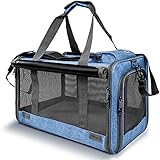
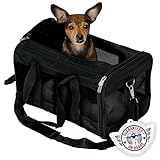
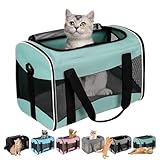
A soft pet carrier typically combines a fabric shell, mesh ventilation panels, a zippered door, and a removable bottom pad. Many also include a shoulder strap, carrying handles, interior safety tether, and exterior storage pockets. The carrier folds down when empty, making it useful for apartment storage or keeping in a closet, car, or office.
Dimensions matter more than the product label. A carrier measuring approximately 17 by 11 by 11 inches has a maximum outside volume of about 2,057 cubic inches, but your pet gets less usable room because of the frame, padding, and sloped sides. That size is generally aimed at cats and very small dogs, often with a listed weight limit around 16 pounds. Weight limits are not the only consideration: a long, heavy, or broad-bodied pet may technically meet the weight requirement but still be cramped.
Your pet should be able to stand, turn around, and lie down without being forced into a curled position. For a nervous cat, extra length and a wider opening can matter more than saving a few dollars. Measure your pet from nose to the base of the tail and from the floor to the top of the head or ears while standing. Compare those measurements with the carrier’s interior dimensions, not just its advertised exterior size.
Soft carriers are especially convenient for routine transportation. They are lighter than many hard crates, easier to lift onto a waiting-room chair, and less awkward in narrow spaces. The fabric sides may also feel less intimidating to a cat that dislikes the visual openness of a wire crate. On the other hand, fabric can absorb accidents, retain odors, and show claw damage more quickly than molded plastic.
Pros
- Lightweight and portable: Many soft carriers weigh roughly 2 to 4 pounds, so the carrier itself does not add much to your pet’s load.
- Easy to store: Collapsible designs fold flat or nearly flat when not in use.
- Usually affordable: Basic small carriers often cost about $20 to $35, while sturdier models commonly range from $40 to $80.
- Comfortable for short trips: A padded base and fabric walls can make a brief ride or vet visit feel less stark than a hard kennel.
- Convenient access: Top and front doors can make it easier to place a cat inside or lift out a small dog.
- Useful pockets: Exterior compartments can hold vaccination records, treats, waste bags, medication, or a collapsible water bowl.
- Flexible in tight spaces: The soft sides can fit more easily under some airplane seats, between car seats, or beside luggage.
- Often more discreet: Mesh windows provide ventilation while reducing some visual stimulation for an anxious pet.
Cons
- Limited protection in a collision: Unless a carrier is specifically designed and independently tested for vehicle safety, do not treat it as a crash-protection system. Secure it according to the manufacturer’s instructions and consider a separately tested pet restraint for car travel.
- Less resistant to escape attempts: Determined cats and dogs may claw through mesh, push at zippers, or bend lightweight frames.
- Cleaning can be inconvenient: A removable pad is helpful, but the fabric shell may not be machine washable. Check whether the liner is waterproof before buying.
- Can sag under heavier pets: A soft base that bows in the middle is uncomfortable and may make the carrier difficult to carry.
- Ventilation depends on placement: Covering mesh panels with blankets or pressing the carrier against luggage can reduce airflow.
- Not ideal for long confinement: A compact carrier is for transportation, not a substitute for a roomy crate, playpen, or overnight space.
- Airline approval is not universal: “Airline approved” claims do not guarantee acceptance. Airlines set their own limits for dimensions, ventilation, structure, and total pet-plus-carrier weight.
Who Should Buy It
Buy a soft carrier if you have a cat or small dog that weighs comfortably below the listed limit and you need a carrier for occasional or regular short-distance transportation. It is a particularly good fit for apartment dwellers, public-transit users, people with limited storage, and owners who carry their pets from a parking lot into a clinic.
A budget model around $20 can make sense for a calm indoor cat used mainly for annual checkups. The 17-by-11-by-11-inch options mentioned above are also reasonable for a small puppy or toy-size dog, provided the dog’s actual body measurements allow it to stand and turn. For frequent use, choose a reinforced frame, strong stitching, locking zippers, a firm base, and a washable or waterproof liner rather than focusing only on the lowest price.
A soft carrier can also be worthwhile as a backup. Even if you normally use a hard crate, a collapsible carrier gives you another option for temporary transport, evacuation planning, or a pet sitter who needs something easy to handle.
Who Should Skip It
Skip a basic soft carrier if your pet is large, unusually strong, highly destructive, or prone to panic and escape. A pet that exceeds the stated weight limit—or nearly reaches it—will usually be more comfortable in a larger, rigid carrier.
You should also skip an inexpensive soft bag if your main goal is car-crash protection, extended travel, or cargo-hold air travel. Look for a carrier or crate specifically rated for that use, and verify the requirements with the transportation provider before the trip. For wet, muddy, or frequent outdoor use, hard plastic is generally easier to disinfect.
Cheaper Alternatives
| Option | Cost | Trade-off |
|---|---|---|
| Borrow a carrier from a friend, shelter, or local pet group | $0-$10 | Lowest cost, but availability, cleanliness, size, and condition may be uncertain. |
| Used hard plastic carrier | $10-$30 | Often easier to clean and more rigid than a budget soft bag; inspect latches, cracks, and odors carefully. |
| Basic cardboard box for an emergency vet trip | $0-$5 | Useful only as a temporary emergency solution; poor ventilation, escape resistance, and moisture protection. |
| Plastic storage tote with properly secured ventilation openings | $8-$20 | Inexpensive and washable, but usually less comfortable and not designed or tested as a pet carrier. |
| Entry-level soft carrier | $20-$35 | More portable and comfortable than improvised options, but fabric, zippers, and frames may be less durable. |
FAQ
Are soft pet carriers safe for car rides?
They can be suitable for routine car transportation when properly secured, but do not assume a soft carrier will protect a pet in a crash. Keep the carrier away from airbags, prevent it from sliding, and follow the carrier maker’s instructions. For frequent driving, look for a pet travel system with clearly stated vehicle-safety testing rather than relying on the words “soft-sided” or “airline approved.”
How long can a pet stay in a soft carrier?
For most healthy pets, a soft carrier is best for a trip, appointment, or short wait—not all-day confinement. A longer journey requires enough room to change position, regular water and bathroom breaks, and temperature control. Never leave a carriered pet unattended in a parked car, even in mild weather.
Is a soft carrier better than a hard carrier for cats?
Neither is universally better. A soft carrier is lighter, quieter, and easier to store, while a hard carrier is generally easier to sanitize and offers more structural protection. Choose based on your cat’s temperament, size, escape habits, cleaning needs, and how you travel. For a cat that claws aggressively or soils the carrier often, hard plastic may be the better investment.
What size soft carrier should I buy?
Measure your pet before shopping. The pet should be able to stand, turn around, and lie down naturally, with enough headroom that the ears are not pressed against the top. Treat a listed capacity such as “up to 16 pounds” as a starting point, not a guarantee of fit. Compare interior measurements, allow for bedding, and size up when your pet is between two options.
Overall, a soft pet carrier is worth it for the right job: affordable, occasional, close-range transportation for a pet that fits well and does not try to escape. In 2026, a $20 carrier can be a sensible purchase, but durability, dimensions, ventilation, and the type of travel matter more than the price tag alone.
Ready to decide? Our #1 pick for 2026 is the Borrow a carrier from a friend, shelter, or local pet group.
Live price & availability on Amazon.