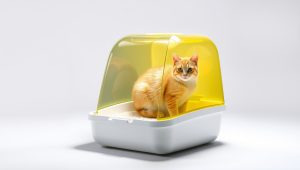
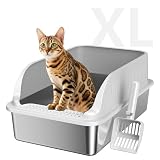
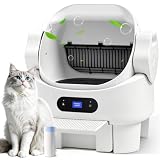
- Top Pick: OneBug Self Cleaning Open Top Automatic Multiple Cat Litter Box, White
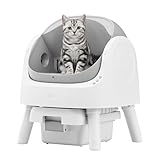
- Best Value: Open-Top Automatic Cat Litter Box, Self Cleaning Litter Box for Multiple Cats, 10 Safety Sensors, Large Capacity with APP Control, Noise&Odor Control Robot, LED Display, Hands-Free
- Premium Choice: Cumrige Automatic Litter Box,Safety Sensor,App Control,95L Large Capacity
📅 Last updated:
Buying one litter box for several cats is rarely as simple as choosing the largest model on the shelf. Common mistakes include assuming one automatic box can serve every cat, measuring only the outside of the unit, overlooking the entrance height, and focusing on app features before checking cleaning access. A box that looks spacious online may have a small waste drawer, a narrow opening, or a rotating mechanism that some cats refuse to use.
This litter box buying guide for multiple cats focuses on the details that affect daily cleanup, cat comfort, safety, and long-term value. Whether you choose a traditional open pan or an automatic model, use your cats’ habits—not just a product’s marketing claims—as the starting point.
As an Amazon Associate we earn from qualifying purchases at no extra cost to you.


📋 Table of Contents
- Decide These 3 Things First
- Size: Measure the Usable Interior, Not the Marketing Footprint
- Material: Choose Surfaces That Resist Odor and Scratching
- Construction: Stability and Access Beat Extra Features
- Comfort and Performance: Match the Box to Your Cats
- Price Tiers: Budget for the Box and Its Consumables
- Warranty: Look for Parts Coverage, Not Just a Headline
- Delivery and Assembly: Plan for the Real Installation
- Spec Checklist
- Red Flags
- FAQ
Decide These 3 Things First
- How many boxes can you fit? The familiar guideline is one box per cat, plus one extra. For three cats, that means four boxes, although a large household may need to compromise based on space, budget, and how well the cats share.
- Do your cats prefer open or enclosed spaces? Open-top boxes usually offer better visibility and ventilation. Enclosed or hooded models can help contain scatter and odor but may feel cramped or trap smells.
- How much maintenance do you actually want? Automatic boxes reduce scooping, but they still require emptying, litter replacement, sensor checks, and routine washing. A basic pan is less sophisticated but easier to inspect and repair.
Before shopping, measure the intended location, doorways, and the route into the room. Plan for at least 3 inches of clearance around an automatic box where possible, plus enough room to remove a waste drawer or lift a cover.
Size: Measure the Usable Interior, Not the Marketing Footprint
See also: Most Trusted Cat Litter Brands in 2026 and What Each Does Best • How to Introduce a Carrier to Cats (2026): Step-by-Step
For a multi-cat home, interior floor area matters more than the overall height. Aim for an interior length of at least 1.5 times the body length of your largest cat, measured from the nose to the base of the tail. For many adult cats, that means roughly 24 to 30 inches long and 18 to 22 inches wide. Large cats may need 30 inches or more in length.
Automatic units often list their exterior dimensions, but the drum, tray, or grate can reduce usable space. Ask whether the advertised dimensions include the hood, rear motor housing, or waste compartment. A box that measures 27 by 22 inches outside may provide considerably less room inside.
Entry height is another practical measurement. A 5- to 7-inch entry works for most agile adult cats, while senior, arthritic, or overweight cats may do better with an entry around 3 to 5 inches. For kittens, avoid deep openings and moving mechanisms unless the manufacturer specifically approves the unit for their age and weight.
Material: Choose Surfaces That Resist Odor and Scratching
Look for a smooth, nonporous plastic interior, such as molded polypropylene or ABS-style plastic. These surfaces are easier to wipe down than unfinished wood, fabric, or textured panels. A removable liner can be useful, but it should fit tightly enough that litter and urine cannot collect beneath it.
For a traditional pan, a wall height of 8 to 12 inches helps contain litter while still allowing easy entry. A high-back design is helpful for cats that spray upward, but check that the front entry remains low. Avoid surfaces with deep seams, exposed screws, or narrow channels where damp litter can harden.
Do not use harsh solvents or heavily scented cleaners on plastic. Mild soap and water, followed by thorough drying, are generally more appropriate. Automatic models may have removable components that cannot be submerged, so read the care instructions before buying.
Construction: Stability and Access Beat Extra Features
A box used by multiple cats should stay put when a cat enters, turns, or exits. A practical target is a unit weighing at least 15 to 25 pounds when empty, or one with a broad base and rubber feet. Lightweight pans can still work, but they may slide across hard flooring unless placed on a litter mat.
Check how the waste drawer, rake, or rotating chamber opens. You should be able to remove the drawer without moving the entire machine. A drawer that holds approximately 8 to 15 liters can provide useful capacity, but actual emptying intervals depend on cat count, litter type, and waste settings.
For automatic units, look for protective stops, weight detection, jam protection, and a delay after a cat leaves. “Multiple sensors” is not enough information by itself; the listing should explain what the sensors do. Keep cords away from water and use a grounded outlet. Never place an automatic box where a loose cord can become a chewing hazard.
Comfort and Performance: Match the Box to Your Cats
Open-top boxes are often the safest starting point for a multi-cat household because cats can see their surroundings and leave quickly. They also make it easier to monitor urine and stool. Covered or automatic designs may offer better odor containment, but the enclosed area should not be so small that a cat cannot turn around comfortably.
For automatic models, a motor rated around 5 to 60 watts is common, depending on whether the unit runs continuously, cycles only after use, or includes heating and air-filtration components. Wattage alone does not prove that a machine is quiet or efficient. If noise is a concern, look for a specified operating sound level, but treat manufacturer claims as estimates rather than independent test results.
Consider litter compatibility carefully. Many self-cleaning boxes work best with clumping clay, while some allow silica or plant-based litter. Pellet litter may not pass through a rake or screen correctly. A cycle delay of 5 to 15 minutes gives clumping litter time to firm up before removal. Cats that dislike sudden movement may need a longer delay or a manual operating mode.
Odor control depends on prompt waste removal, adequate ventilation, litter depth, and cleaning—not only on a carbon filter. Replaceable filters are useful, but calculate their ongoing cost before choosing a model with proprietary cartridges.
Price Tiers: Budget for the Box and Its Consumables
At the budget level, roughly $20 to $80 buys a traditional pan, high-sided box, or basic sifting design. These models are inexpensive to replace and usually have few parts to fail. The trade-off is more frequent scooping and less automated odor management.
Entry-level automatic boxes generally fall around $90 to $140. The example products supplied for this guide include open-top self-cleaning models priced at $99.99. At this level, verify the usable interior, sensor protections, waste-drawer size, and whether replacement parts are available.
Midrange models commonly cost $140 to $220. The listed examples include an app-controlled unit at $149.98 and a large-capacity model at $199.93. These may add app notifications, LED displays, larger drawers, or more elaborate safety systems, but those additions are valuable only if the basic box is large enough and easy to clean.
Premium systems often start around $220 and can exceed $500. They may offer stronger construction, quieter operation, better customer support, or more polished software. Compare the total cost over two years, including liners, filters, mats, replacement motors, and litter. A $150 box with $10 monthly consumables costs about $390 over two years before litter; a less expensive pan may cost far less to maintain.
Warranty: Look for Parts Coverage, Not Just a Headline
A one-year limited warranty is a reasonable minimum for an automatic litter box. Two years is more reassuring, especially when the unit contains a motor, sensors, and a control board. Read whether the warranty covers the entire product or excludes consumable parts, liners, filters, and damage caused by litter dust or improper cleaning.
Confirm who pays return shipping for a defective unit and whether a replacement is new, refurbished, or limited to a specific component. Keep the receipt and original packaging until the box has operated reliably for at least 30 days. A manufacturer that sells individual rakes, sensors, power supplies, and waste drawers is generally easier to deal with than one that requires full replacement.
Delivery and Assembly: Plan for the Real Installation
Compare the boxed dimensions with your doors, stairs, and elevator. An automatic box may be easy to assemble but still arrive in packaging more than 30 inches long. Most models require attaching a waste drawer, hood, mat, or power adapter; allow 15 to 30 minutes for setup and calibration.
Place the box on a level, hard surface. Thick carpet can interfere with weight sensors, while uneven tile may affect rotating or raking mechanisms. Start with the manufacturer’s recommended litter depth—often around 2 to 3 inches for a traditional box, though automatic systems may require less. Transition gradually by placing the new box beside the old one and mixing a small amount of familiar used litter into it.
Spec Checklist
| Spec | Budget | Mid | Premium |
|---|---|---|---|
| Typical price | $20–$80 | $90–$220 | $220–$500+ |
| Recommended interior length | 24–30 in. | 26–32 in. | 28–36 in. |
| Recommended interior width | 18–22 in. | 19–24 in. | 20–26 in. |
| Entry height | 3–8 in. | 4–9 in. | 3–10 in.; adjustable is best |
| Waste capacity | Manual removal | 8–12 L drawer | 10–20 L drawer |
| Safety features | Stable base, rounded edges | Weight sensor and cycle delay | Multiple sensors, jam detection, manual override |
| Warranty target | 30 days–1 year | 1 year | 2 years or more |
Red Flags
- Only exterior dimensions are listed: You cannot judge cat comfort without usable interior measurements.
- “For multiple cats” with no weight range: Look for a stated cat-size or weight limit and guidance for kittens.
- Safety claims without explanations: A product should identify its sensors, shutoff behavior, and manual controls.
- No replacement parts: A low purchase price is less attractive if a failed motor means replacing the whole unit.
- Unclear litter compatibility: Avoid assuming every self-cleaning system works with pellets, crystals, or lightweight litter.
- Permanent seams or hard-to-reach chambers: Trapped urine and dust can create odor and hygiene problems.
- App dependence: The box should still operate safely if Wi-Fi or the app is unavailable.
FAQ
How many litter boxes do I need for three cats?
The usual starting point is four boxes: one per cat plus one extra. If space or budget prevents that, use at least two well-separated boxes and monitor for urine marking, avoidance, or guarding. A single large automatic box should not be treated as a complete substitute for multiple toileting locations.
Are automatic litter boxes safe for multiple cats?
They can be, provided the model has appropriate weight detection, a post-use delay, jam protection, and a manual operating option. Follow the age and weight requirements, keep kittens away from moving mechanisms unless approved, and observe each cat during the transition.
Is an open-top or covered box better?
Open-top boxes are usually easier to clean, ventilate, and monitor. Covered boxes can reduce visible scatter and may help in small rooms, but they need enough interior space and ventilation. If a cat hesitates, crouches, or stops using the box, switch to a larger open design.
How often should a multi-cat litter box be cleaned?
Scoop traditional boxes at least once daily and preferably twice daily for several cats. Empty automatic waste drawers before they are full, wipe the interior weekly or according to the instructions, and perform a deeper wash about once a month. Replace litter on a schedule based on odor, clumping quality, and the manufacturer’s guidance.
Ready to decide? Our #1 pick for 2026 is the Typical price.
Live price & availability on Amazon.