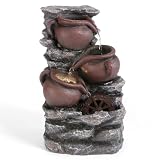
- Top Pick: Teamson Home Outdoor Water Fountain, Freestanding Stone Look
- Best Value: Grepatio Outdoor 6-Tiers Water Fountain, Cascading Water Fountain for Outside with 5 LED Lights, 40" H Large Outdoor Fountains with Waterfall for Garden, Yard, Deck Decor with Natural Tree Trunk Look
- Premium Choice: Cat Water Fountain Stainless Steel: 74oz/2.2L Cat Fountain for Drinking
📅 Last updated:
Buying a quiet fountain sounds simple until the pump hums louder than the water, the basin needs refilling every day, or the “stone” finish turns out to be lightweight plastic. The most common mistake is shopping by appearance first and noise second. A tall, dramatic cascade may look beautiful in a listing photo but create more splash, require more maintenance, and transmit vibration through a deck or tabletop.
Another mistake is comparing unlike products. A $24.99 stainless-steel cat fountain is designed for a pet’s drinking needs, while a $101.99 freestanding garden fountain is intended as outdoor décor. Neither is automatically better; they solve different problems. Use the guidance below to decide what matters before comparing finishes, lights, and decorative shapes. The best quiet fountain for 2026 is the one that fits your space, water habits, and tolerance for upkeep—not necessarily the largest or most expensive model.
As an Amazon Associate we earn from qualifying purchases at no extra cost to you.


📋 Table of Contents
Decide These 3 Things First
- Where will it go? Measure the available footprint, overhead clearance, outlet location, and the distance to walls or furniture. Indoor tabletop fountains have different requirements from outdoor freestanding models and pet fountains.
- How quiet does it need to be? A fountain in a living room, bedroom, or office needs controlled water flow and vibration isolation. A garden fountain can tolerate more ambient sound, but it still should not dominate conversation.
- How much maintenance will you accept? Small reservoirs may need water every few days, while larger basins can go longer between refills. Hard water, leaves, pet hair, and algae all affect the real workload.
Size and Water Capacity
See also: How to Remove Litter Box Odor Buildup (2026): Step-by-Step • How to Fix a Jammed Automatic Feeder (2026): Step-by-Step
Start with the footprint rather than the advertised height. A fountain that is 40 inches tall may need a base roughly 15 to 20 inches wide, plus clearance for splashing and access to the pump. Leave at least 6 inches behind an indoor fountain for cords and cleaning; outdoors, allow 12 to 18 inches around the unit if you need to reach the basin.
For a desk, nightstand, or shelf, a fountain measuring 6 to 12 inches wide and 6 to 14 inches high is usually easier to place. Reservoirs in the 12- to 32-ounce range are common for compact indoor designs, but evaporation and splash can require frequent refills. A tabletop unit such as the Dyna-Living indoor waterfall fountain, listed around $54.99, fits the decorative category rather than the low-maintenance category.
For outdoor use, consider both the water volume and the visual scale. A 20- to 30-inch fountain can suit a patio or small garden, while a 36- to 42-inch model makes a stronger focal point. A 2- to 4-gallon reservoir is more forgiving than a small bowl, especially in warm weather. Do not place a fountain where wind can carry water onto siding, electrical connections, or slippery walkways.
Pet fountains are measured differently. A 74-ounce, or 2.2-liter, capacity—such as the example stainless-steel cat fountain priced around $24.99—can work for one or two cats, but the usable level falls as water evaporates and the filter collects debris. Check the minimum operating level; running a pump dry can shorten its life.
Material and Finish
Material affects weight, weather resistance, cleaning, and how much pump vibration reaches the surface. Stainless steel is a practical choice for pet fountains because it is nonporous, dishwasher-friendly on many models, and less likely to retain odors than porous finishes. Confirm the manufacturer’s cleaning instructions before putting any part in a dishwasher.
Resin and molded plastic are common in decorative indoor and outdoor fountains. They keep prices down and make tall designs easier to move, but thin panels can amplify vibration or sound hollow when tapped. Look for UV-resistant labeling for outdoor use, especially if the fountain will sit in direct sun. “Stone look” describes an appearance, not necessarily stone construction. A freestanding stone-look Teamson Home model, for example, may be appealing at roughly $101.99, but check its listed material and weight before assuming it has the stability of real stone.
Concrete, ceramic, and natural stone generally provide more mass and a solid appearance, but they can be difficult to move and vulnerable to cracking if water freezes inside. In cold climates, drain outdoor fountains before freezing weather and store removable pumps according to the instructions. Metal finishes can look premium, but untreated or poorly protected metal may corrode near chlorinated water, salt air, or constant moisture.
Construction and Pump Design
Quiet operation starts with construction. Look for a level base, a sealed reservoir, accessible pump housing, and tubing that does not kink. A pump that rests directly against a hard basin can transmit a low hum through a tabletop or patio. Rubber feet, silicone mounts, or a separate pump compartment help isolate vibration.
Variable-flow controls are valuable because maximum flow is rarely the quietest setting. For a small indoor fountain, a pump rated around 1 to 5 watts is often enough. Medium outdoor fountains may use roughly 5 to 15 watts, while larger or taller cascades can require more. Treat wattage as an energy and capacity clue, not a guaranteed noise rating; pump design, water depth, and installation matter just as much.
Inspect the water path. A broad spillway can create a softer sheet of water than a narrow outlet that spits or splashes. Multiple tiers can add visual interest but also create several impact points, which may increase sound. The Grepatio six-tier outdoor fountain, listed around $179.99, illustrates the tradeoff: a tall, cascading design can be attractive, but buyers should verify flow adjustment, basin depth, and pump access before prioritizing its height.
Comfort and Performance
“Quiet” is not the same as silent. Water itself produces sound, and the desired sound depends on the room. In a bedroom, choose a low-flow fountain with a short drop and a reservoir that will not need overnight refilling. For a home office, a gentle continuous trickle may mask occasional household noise without becoming distracting.
Check whether the fountain has a published decibel rating, but be cautious about treating an unverified number as a guarantee. Manufacturers may measure at different distances and flow settings. A more useful specification is adjustable flow combined with a stated pump type and clear maintenance instructions. If there is no noise information at all, read the construction details and look for buyer photos showing the pump and basin.
LED lighting can improve nighttime appearance, but lights add wiring, heat, and another part that may fail. Five LEDs, like those advertised on some outdoor cascade fountains, do not indicate brightness, color quality, or replaceability. For bedrooms and meditation spaces, make sure lights can be switched off independently.
Price Tiers
Budget fountains generally cost about $20 to $80. This range includes compact pet fountains, small plastic or resin tabletop designs, and basic pumps. Expect simpler controls, smaller reservoirs, and more frequent cleaning. A $24.99 cat fountain can be a sensible low-cost choice for one pet, but replacement filters may become a recurring expense.
Midrange models, roughly $80 to $200, offer larger reservoirs, taller outdoor profiles, improved finishes, LED features, or more substantial pump assemblies. The Teamson example at $101.99 and the Grepatio example at $179.99 sit in this broad category. Compare the complete package: pump, tubing, lights, filter availability, cover, and shipping.
Premium fountains commonly begin around $200 and can exceed $600, especially when made from heavy stone, ceramic, copper, or custom metalwork. You are paying for material, weight, finish quality, repairability, and design—not automatically silence. A premium fountain with a poorly isolated pump can still hum, so construction remains more important than price alone.
Warranty and Replacement Parts
A one-year limited warranty is a useful baseline for an electric fountain. Some brands provide longer coverage on the pump or vessel, but read exclusions carefully: clogged pumps, mineral buildup, freeze damage, improper outdoor placement, and water damage may not be covered.
Before buying, search the product documentation for replacement pumps, impellers, LED modules, filters, tubing, and seals. A fountain is easier to keep quiet when you can replace a worn pump instead of replacing the whole unit. Pet fountains may need filters every two to four weeks, depending on the pet, water quality, and manufacturer guidance. Budget for those consumables rather than comparing only the initial price.
Delivery and Assembly
Confirm the packaged weight, not just the product weight. A 40-inch outdoor fountain may weigh 20 to 40 pounds in a resin construction, while stone or concrete versions can exceed 100 pounds. Make sure the delivery path includes stairs, narrow doors, and the final placement area.
Assembly should typically involve connecting tubing, seating the pump, adding water, and leveling the unit. Avoid designs that require permanent modification or complicated electrical work. Outdoor fountains should plug into a weather-protected, ground-fault circuit interrupter outlet. Keep plugs and connections elevated and protected from standing water; do not use an indoor-rated extension cord outdoors.
Spec Checklist
| Spec | Budget | Mid | Premium |
|---|---|---|---|
| Typical price | $20–$80 | $80–$200 | $200–$600+ |
| Typical footprint | 6–14 in. wide | 12–20 in. wide | 16–30+ in. wide |
| Typical height | 6–16 in. | 18–42 in. | 24–60+ in. |
| Reservoir capacity | 12–32 oz. or 0.5–1.5 gal. | 1.5–4 gal. | 3–10+ gal. |
| Pump power | 1–5 watts | 5–15 watts | 10–30+ watts |
| Best material choices | Plastic or resin | UV-resistant resin, steel | Stone, ceramic, copper, thick metal |
| Warranty target | 90 days–1 year | 1 year | 1–3 years |
Red Flags
- No stated pump wattage, water capacity, dimensions, or minimum water level.
- “Whisper-quiet” marketing with no flow control, pump details, or cleaning instructions.
- A very tall fountain with a narrow, shallow reservoir and no splash guard.
- Outdoor placement claims without UV resistance, weather guidance, or freeze instructions.
- LED lights that cannot be switched off or have no replacement information.
- No available replacement filters, pumps, tubing, or seals.
- Reviews mentioning dry-running, leaking seams, unstable bases, or water spraying beyond the basin.
- Product photos that hide the cord, pump compartment, water-fill opening, or back of the unit.
FAQ
What makes a fountain quiet?
A properly sized pump, adjustable flow, deep enough water coverage, and vibration-isolating feet are the main factors. Keep the pump fully submerged and place the fountain on a level, stable surface. A small amount of water loss can expose the pump and create rattling, so check the level regularly.
Are tabletop fountains quieter than outdoor fountains?
Often, but not always. Tabletop fountains usually use smaller pumps and shorter water drops. However, a lightweight tabletop shell can transmit motor vibration into a desk. A heavier base, rubber feet, and low-flow setting may matter more than overall size.
How often should a quiet fountain be cleaned?
Inspect it weekly and clean it at least every two to four weeks, or more often with pets, hard water, dust, or outdoor debris. Rinse filters according to the instructions and remove mineral deposits before they restrict flow. Always unplug the pump before cleaning.
Is a more expensive fountain worth it?
Pay more when you need durable materials, a stable heavy base, replaceable components, longer warranty coverage, or a larger reservoir. Do not pay more solely for extra tiers or lights. For quiet operation, prioritize adjustable flow, pump access, vibration isolation, and a water path that limits splashing.
Ready to decide? Our #1 pick for 2026 is the Typical price.
Live price & availability on Amazon.