📅 Last updated:
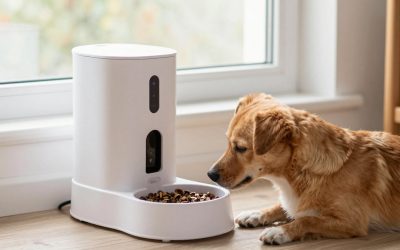
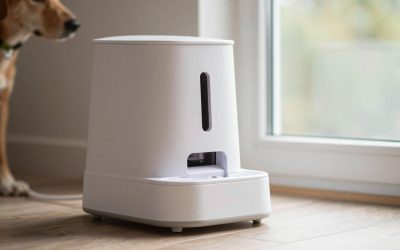
An automatic feeder with a camera solves a problem that a plain timed feeder never quite does: it tells you whether the food actually came out, and whether the animal actually ate it. A dispenser that fires on schedule into an empty bowl looks identical to one that has jammed, unless you can see the bowl. That single feature — visual confirmation — is the reason these cost twenty to eighty dollars more than the camera-free version of the same hardware, and for most people it is worth it.
What it does not do is make the feeder trustworthy on its own. Before anything else: do not leave a cat alone with only an automatic feeder for days. Kibble bridges in the hopper, a portion wheel binds on a large biscuit, a power strip gets kicked, the router reboots and the unit never reconnects. A camera lets you find out that it happened; it does not let you fix it from two states away. Any absence longer than an overnight needs a human who can physically walk in — a neighbour, a sitter, a friend with a key. The feeder is convenience and consistency. It is not a substitute for supervision.
📋 Table of Contents
Quick Verdict
| Model | Price | Hopper | Camera | Best for |
|---|---|---|---|---|
| PETLIBRO with Camera, Blockage Sensor | Varies | Single tray | 1080p, night vision | Best overall; jam detection |
| PETLIBRO with Camera, Stainless Tray | Varies | Single tray | 1080p, night vision | Easiest bowl to clean |
| MUBBI 7L Elevated Bowl | Varies | 7L / 29 cups | 1080p, night vision | Best value |
| MUBBI 7L Jam-Free | Varies | 7L | Night vision | Long absences on dry food |
| Frienhund 2K Camera | Varies | 7L / 29 cups | 2K, night vision | Varies |
| Minikey 2K Camera | Varies | 6.5L | 2K | Capacity per dollar |
| Inetzora 2K Camera | Varies | 6L | 2K | Mid-size households |
| faroro 3MP with Low Food Sensor | Varies | 4L | 3MP, night vision | Best budget, one cat |
| oneisall for 2 Cats | Varies | 5L / 20 cups | Yes | Two cats, two bowls |
| Yakry Dog Feeder | Varies | 8L / 33 cups | Yes | Dogs, large kibble |
How to Choose
See also: Best Dog Multivitamins and Supplements for Everyday Care • How to Set Up Timed Pet Feeder (2026): Step-by-Step
Assume the feeder will jam at least once
Every auger or rotor design can bridge — kibble arches over the opening and nothing falls. Large, oddly shaped or very dry biscuits do it more often; so does an overfull hopper, because the weight compacts the food. The practical defences are a blockage or low-food sensor that pushes an alert, a hopper you fill two-thirds rather than to the brim, and kibble sized within the range the manufacturer states. The camera is your third line of defence, not your first.
Match the hopper to the animal, not to the number of days
A 7L hopper can theoretically hold weeks of food for one cat. That is not a reason to fill it. Dry food oxidises once the bag is open, and fat in kibble goes stale and unpalatable faster in a warm plastic container than most owners expect. Filling for five to seven days at a time and topping up is better practice than loading a month and forgetting it.
Power, WiFi and what happens when both fail
Camera feeders need mains power — the camera and the WiFi radio draw far more than a timer. Most include a battery backup that keeps the scheduled dispensing alive through an outage, but the camera and app connection usually will not survive it. Check whether the model you buy holds its schedule in memory after a reboot; some restart into an unprogrammed state. Also confirm the WiFi band: several of these feeders now support 5GHz as well as 2.4GHz, which is genuinely useful, but the cheaper units are frequently 2.4GHz-only and will refuse to join a combined-band network without you splitting the SSID.
Portion control is a weight-management tool, and free feeding is not
The real health argument for these feeders is that they replace the bowl that stays full all day. A scheduled feeder that delivers a measured portion four or five times daily suits cats better than two large meals and far better than unlimited access. If your cat is overweight, the number that matters is the daily total, not the number of meals. Set the total with your vet rather than by guessing from the scoop markings — bowl-filling by eye is how most cats get fat, and a feeder automates whatever error you programme into it.
Wet food changes everything
None of the feeders here handle wet food. They are dry-kibble gravity-and-auger machines. If your cat is on wet food for urinary or renal reasons, a dry-food feeder is not a schedule solution, it is a diet change — and that is a conversation for your vet, not a purchase decision.
Cleaning access decides whether you keep using it
The single most abandoned feature of these devices is regular cleaning, because most hoppers are awkward to take apart. Look for a detachable hopper and a dishwasher-safe or at least fully removable bowl. Frienhund and the PETLIBRO stainless tray model both advertise easy disassembly; the cheapest units tend to have a fixed plastic bowl that accumulates a greasy kibble film.
The Picks in Detail
The PETLIBRO with blockage sensor (under $150) earns the top spot on one distinction. Almost every feeder here can tell you the hopper is empty; this one is designed to notice when food should have dispensed and did not. Combined with motion and sound alerts, it means you find out about a failure at feeding time rather than when you happen to open the app. The 1080p night vision image is adequate rather than spectacular — good enough to see a cat at a bowl in a dark kitchen, not good enough to read a collar tag.
Frienhund (under $60), Minikey (under $50) and Inetzora (under $60) are the 2K-camera tier. The sharper sensor is the headline, and it does make a difference if you want to check whether the bowl still has food in it from across the room. All three are unbranded-adjacent units where the app quality is the wildcard — these ecosystems change without notice, and app longevity is the genuine risk with cheap connected hardware. Frienhund’s 7L detachable container makes it the pick of the three.
Related guides: best gps pet collar battery life compared, best indoor rabbit hutch with litter tray, best pet camera with treat dispenser, best pet water fountain for multiple cats, best self cleaning litter box
FAQ
Can I leave my cat alone for a weekend with one of these?
One night, comfortably. A weekend, only with someone checking in. The failure modes — a jam, a power cut, a WiFi drop, a cat that knocks the unit over — are not rare enough to bet an animal’s water and food on. Water matters more than food over 48 hours, and no feeder supplies it. Arrange a human visit for anything beyond an overnight, every time.
Does the camera record, and does it cost extra?
Live view and two-way audio are generally included. Continuous recording, cloud clip history and person or pet detection are often behind a subscription on the more established brands. Check the listing and the app’s own pricing page before you buy, because the monthly cost can exceed the hardware cost within a year. Several models here store clips to a local microSD card instead, which avoids the fee entirely.
Will it work with my WiFi?
Most of these now accept 5GHz as well as 2.4GHz, which the listings state explicitly. Older and cheaper feeders are 2.4GHz-only. If your router broadcasts both bands under one name, you may need to temporarily split them to complete setup. This is the single most common cause of a feeder that will not pair.
My cat is a grazer. Is scheduled feeding bad for her?
Cats are natural multi-meal eaters, so several small scheduled portions actually suit feline eating patterns well — arguably better than two big meals. The problem is not the schedule, it is the total. If she is losing or gaining weight, or suddenly eating far more or less than usual, that is a veterinary question rather than a settings question.
How often does it need cleaning?
The bowl daily or near enough, the hopper whenever you change bags — at minimum monthly. Kibble leaves a fine oily dust that turns rancid and smells faintly stale; cats notice long before we do, and a feeder that starts getting refused is usually a dirty feeder rather than a broken one.