Our Short List of 3
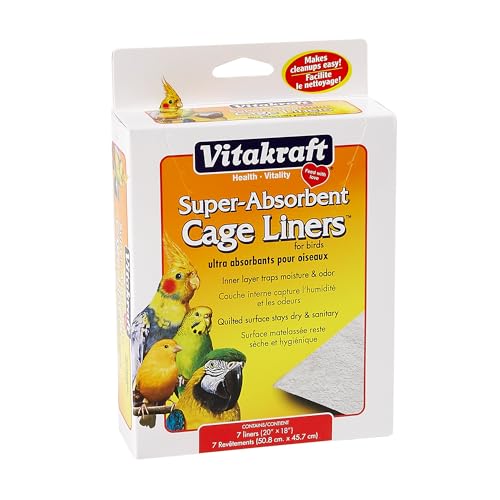
- Brand: Vitakraft
- Sheet size: 20 x 18 inches
- Pack count: 7 sheets
- Material: Quilted absorbent paper, per maker

- Brand: HA SHI
- Sheet size: 31 x 21.5 inches
- Pack count: 120 sheets
- Material: Acid-free newsprint paper, unprinted

- Brand: RUBY.Q
- Sheet size: 14 x 10 inches
- Pack count: 100 sheets
- Material: Non-woven fabric
All 5 Picks at a Glance
| Product | Specs | Action |
|---|---|---|
| 1. Vitakraft Cage Liners for Birds, 20 x 18 Inches, 7 Count |
| Check price on Amazon |
| 2. HA SHI Bird Cage Liner, 31 x 21.5 Inches, 120 Sheets |
| Check price on Amazon |
| 3. RUBY.Q Bird Cage Liner Papers, 14 x 10 Inches, 100 Sheets |
| Check price on Amazon |
 4. Dnoifne Gravel Paper for Bird Cage, 17 x 11 Inches, 20 Pack |
| Check price on Amazon |
 5. Living World Gravel Paper, 9.5 x 15.75 Inches, 8 Pack |
| Check price on Amazon |
📅 Last updated:
A mesh skirt around a cage guards the floor outside it. The tray inside the cage is a different problem, and it is the one that decides how the cage smells, how long cleaning takes, and how clearly you can see what your bird leaves behind. That is the job of a cage liner: a disposable sheet of paper, absorbent pad material, non-woven fabric, or gravel-coated paper that sits in the tray, catches droppings, spilled water, seed hulls, and bath splashes, and then lifts out so the tray needs scrubbing far less often.
One honest limit applies to every product here. A liner does not clean a cage. It holds waste in one removable layer, and that layer only stays hygienic if you change it often. A liner left in place for a week becomes the hygiene problem it was meant to solve, whatever the material. Change frequency matters more than brand.
All sizes, sheet counts, and absorbency figures below are maker figures from product listings. There is no shared test standard for cage liners, so treat absorbency claims as rough positioning rather than measured fact.
Disclosure: As an Amazon Associate, I earn from qualifying purchases.
📋 Table of Contents
How to Choose
Measure the tray, not the cage. Sizing is the whole game with liners. Cage listings advertise the footprint of the cage frame, but the removable tray inside is usually smaller, sometimes by an inch or more on each side. Pull the tray out and measure its inside floor. A sheet smaller than that floor leaves bare plastic exposed, and waste on bare plastic is exactly the scrubbing you bought liners to avoid. A sheet far larger than the tray bunches, folds, and curls up the tray walls, where a determined bird can grab an edge and drag the whole layer around. Sheets slightly larger than the tray that you trim or fold down once sit flattest.
Pick the material for what you need to see. Plain unprinted paper, like the newsprint sheets in this guide, has one underrated advantage: droppings stay visible. Changes in dropping color, volume, and consistency are among the earliest health signals a bird gives, and a plain light sheet shows them clearly. Thick quilted absorbent pads hide liquid well and keep the tray drier, but that same absorbency can mask how much water is in the droppings. Non-woven fabric sheets resist tearing when wet, which matters for birds that splash at bath time, but the material is a synthetic fabric rather than paper, so check the listing if that matters to you.
Treat gravel paper as a contested option. Gravel-coated sheets are sold on the promise that the grit helps beaks, claws, and digestion. Many avian veterinarians advise against them where a bird can reach the surface directly, because loose grit can be eaten off a soiled sheet and the abrasive texture can irritate feet. If you use gravel paper at all, the safer pattern is under a floor grate that keeps the bird off the sheet. Keepers who want grit for digestion can offer it in a separate dish instead, where it stays clean. Two picks below are gravel papers, included because they remain widely sold and widely used, but they carry this caution honestly.
Avoid scented and heavily printed sheets. Fragrance is added for the owner, not the bird, and birds have sensitive respiratory systems. Printed paper with colored inks is a poorer choice than plain unprinted stock. Every pick in this guide is unscented and either unprinted or lightly finished.
Match pack format to your routine. Precut sheets are fastest for daily changes in standard trays. Large-format sheets suit flight cages and wide trays that standard sizes leave half covered. Count how many changes a pack gives you at your real pace before deciding a big pack is the sensible format.
The 5 Best Bird Cage Liners and Tray Papers
See also: Best Automatic Transmission Floor Shifter: Ratchet, Gated and Detent Shifters Compared • Best Automatic Floor Shifter for Truck: Tall, Tough Picks for Pickups and Bench Seats
1. Vitakraft Cage Liners for Birds, 20 x 18 Inches, 7 Count
- Brand: Vitakraft
- Sheet size: 20 x 18 inches
- Pack count: 7 sheets
- Material: Quilted absorbent paper, per maker
Vitakraft’s liner is the thick, absorbent end of the precut market. The maker describes a super-absorbent quilted construction, and the sheets are sized at 20 by 18 inches, which matches the trays of many mid-size parrot and cockatiel cages without trimming. For trays a little smaller, the sheets trim down with household scissors and the quilted build holds together at a cut edge better than single-ply paper does.
The trade-off of a thick pad is the one flagged above: it hides liquid well, which keeps the tray dry but can also hide changes in droppings that a plain sheet would show. Use these where soak-through is the main problem, such as under a water dish zone, and check droppings at each change. The 7-count pack covers about a week at a daily pace.
2. HA SHI Bird Cage Liner, 31 x 21.5 Inches, 120 Sheets
- Brand: HA SHI
- Sheet size: 31 x 21.5 inches
- Pack count: 120 sheets
- Material: Acid-free newsprint paper, unprinted
Flight cages and wide aviary trays are where standard precut sizes fail, and this HA SHI pack is built for that gap. The sheets measure 31 by 21.5 inches, the largest format in this guide, and the material is plain acid-free newsprint with no printing on it. That plain surface is the health-monitoring choice: droppings, hulls, and spilled food all show clearly against the gray-white paper, and nothing printed touches the tray.
Newsprint is single-ply paper, so be honest about its limit. Standing liquid from a tipped water dish will work through if a soaked sheet sits all day. The maker positions these for daily changes, and the 120-sheet count supports that pace for months even in a large cage. For a wet zone, layering two sheets under the dish area is a reasonable workaround.
3. RUBY.Q Bird Cage Liner Papers, 14 x 10 Inches, 100 Sheets
- Brand: RUBY.Q
- Sheet size: 14 x 10 inches
- Pack count: 100 sheets
- Material: Non-woven fabric
Small cages for finches, canaries, and budgies have small trays, and cutting down large sheets for them wastes material and time. RUBY.Q cuts its non-woven sheets to 14 by 10 inches, a size aimed squarely at those compact trays. The non-woven fabric build is the point of difference here: where plain paper can tear as you lift a wet sheet, this material holds together, so the used layer comes out in one piece instead of shedding soaked fragments back into the tray.
The maker describes the fabric as absorbent, odorless, and dust-free. Because it is a fabric rather than paper, it will not break down the way paper does, so disposal habits differ. The 100-sheet count supports a daily change routine for over three months in a single small cage. For trays slightly larger than the sheet, two sheets overlapped at the middle cover the floor without a gap.
4. Dnoifne Gravel Paper for Bird Cage, 17 x 11 Inches, 20 Pack
- Brand: Dnoifne
- Sheet size: 17 x 11 inches
- Pack count: 20 sheets
- Material: Paper with sea sand calcium coating, per maker
This Dnoifne pack is the gravel paper format at a mid-range sheet size: 17 by 11 inches, with a coating the maker describes as calcium paper with sea sand. The sheets are sold for parakeets, cockatiels, conures, and lovebirds, and the grit surface is the entire reason the product exists. Keepers who use gravel paper generally place it where it can file beak and claw tips as the bird moves across the cage floor.
Read the caution in the How to Choose section before choosing this format. Many avian veterinarians advise against grit surfaces a bird can stand on and pick at, because soiled grit can be swallowed and abrasive paper can irritate feet. The careful way to use these sheets is under a floor grate, where droppings fall through onto the paper and the bird never contacts the coating. Used that way, the sheet works as a firm tray liner that lies flat and resists curling.
5. Living World Gravel Paper, 9.5 x 15.75 Inches, 8 Pack
- Brand: Living World by Hagen
- Sheet size: 9.5 x 15.75 inches
- Pack count: 8 sheets
- Material: Gravel-coated paper
Living World, from Hagen, is the long-established name in this category, and its gravel paper comes in the smallest sheet size in this guide: 9.5 by 15.75 inches, in an 8-pack. That size suits the narrow trays of small starter cages for budgies and finches, where a standard 17 or 18 inch sheet needs heavy trimming on two sides.
The same gravel paper caution applies in full. This is an abrasive-coated sheet, and the safer placement is under a grate rather than as a walking surface, whatever older cage-keeping habits suggest. For keepers whose cages have grates, it remains a straightforward, widely stocked option in a size few other makers offer. The small pack count runs out quickly at a daily pace, so treat it as the size specialist of the group rather than the bulk choice.
Comparison Table
| Product | Sheet size | Count | Material | Best fit |
|---|---|---|---|---|
| Vitakraft Cage Liners | 20 x 18 in | 7 | Quilted absorbent paper | Mid-size trays, soak control |
| HA SHI Bird Cage Liner | 31 x 21.5 in | 120 | Unprinted newsprint | Flight cages, health checks |
| RUBY.Q Liner Papers | 14 x 10 in | 100 | Non-woven fabric | Small trays, wet tearing |
| Dnoifne Gravel Paper | 17 x 11 in | 20 | Sand-coated paper | Under-grate use |
| Living World Gravel Paper | 9.5 x 15.75 in | 8 | Gravel-coated paper | Narrow small trays |
FAQ
How often should a cage liner be changed?
For most pet birds, daily is the sound default, and every other day is the outer limit for a single bird in a large tray. Droppings and spilled food sit on the liner the whole time it is in place, so the change schedule, not the material, is what keeps the tray hygienic. Birds that bathe in their water dish soak liners faster and may need a fresh sheet after a splashy morning.
Can I use newspaper or paper towels instead of bought liners?
Plain unprinted paper works on the same principle, and many keepers use it. The practical differences are sizing and consistency: bought sheets are cut to tray sizes, come in uniform stock without heavy colored printing, and save the measuring and cutting at every change. If you use household paper, choose plain, unscented stock and avoid glossy inserts and heavily printed pages.
Is gravel paper safe for my bird?
It is genuinely contested. Makers sell it for beak, claw, and digestion benefits, while many avian veterinarians advise against grit surfaces a bird can reach, citing swallowed grit and irritated feet. The cautious middle path is to place gravel paper under a floor grate so the bird never stands on or picks at the coating, and to offer any digestive grit separately in a clean dish.
What size liner should I buy for my cage?
Measure the inside floor of the removable tray itself, in both directions, and buy the sheet size that matches or slightly exceeds those measurements. Cage listings describe the frame footprint, and trays are often an inch or more smaller, which is why sheets bought from the cage listing alone so often fit badly. Slightly oversize sheets can be trimmed or folded down; undersize sheets leave waste on bare tray.
Conclusion
The right liner is mostly a measuring exercise. Get the tray dimensions right, choose plain paper if you want droppings easy to read, an absorbent pad if soak-through is your problem, or a non-woven sheet if wet tearing frustrates you, and treat gravel paper as an under-grate option rather than a floor surface. Vitakraft covers the standard mid-size tray with the thickest sheet here, HA SHI covers the big flight trays and the health-monitoring brief, and RUBY.Q covers the small cages the others ignore. Whichever you pick, the daily change is what does the real work.