Our Short List of 3
- Protein: 18%
- Medication: amprolium coccidiostat
- Form: crumbles
- Bag size: 25 lb

- Protein: 20.5%
- Medication: none
- Form: whole grain crumbles
- Bag size: 25 lb

- Protein: 18%
- Medication: none
- Form: crumbles
- Bag size: 5 lb
All 4 Picks at a Glance
| Product | Specs | Action |
|---|---|---|
| 2. Purina Start & Grow Medicated Crumbles, 25 lb |
| Check price on Amazon |
| 3. Scratch and Peck Feeds Organic Starter Crumbles, 25 lb |
| Check price on Amazon |
| 4. Manna Pro Chick Starter Feed Non-Medicated, 5 lb |
| Check price on Amazon |
 5. Purina Start & Grow Non-Medicated Crumbles, 5 lb |
| Check price on Amazon |
📅 Last updated:
Disclosure: As an Amazon Associate, I earn from qualifying purchases.

A chick doubles in size again and again during its first weeks, building bone, muscle, organs, and a full set of feathers out of whatever sits in the feeder. Chick starter is the ration built for that sprint: higher protein than any feed the bird will eat later in life, ground or crumbled small enough for a day-old beak, and fortified with the vitamins and minerals that growth at this speed demands. It is also a short season. Starter covers the opening weeks only, and the keepers who get the best results spend less energy hunting for a perfect bag and more on the two decisions that actually shape those weeks: medicated or not, and when to move on to the next feed.
The five picks below split along that first decision. Two are medicated with amprolium, the coccidiostat that guards against coccidiosis, and three are non-medicated, including one certified organic recipe. Protein runs from 18 to 20.5 percent, and bag sizes from a small-flock 5 pounds to a 25-pound bag suited to a bigger hatch. Every pick is a complete ration, so none of them needs supplements mixed in during the starter window.
📋 Table of Contents
- How to Choose Chick Starter Feed
- 1. Manna Pro Medicated Chick Starter Grower, 5 lb
- 2. Purina Start & Grow Medicated Crumbles, 25 lb
- 3. Scratch and Peck Feeds Organic Starter Crumbles, 25 lb
- 4. Manna Pro Chick Starter Feed Non-Medicated, 5 lb
- 5. Purina Start & Grow Non-Medicated Crumbles, 5 lb
- Comparison Table
- Frequently Asked Questions
- Conclusion
How to Choose Chick Starter Feed
Decide medicated versus non-medicated first, and decide it based on vaccination. Medicated starter contains amprolium, which blocks the coccidia parasite while chicks build their own resistance. It prevents coccidiosis; it does not treat an outbreak already underway, and a chick that is already sick needs veterinary care, not a feed change. The pairing that matters is with the hatchery. Chicks vaccinated against coccidiosis at the hatchery should get non-medicated feed, because amprolium in the ration works against that vaccine. Unvaccinated chicks, chicks from an unknown background, and chicks brooded on ground where poultry has lived before are the usual case for the medicated bags. Keepers who skip medication take on the job themselves: dry litter, clean waterers, and no crowding are what stand in for the coccidiostat.
Read the protein percentage before the brand name. Most layer-bound chicks thrive on 18 to 20 percent protein through the starter phase. Faster-growing meat birds and game birds sit at the higher end or above it. Protein and crumble size decide the first weeks more than the label on the bag: a chick that cannot get the crumble into its beak, or that fills up on a ration too low in protein, falls behind no matter who milled the feed. Check that the crumble is genuinely fine for the first days; coarse pieces in the first week are a real problem for bantams and small breeds.
Plan the switches before the first bag runs out. Starter is the opening ration, not the whole childhood. The common pattern is starter for roughly the first six to eight weeks, then a grower ration with a step down in protein, then layer feed at about 18 weeks or when the first egg arrives, whichever comes later. Some bags below are labeled starter-grower combinations and are directed to be fed much longer, which is legitimate; follow the bag in hand rather than a generic calendar. The one switch that must never come early is layer feed. Its calcium level is built for hens in lay and can damage the kidneys of growing birds, so squeezing a starter bag for extra weeks is harmless, while jumping to layer feed early is not.
Match bag size to the hatch, and store it dry. A handful of chicks eats slowly, and feed loses freshness once opened, so a 5-pound bag suits a small backyard hatch better than a bargain sack that sits open for months. Larger hatches justify the 25-pound bags. Either way, keep the bag sealed, off the floor, and away from damp; moldy feed is a genuine hazard to chicks, and any bag that smells off should be discarded rather than fed through.
1. Manna Pro Medicated Chick Starter Grower, 5 lb
See also: Best Automatic Transmission Floor Shifter: Ratchet, Gated and Detent Shifters Compared • Best Automatic Floor Shifter for Truck: Tall, Tough Picks for Pickups and Bench Seats
The Manna Pro medicated bag is the straightforward guard-rail pick for unvaccinated chicks. It is an 18 percent protein crumble with amprolium worked through the whole ration, fed as the sole feed from hatch through the eighth week. That feeding window matches the classic starter season exactly, so the bag lines up neatly with a move to grower feed once the chicks feather out.
The 5-pound size is the practical half of the appeal. A small hatch of backyard chicks works through it while it is still fresh, and the crumble size suits standard and bantam chicks from the first days. Because the medication is preventive rather than curative, the bag belongs in the brooder from day one; starting it after trouble appears misses the point of the product.
Specs
- Protein: 18% minimum
- Medication: amprolium coccidiostat
- Form: crumbles
- Bag size: 5 lb
- Feeding window: hatch to 8 weeks, as the sole ration
- Maker model: 1000197
See the Manna Pro Medicated Chick Starter on Amazon
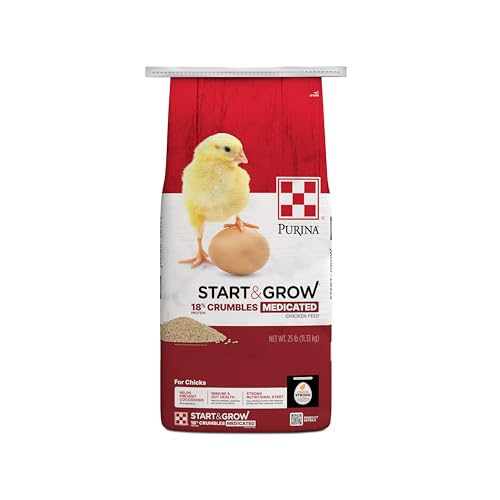
2. Purina Start & Grow Medicated Crumbles, 25 lb
- Protein: 18%
- Medication: amprolium coccidiostat
- Form: crumbles
- Bag size: 25 lb
Purina’s medicated entry is the same idea at flock scale. The 25-pound bag carries an 18 percent protein crumble with amprolium, aimed at keepers raising a dozen or more chicks at once, where a 5-pound bag would be gone in days. Purina directs this one to be fed from day one through week 18, making it a starter-grower combination rather than a pure eight-week starter, so it covers the grower step without a mid-season bag change.
Beyond the medication, the formula adds prebiotics and probiotics for gut support and marigold extract, the pigment source associated with bright beaks and shanks in growing birds. It is a complete ration built around 38 essential nutrients, so nothing needs to be added during the feeding window. For unvaccinated chicks in a larger hatch, this is the bag that combines the coccidiosis guard with the fewest restocking trips.
See the Purina Start & Grow Medicated on Amazon
3. Scratch and Peck Feeds Organic Starter Crumbles, 25 lb
- Protein: 20.5%
- Medication: none
- Form: whole grain crumbles
- Bag size: 25 lb
The Scratch and Peck starter is the organic, corn-free, soy-free option, and it carries the highest protein in this roundup at 20.5 percent. The recipe is built on whole grains with grub protein in the mix, certified USDA Organic and Non-GMO Project Verified, and milled as a crumble that chicks can handle from the first week. It is non-medicated, which makes it the right partner for hatchery-vaccinated chicks and for keepers committed to an organic ration from the first day.
The maker rates the feed for chicks from hatch to eight weeks and for ducklings in their first four weeks, a useful overlap for mixed brooders. At 25 pounds it is sized for a serious hatch rather than a trio of chicks, and the higher protein suits fast-growing breeds and keepers who want one bag to carry chicks deep into the starter window without the ration becoming the limiting factor.
See the Scratch and Peck Organic Starter on Amazon
4. Manna Pro Chick Starter Feed Non-Medicated, 5 lb
- Protein: 18%
- Medication: none
- Form: crumbles
- Bag size: 5 lb
This is the non-medicated twin of the first pick: an 18 percent protein crumble with the same small-bag practicality and no coccidiostat in the ration. It is the bag for chicks that arrived vaccinated against coccidiosis, where medicated feed would work against the vaccine, and for keepers running a clean, dry brooder who prefer to manage coccidiosis through litter and hygiene instead.
The formula is a complete starter-grower ration with the vitamins and minerals young birds need, and Manna Pro also markets it for ducklings, which makes it a sensible single bag for a mixed brooder of chicks and ducklings. In a 5-pound bag it stays fresh through a small hatch, and it pairs logically with the medicated version above: same maker, same protein level, and the choice between them comes down to the vaccination question and nothing else.
See the Manna Pro Non-Medicated Chick Starter on Amazon
5. Purina Start & Grow Non-Medicated Crumbles, 5 lb
- Protein: 18%
- Medication: none
- Form: crumbles
- Bag size: 5 lb
The small Purina bag rounds out the set for keepers who want the Start & Grow formula without medication and without committing to 25 pounds. It is an 18 percent protein crumble with the same nutritional blueprint as the medicated version: a complete ration covering 38 essential nutrients, with prebiotics and probiotics for digestive support and marigold extract for pigmentation as the birds grow.
Like the other non-medicated picks, it suits vaccinated chicks and flocks where coccidiosis pressure is managed by hygiene. The 5-pound size fits a small hatch or a first attempt at raising chicks, and it keeps the medicated-versus-not decision reversible at the next bag: a keeper who starts here and later brings in unvaccinated chicks can switch to the medicated version of the same line without changing anything else about the routine.
See the Purina Start & Grow Non-Medicated on Amazon
Comparison Table
| Product | Protein | Medicated | Form | Bag Size |
|---|---|---|---|---|
| Manna Pro Medicated Chick Starter Grower | 18% | Yes, amprolium | Crumbles | 5 lb |
| Purina Start & Grow Medicated | 18% | Yes, amprolium | Crumbles | 25 lb |
| Scratch and Peck Organic Starter Crumbles | 20.5% | No | Whole grain crumbles | 25 lb |
| Manna Pro Chick Starter Non-Medicated | 18% | No | Crumbles | 5 lb |
| Purina Start & Grow Non-Medicated | 18% | No | Crumbles | 5 lb |
Frequently Asked Questions
Should chicks get medicated or non-medicated starter?
It depends on vaccination. Chicks vaccinated against coccidiosis at the hatchery should eat non-medicated starter, because the amprolium in medicated feed works against that vaccine. Unvaccinated chicks, especially on ground with a poultry history, are the standard case for medicated starter. Remember that medicated feed prevents coccidiosis rather than treating it, so a chick already showing illness needs care beyond a feed change.
How long do chicks stay on starter feed?
A pure starter usually covers the first six to eight weeks, followed by a grower ration, and then layer feed at about 18 weeks or at the first egg, whichever comes later. Some starter-grower combinations are directed to be fed longer, so follow the directions on the bag in hand. The switch that matters most is the last one: layer feed fed too early can harm growing birds because of its calcium level.
How much protein does a chick starter need?
Most chicks bound for the laying flock do well on 18 to 20 percent protein during the starter phase, with faster-growing meat birds at the top of that range or above it. Protein percentage and crumble size shape the first weeks more than the brand on the bag, so check those two numbers first and treat everything else as secondary.
Can ducklings eat chick starter?
Ducklings are usually raised on non-medicated starter, and two picks above are marketed for ducklings as well as chicks. The nutritional gap to watch is niacin, which ducklings need in greater amounts than a chick ration guarantees, so keepers raising waterfowl should confirm the niacin supply and supplement if the bag does not cover it.
Conclusion
The chick starter decision is narrower than the feed aisle suggests. Sort out vaccination first: unvaccinated chicks point to the Manna Pro or Purina medicated bags, in 5 or 25 pounds depending on the size of the hatch, while vaccinated chicks point to the non-medicated Manna Pro or Purina bags, or to the Scratch and Peck organic crumbles where a certified organic, corn-free, soy-free ration is the goal. After that, protein percentage and crumble size matter more than brand loyalty, and the calendar matters most of all. Starter is a short season; feeding it well for eight weeks and then making the grower and layer switches on time will do more for a flock than any single bag can.