📅 Last updated:
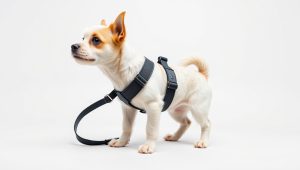
After spending the better part of a year fitting harnesses on three different small dogs — a four-pound Chihuahua mix with a barrel chest, a six-pound Pomeranian who treats every walk like an escape attempt, and a nine-pound French Bulldog who pulls like a much bigger dog — I have a clear picture of what separates a harness that actually works from one that looks cute in product photos but fails the moment you clip a leash on. The core problem is deceptively simple: small dogs have disproportionate chest-to-neck ratios, thinner fur coverage, and surprisingly strong escape instincts. A harness that fits a twenty-pound beagle will slip off a five-pound Yorkie during the first twist of a squirrel-chase.
What separates the best harnesses for small dogs is a combination of secure adjustment points, breathable but structured fabric, and clip placement that discourages pulling without creating pressure on the trachea. Step-in designs dominate this category for a reason — they eliminate the over-the-head struggle that makes small dogs flinch — but not all step-ins are equal. The ones that survive weeks of daily use share a few common traits: reinforced stitching at stress points, soft-edged webbing that won’t chafe underarms, and enough adjustability to dial in a snug-but-comfortable fit on dogs with narrow ribcages.
As an Amazon Associate we earn from qualifying purchases at no extra cost to you.




📋 Table of Contents
Quick Picks
| Product | Best For | Price |
|---|---|---|
| Voyager Step-in Air Vest (Moss Green, Small) | Daily walks on a budget | Varies |
| PHOEPET No Pull Vest with Handle | Dogs that pull hard | Varies |
| AIITLE Breathable Set (XXXS) | Tiny or young dogs | Varies |
| Petank Step-in Vest with Leash (Purple, S) | Puppy starter kit | Varies |
| Voyager Step-in Air Vest (Black, Small) | Visibility-conscious owners | Varies |
| Annchwool No Pull with Handle (Brown, L) | Escape-prone small dogs | Varies |
| Voyager Step-in Air Vest (Baby Blue, Medium) | Larger small dogs | Varies |
| Voyager Step-in Air Vest (Moss Green, Medium) | Small-medium crossover fits | Varies |
How We Compared
See also: 7 Best Refillable Frozen Dog Treat Toys for Long-Lasting Licks • Best Dog Door Mat for Muddy Paws: Sizing, Materials and Picks by Entryway
We evaluated every harness in this roundup against four criteria that matter most for small-dog owners: escape resistance under real-world conditions (lateral movement, backward pulls, and the “spook-and-bolt” scenario), comfort during extended wear (no chafing under the forelegs or rubbing at the neck), ease of on-and-off fitting without a struggle, and value relative to build quality. We ignored purely aesthetic factors like color options unless they impacted visibility or reflectivity.
The 8 Best Harnesses For Small Dogs in 2026
Voyager Step-in Air Vest (Moss Green, Small)
This is the harness I recommend to almost everyone with a dog under ten pounds who just needs something reliable for daily walks without overthinking it. The mesh paneling keeps things cool in summer, and the step-in design means I can get my Pomeranian into it in about four seconds without her squirming free. The adjustable Velcro at the back holds well through weeks of use, though it does collect fur and lint if you have a shedding dog.
- Pro: Mesh construction breathes well and dries quickly after rain.
- Pro: Step-in fit eliminates over-the-head anxiety that makes small dogs stiffen up.
- Con: Velcro closure loses grip after heavy washing cycles.
Skip this if your dog is a determined escape artist who can wriggle backward out of a loosely fitted vest.
PHOEPET No Pull Vest with Handle
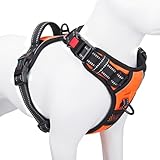
The front-clip design is the real story here. When my Frenchie lunges at a neighbor’s cat, the attachment point at the chest redirects his momentum sideways instead of just yanking me forward. The top handle is useful for guiding him through crowded areas or lifting him over curbs. It’s slightly heavier than the Voyager vests, which might feel like a lot on a dog under four pounds.
- Pro: Front clip actively discourages pulling with real redirection force.
- Pro: Sturdy top handle gives a second point of control in busy environments.
- Con: Bulkier profile can feel heavy on dogs under four pounds.
Skip this if your dog is already well-behaved on leash and you prioritize minimal weight over pull control.
AIITLE Breathable Set (XXXS)
At XXXS, this fits the genuinely tiny dogs — teacup breeds, very young puppies, senior dogs who’ve lost muscle mass and need a snug harness without bulk. The set includes a matching leash, which is convenient for a starter kit. The fabric is thin enough that I worry about durability if my dog gets into brush or rough play, but for short neighborhood walks it works perfectly and the price is hard to argue with.
- Pro: XXXS sizing fits dogs where other “small” harnesses are still too loose.
- Pro: Includes a matching leash, saving you from a separate purchase.
- Con: Thin material shows wear quickly with rough terrain or active play.
Skip this if your tiny dog is also a rough-and-tumble type who needs something that survives the dog park.
Petank Step-in Vest with Leash (Purple, S)
This is the most affordable complete package in our lineup. The step-in design mirrors what makes the Voyager vests easy to use, and the included leash is a genuine bonus at this price rather than a throwaway string. Fit runs a touch small in the S size, so if your dog sits right at the upper end of the small range, consider sizing up. The padding is minimal, which keeps weight down but means less cushioning on sensitive underarms during long walks.
- Pro: Cheapest option that includes both harness and leash in one purchase.
- Pro: Lightweight enough that small dogs barely notice wearing it.
- Con: Sizing runs conservative, so borderline dogs may need to go up one size.
Skip this if your dog needs padding under the forelegs due to sensitive skin or existing irritation.
Voyager Step-in Air Vest (Black, Small)
Identical construction to the Moss Green version — same mesh panels, same Velcro back closure, same four-second step-in. The reason to choose black over the other colors is purely practical: it hides dirt, paw grease, and the general grime that accumulates on a walking harness faster than you want to admit. I’ve gone through weeks of muddy trails with this one still looking acceptable. It’s my default pick for winter walks when everything is wet and dirty.
- Pro: Black hides grime far better than lighter colors, extending time between washes.
- Pro: Same proven mesh-and-Velcro build as the top budget pick.
- Con: Reflects less light than brighter colors if you walk at dawn or dusk.
Skip this if you frequently walk in low light and need visibility over low maintenance.
Annchwool No Pull with Handle (Brown, L)
This is the one I reach for when dealing with the Pomeranian who treats every harness as a personal insult and attempts to back out of it within thirty seconds. The escape-proof construction uses a combination of a wider chest panel and dual adjustment points that make it genuinely difficult to wriggle free. The padded handle is soft enough to grip without hurting your palm. It’s the most expensive option here, but for dogs that have already defeated cheaper harnesses, it’s worth every dollar.
- Pro: Dual-point adjustment and wide chest panel create a genuinely escape-resistant fit.
- Pro: Soft padded handle stays comfortable during long leash holds.
- Con: The L size means it’s only appropriate for larger small dogs, not tiny ones.
Skip this if your dog weighs under eight pounds, since the size range is too generous for a secure fit on very small frames.
Voyager Step-in Air Vest (Baby Blue, Medium)
The medium size opens this harness up for dogs that are technically “small” but sit at the heavier end of the category — nine to fifteen pounds, or shorter dogs with deeper barrels that make the Small fit too tight around the ribs. The Baby Blue color is pleasant without being loud, and the mesh breathes the same way. If you have a French Bulldog or a stocky Corgi mix, this is the version you need rather than the Small.
- Pro: Medium sizing accommodates stocky small dogs that find the Small too restrictive.
- Pro: Same trusted mesh-and-Velcro construction at a negligible price bump.
- Con: Medium is too loose for dogs under seven pounds without significant cinching.
Skip this if your dog is slender or under seven pounds, since the chest panel will gap too widely.
Voyager Step-in Air Vest (Moss Green, Medium)
Functionally identical to the Baby Blue Medium and the Moss Green Small in construction — just a different color-size pairing. What earns this a spot here is the size crossover: the Moss Green Medium is slightly easier to find in stock than the Baby Blue version, and the earth-tone color pairs well with most leash options without clashing. For owners whose small-medium dogs are right at the ten-pound boundary, this is the most reliable availability option.
- Pro: Medium fit covers the small-to-medium crossover zone effectively.
- Pro: Moss Green hides moderate dirt while still being a nature-friendly color.
- Con: No real distinction from other Voyager variants — you’re choosing based on stock and color preference.
Skip this if you already own a Voyager vest and want a different design feature like a front clip or handle.
Buying Guide
Size and Fit: Where Small Dogs Go Wrong
Most small-dog harness problems trace back to sizing errors. A dog weighing nine pounds with a sixteen-inch chest needs different adjustment than a twelve-pound dog with the same chest measurement. Measure your dog’s ribcage circumference directly behind the forelegs and compare it to the manufacturer’s size chart rather than relying on weight ranges alone. Look for harnesses with at least three adjustment points: neck, chest, and girth. Two-point adjusters leave gaps that escape-prone dogs exploit within minutes.
Escape Resistance: Structure Over Padding
Padding feels reassuring in reviews, but it rarely prevents escape. The features that actually matter are the shape of the chest panel (wider is harder to back out of), the location of the leash ring (front clips create a biomechanical disadvantage for backward pulling), and whether the closure system has a secondary lock or double Velcro overlap. Step-in designs are easier to put on but inherently more escape-prone than vest styles with a belly strap underneath.
Clip Placement: Front, Back, or Both
For small dogs specifically, clip placement determines whether the harness functions as a training tool or just a leash holder. Back-clip harnesses allow full forward pulling, which on a small dog with a fragile trachea means all pressure concentrates at the neck regardless of padding. Front-clip designs redirect the pull to the shoulder, reducing airway strain. The best harnesses for small dogs that pull include both options so you can train with the front clip and switch to back for low-excitement walks.
Our Verdict
Our top pick is the PHOEPET No Pull Vest with Handle. It’s the only harness in this group that addresses pulling at the biomechanical level rather than relying on a dog’s cooperation, and the added top handle makes it versatile enough for urban environments, vet visits, and navigating crowds with a small dog on a leash. The AIITLE Breathable Set (XXXS) wins as the budget pick for owners with genuinely tiny dogs who just need something functional for short neighborhood walks without spending more than ten dollars.
The one condition under which the Annchwool No Pull wins outright: your dog has already escaped from at least two other harnesses. If backward wriggling is your dog’s primary escape strategy, the dual-point adjustment and wide chest panel make this the only option here that consistently holds.
FAQ
Should I use a harness or collar for my small dog?
For any dog under fifteen pounds, a harness is the safer default choice. Small dogs have thinner tracheal rings and are more vulnerable to neck injuries from leash tension, and a harness distributes force across the chest and shoulders instead of concentrating it on a single point.
How tight should a harness be on a small dog?
You should be able to slide two fingers flat between the harness and your dog’s skin. Fewer than two fingers means it’s too tight and risks chafing. More than two fingers means your dog has enough slack to potentially back out, which is the most common way small dogs lose harnesses mid-walk.
Do step-in harnesses work for dogs with long backs like Dachshunds?
Yes, and they’re often the best option for long-backed breeds because they avoid any over-the-head movement that could stress the spine. The key is finding one with enough adjustability in the girth area, since Dachshunds have unusually narrow chests relative to their body length.
How often should I replace my small dog’s harness?
Inspect the stitching and Velcro every two weeks during regular use. Replace immediately if you see fraying at the leash attachment point or if the Velcro no longer grips after washing. Most quality harnesses last six to twelve months with daily use before showing meaningful wear.
Part of our dogs buying guide hub.