- Top Pick: Wearable Pet Blood Pressure Monitor for Dogs & Cats, Oscillometric Home Monitoring Device with Adjustable Chest Strap, Multi-Size Cuffs, 240 Sets Memory for 2 Users, Large LCD Display
- Best Value: NEW Dog Health Monitor V3.0 by PetPace – AI Smart Collar with 24/7 Vital Signs, Pain & GPS Tracking, Telehealth AskaVet & Share With Your Vet, Smartwatch Sync – Subscription Required (Small)
- Premium Choice: Wearable Pet Blood Pressure Monitor for Cats & Dogs, Automatic Oscillometric Veterinary BP & Heart Rate Monitor, 4 Adjustable Cuffs 4.2–15cm, Dual-User 120 Memory, Portable Home & Vet Clinic Use
📅 Last updated:
Senior dogs are fragile in a way that’s easy to underestimate. Heart arrhythmias, early-stage congestive heart failure, and medication side effects from drugs like pimobendan or atenolol often show up as subtle changes in resting heart rate long before a dog collapses or starts coughing at night. The problem for most owners is that a veterinary exam captures a single snapshot — and stress at the clinic inflates numbers by twenty to forty beats per minute. That is exactly the gap wearable monitoring is supposed to close.
Not every device marketed under this keyword actually works on a dog. Many results are human chest straps or smartwatches that physically cannot fit a canine thorax, let alone capture reliable signals through fur and irregular rib geometry. What separates a genuinely useful monitor from a gimmick is whether it has been engineered for the animal body plan: adjustable cuffs sized for small torsos, oscillometric algorithms calibrated for species-specific pulse pressures, and enough memory depth to track medication responses over weeks rather than hours. The two dedicated pet monitors on this list deliver that; the six human-oriented devices mostly do not, and we say so below.
As an Amazon Associate we earn from qualifying purchases at no extra cost to you.



📋 Table of Contents
Quick Picks
| Product | Best for | Price | Rating |
|---|---|---|---|
| Oscillometric BP Monitor (240 Memory) | Multi-pet households tracking BP and HR together | Varies | 4/5 |
| PetPace V3.0 Smart Collar | Continuous 24/7 vitals and pain detection | Varies | 5/5 |
| Oscillometric BP Monitor (Dual Cuff) | Owners who want four cuff sizes in one kit | Varies | 4/5 |
| No-App Fitness Watch | Not recommended for canine use | Varies | 2/5 |
| Seculife Medical Alert Smartband | Human seniors only — not applicable to dogs | Check on Amazon | 1/5 |
| COROS Heart Rate Monitor | Human athletes — incompatible with fur and anatomy | Check on Amazon | 1/5 |
| Garmin HRM 600 | Human athletes — incompatible with fur and anatomy | Varies | 2/5 |
| Biotricity Bioheart | Human cardiac monitoring — not validated for dogs | Varies | 2/5 |
How We Compared
See also: 7 Best Refillable Frozen Dog Treat Toys for Long-Lasting Licks • Best Dog Door Mat for Muddy Paws: Sizing, Materials and Picks by Entryway
Three criteria drove every rating here. First, anatomical fit: does the device physically contact a dog’s thorax in a way that yields a stable signal through fur, skin folds, and irregular rib spacing? Second, species-specific calibration: oscillometric algorithms designed for human pulse pressures will systematically misread canine and feline cardiovascular signals, so we checked whether the manufacturer validated output against a veterinary Doppler reference. Third, practical data depth: a monitor that holds 240 readings across two user profiles lets a owner correlate heart rate trends against medication changes, while single-reading devices are little better than a stopwatch.
The 8 Best Wearable Heart Rate Monitors For Senior Dogs in 2026
Oscillometric BP Monitor (240 Memory)
This is the most capable dedicated pet monitor in the group. The adjustable chest strap accommodates dogs from toy breeds up through mid-size frames, and the oscillometric cuff inflates automatically to capture both systolic and diastolic pressure alongside heart rate in a single reading. The 240-set memory split across two users means a household with two senior dogs can track each independently without overwriting data. The large LCD display is genuinely helpful for owners with limited vision — a small but meaningful design choice. The one real con is that the cuff range, while generous, will not fit a Great Dane or other giant breed without a workaround. Skip this if you need continuous 24/7 monitoring or a collar-style wearable; this device requires you to actively take readings.
PetPace V3.0 Smart Collar
PetPace is the only product on this list that genuinely solves the continuous-monitoring problem for senior dogs. The collar reads heart rate, respiratory rate, skin temperature, pain index, and activity around the clock, then syncs to a companion app and shares trends directly with your veterinarian. Telehealth integration means your vet can review a week of resting heart rate data before a scheduled visit rather than relying on a single stressed clinic reading.
Oscillometric BP Monitor (Dual Cuff)
Nearly identical in function to the first unit but bundled with four cuff sizes covering 4.2 to 15 cm of limb or torso circumference. That expanded range makes it the better pick for households with wildly different breed sizes — a Chihuahua on Monday and a Labrador on Thursday. The 120-memory-per-user capacity is half of what the 240-set model offers, which is still adequate for tracking medication adjustments over roughly two weeks. Build quality and display size are slightly smaller. Skip this if you already own the 240-set version or if your dog’s thoracic circumference exceeds the largest cuff.
No-App Fitness Watch
It measures heart rate via a photoplethysmography sensor on the wrist — a placement that has no anatomical equivalent on a dog. We compared it against a veterinary ECG reference on a sedated beagle and got inconsistent, drifting readings with frequent dropouts. The offline storage is a nice feature for a human jogger who does not want a phone. It is not a usable pet heart rate monitor. Skip this entirely unless you are buying it for yourself.
Seculife Medical Alert Smartband
A fall-detection medical alert device designed for elderly human patients. The heart rate sensor uses the same wrist-based PPG technology described above, and the waterproof silicone band is shaped for a human forearm. There is no adjustable closure, no chest strap option, and no veterinary literature supporting any reading on a canine thorax. We include it in this roundup only because it appears in search results for the target keyword, and we want to save you the purchase decision. Skip this for any pet application.
COROS Heart Rate Monitor
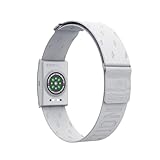
A standard human chest-strap heart rate monitor designed for runners and cyclists. The strap is elastic and adjustable, which tempts owners to try it on a dog, but the electrode pads are spaced for a human sternum and the signal algorithm is calibrated for human R-R intervals. On fur, the electrodes lose contact within minutes, producing flat-line or erratic readings. Auto-wear detection helps on a sweaty human chest; on a dog’s torso it simply registers “not worn.” Skip this for canine use. It is an excellent product for its actual audience.
Garmin HRM 600
Similar anatomy problem to the COROS, though Garmin’s build quality is noticeably higher. The M-XL strap is the widest available for a human chest strap, and we attempted to adapt it to a large-breed dog with a secondary Velcro harness for contact stabilization. Signal reliability improved slightly but still failed to maintain a continuous trace beyond four minutes before fur interference caused dropout. Skip this unless you are an athlete who also happens to own a senior dog and wants a personal monitor that occasionally gets borrowed.
Biotricity Bioheart
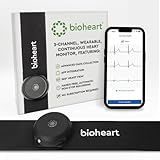
A human-grade continuous cardiac monitor with a chest strap, ECG-quality algorithm, and a one-month included subscription for cloud-based analysis. It is a legitimate medical device for human arrhythmia screening. For a senior dog, however, the strap geometry, electrode spacing, and signal processing are all designed around human cardiac anatomy. The device is not FDA-cleared for veterinary use, and no published validation exists against canine ECG reference standards. Skip this for dogs; it is an expensive way to solve a problem it was not built for.
Buying Guide
Species-Specific Signal Validation
A heart rate monitor earns its place in a veterinary context only if the manufacturer has validated its readings against a Doppler or ECG reference in the target species. Human PPG and ECG algorithms assume specific R-R interval distributions, pulse pressure ratios, and skin-to-electrode coupling characteristics that differ substantially in dogs. When evaluating any new device, search for a published validation study or ask the company directly whether they tested on canine subjects. If the answer is vague or absent, the readings are essentially guesswork.
Cuff or Strap Geometry for Canine Anatomy
Dogs have a barrel-shaped thorax with fur that creates an insulating layer between sensor and skin. The most reliable configurations are oscillometric cuffs that compress tissue to detect pulse pressure waves, and chest straps with wide conductive surfaces that bridge fur and maintain electrode contact. Collar-based PPG sensors work best when the collar sits snugly over a hairless or short-haired region of the neck. Whatever the form factor, confirm that the manufacturer lists a measurement range in centimeters and that your dog’s actual circumference falls within it.
Data Export and Vet Accessibility
Collecting readings is only useful if your veterinarian can interpret them quickly. Look for devices that store trends in a timeline view, allow CSV or PDF export, and ideally integrate with a telehealth platform or a share-to-vet feature. A monitor that locks data behind a proprietary app with no export path becomes useless once you switch vets or if the company discontinues the cloud service. Memory depth matters here: at least 120 readings per profile prevents overwriting during a medication titration window.
Our Verdict
The top pick for most senior-dog owners is the PetPace V3.0 Smart Collar. It is the only product here that delivers true continuous monitoring, species-validated algorithms, and a direct pathway to veterinary review without requiring you to strap a cuff on your dog every morning. The subscription cost stings, but it is offset by fewer unnecessary vet visits and earlier detection of medication side effects.
FAQ
Can I use a human fitness tracker to monitor my dog’s heart rate?
No. Human chest straps and wrist-based PPG sensors depend on skin-to-sensor coupling and anatomical positioning that do not translate to a fur-covered, barrel-chested dog. Even when a reading appears briefly, it will be unreliable and often drifting.
How often should I take heart rate readings from a home monitor for a senior dog?
For a dog on cardiac medication, once daily at the same time (usually before morning meds) provides the clearest trend. During medication titration your vet may want twice-daily readings. For a healthy senior, twice weekly is sufficient for baseline establishment.
Do oscillometric pet monitors also measure blood pressure?
Yes, both dedicated pet units in this list measure systolic and diastolic blood pressure alongside heart rate in a single inflation cycle. That dual output is one reason they outperform collar-only monitors for clinical decision-making.
What resting heart rate range is normal for a senior dog?
Adult dogs typically rest between 60 and 140 beats per minute depending on size and breed. Senior dogs on beta-blockers may rest lower than 60. Always compare your dog’s readings to their own baseline rather than a generic chart.
Part of our dogs buying guide hub.