- Top Pick: 4 Pcs Cat Corner Brush, and Cat Self Grooming Brush with Mint, Corner for Cats to Scratch and Groom, Pet Wall Mounted for Stress Relief and Fur Care
- Best Value: 3.0 Softer Cat Self Groomer with Catnip, Dog Cat Corner Groomer Comb
- Premium Choice: DOUBLE 2 C Hair Brush, 4 Pack Cat Wall Corner Groomers with Catnip, Soft Face Scratchers Brush, Corner Massage Comb for Long & Short Fur Cat Owners, All Ages, Unisex (Grey&Blue)
📅 Last updated:
As an Amazon Associate, All Ears Pet Care earns from qualifying purchases. This article contains affiliate links — if you buy through them we may earn a small commission at no extra cost to you. We only recommend products we believe in.
🛒 Best Price Today on Amazon
Prime members get fast, free shipping on everything above, plus member-only deals. New members get a 30-day free trial — cancel anytime.
As an Amazon Associate we earn from qualifying purchases at no extra cost to you.


📋 Table of Contents
Quick Comparison
| Product | Brand | Price | Rating | Availability |
|---|---|---|---|---|
| Furbulous True Odor-Free Automatic Self-Cleaning Cat Litter Box, Extra | FURBULOUS | $379.99 | 4.1★ (84) | In stock |
| Automatic Cat Feeder, 4L Dual Hopper Smart WiFi Pet Food Dispenser wit | PalNests | $29.99 | 4.2★ (53) | In stock |
| GPS Tracker for Dogs Collar (Android & iOS) – Bluetooth Dog GPS Tracke | MaviyTxen | $24.99 | 4.8★ (10) | In stock |
TL;DR: A cat self grooming brush lets your cat scratch, rub, and groom on demand — reducing loose fur, skin oil buildup, and stress without any human intervention. This guide covers arch designs, wall-mount options, bristle types, and the best picks for 2026.
Best Cat Self Grooming Brush: Top Arch and Wall-Mount Picks for Independent Cats in 2026
Cats groom themselves for up to 50% of their waking hours, but there are zones they cannot reach: the base of the tail, behind the ears, the sides of the face, and along the cheeks. A cat self grooming brush fills these gaps — providing a scratch-and-rub station that the cat controls entirely. The result is less fur on your furniture, a calmer cat, and reduced hairball formation from excess loose coat ingested during self-licking.
Arch designs sit on the floor and create a natural tunnel the cat walks through and rubs against. Wall-mount and corner designs let cats push and rub at face height. Both serve similar purposes with different use patterns. Here is what separates an effective design from one that collects dust.
Why Cats Use Self-Grooming Brushes
See also: Washable Kitten Bed With Removable Cover: 7 Easy-Wash Picks • Cat House for Outdoor Cats: Insulated Shelters and Straw Bedding
Cats engage with grooming brushes for four distinct reasons: fur management (removing loose coat), scent marking (sebaceous glands along the cheeks deposit pheromones on brushed surfaces), tactile stimulation (the scratch sensation releases endorphins), and stress relief (repetitive grooming behaviors are self-soothing). Multi-cat households see an additional social benefit: cats that share a grooming arch engage in a form of communal scent blending, which can reduce inter-cat tension.
Catnip infusion dramatically increases adoption. Most self-grooming brushes include a catnip compartment or come pre-treated. Cats that initially ignore a new arch almost universally engage within 30 minutes of catnip application. The catnip effect diminishes after 10–15 minutes, but the physical conditioning of using the brush persists — most cats continue using it without catnip after the initial introduction period.
Our Top Cat Self Grooming Brush Picks

9
In Stock


As an Amazon Associate we earn from qualifying purchases. Product prices and availability are accurate as of the date/time indicated.

31
Prime
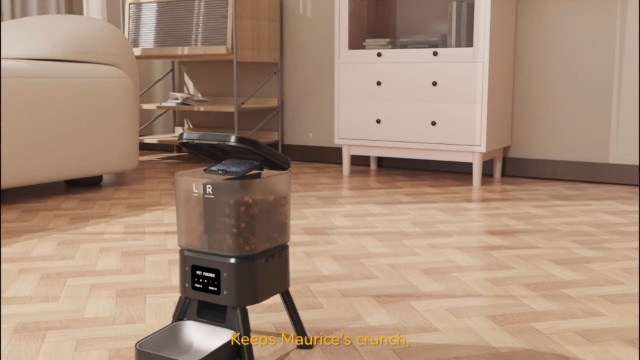
Dual Chamber Automatic Cat Feeder 4L, Dry/Treat Portion | Smart WiFi Pet Food Dispenser 4L with 2.4&5G WiFi App, Custom Schedule & Portion Control for Dry Food and Treats, Black
In Stock








As an Amazon Associate we earn from qualifying purchases. Product prices and availability are accurate as of the date/time indicated.
Cat Self Grooming Brush Types Compared
| Type | Placement | Best For | Catnip Compatible |
|---|---|---|---|
| Floor arch | Freestanding | Full-body rub, large cats | Yes (most models) |
| Corner wall-mount | Screws to corner | Face/cheek rubbing | Yes |
| Door frame strip | Adhesive / magnetic | Side-body brushing | Sometimes |
| Furniture-mount | Clips to sofa leg | Quick face rubs | Sometimes |
| Combined arch + scratcher | Freestanding | Multi-function enrichment | Yes |
What to Look for in a Cat Self-Grooming Brush
Bristle Type and Density
Silicone bristles are the most effective for loose fur removal — they create static charge that attracts dead undercoat and are gentle enough for daily use without causing skin irritation. Nylon bristles provide stronger scratch stimulation but can mat long-haired coats if the bristle spacing is too tight. For shorthair breeds, either works well. For medium and long-haired breeds (Maine Coon, Persian, Ragdoll), wide-spaced silicone is preferable to avoid snagging. Check that bristles are firmly anchored — loose bristles are an ingestion risk.
Arch Height and Tunnel Width
Floor arches should be tall enough for your cat to walk through comfortably with its tail up — measure from the floor to the cat’s raised tail tip. Most commercial arches suit cats up to 12 inches at the shoulder. For large breeds, verify the arch interior clearance before purchasing. The tunnel width should be at least 6 inches wider than the cat’s broadest point (usually the hips) to allow the rubbing motion without the cat feeling trapped.
Base Stability and Anti-Slip Design
A grooming arch that slides across the floor when the cat rubs against it will be abandoned immediately. The base should be weighted or have a non-slip rubber underside. For wall-mount designs, verify the screws and mounting hardware are load-rated for cat impact — a 15-lb cat pushing at full force creates significant lateral stress on a corner mount. Adhesive-only corner mounts often fail within weeks under active use.
Catnip Compartment Quality
The best self-grooming brushes include a refillable catnip compartment built into the arch apex — positioned at nose level for maximum olfactory engagement. Check that the compartment opens and closes securely; loose compartment lids allow cats to dig out and eat large quantities of catnip, which is harmless but defeats the purpose. Look for mesh-covered compartments that release scent passively without allowing direct access.
Cleaning and Fur Management
Grooming brushes accumulate fur rapidly in multi-cat households. Choose a design where the bristle panels are removable for cleaning. Most silicone bristle panels can be pulled free from a snap-fit frame — rinse under warm water and air dry. Fixed bristle designs require using a fine-tooth comb to remove trapped fur, which is time-consuming. Check cleaning complexity in reviews; some seemingly well-designed arches trap fur deep in the bristle base where it is nearly impossible to remove completely.
Frequently Asked Questions
Do cat self-grooming brushes actually reduce shedding?
Yes, measurably. Self-grooming brushes remove loose undercoat passively every time the cat uses the arch, before that fur ends up on furniture or ingested during self-licking. The reduction in ambient fur varies by coat type — double-coated breeds like Maine Coons and Norwegians show the most dramatic improvement. Single-coated shorthairs see less change in surface shedding but benefit from the skin stimulation and increased sebum distribution, which improves coat sheen and skin health.
How do I introduce my cat to a self-grooming brush?
Place the brush in a high-traffic area your cat already uses — beside the food bowl, near a favorite sleeping spot, or in front of a window perch. Apply dried catnip to the bristles and inside any catnip compartment. Drag a feather toy through the arch to demonstrate “safe passage.” Do not place the brush in an area the cat associates with stress or punishment. Most cats investigate within 30–60 minutes and begin rubbing against it on the first day. Shy cats may take 3–5 days of passive exposure before engaging.
Can multiple cats share one grooming arch?
Yes, and in multi-cat households, shared grooming arches often become social hubs. Cats deposit facial pheromones on the arch during rubbing, and other cats investigate and add their own scent — a form of indirect scent communication that can reduce tension between cats that do not engage in direct allogrooming. For households with three or more cats, place two arches in different locations to prevent resource guarding. One dominant cat can monopolize a single arch and discourage others from using it.
Are self-grooming brushes suitable for senior cats?
Highly suitable. Senior cats often develop arthritis in the spine and hips, making self-grooming painful or impossible in the hindquarter and tail-base areas — exactly the zones a grooming arch reaches. A low-clearance arch that does not require the cat to duck down or stretch up is ideal. Softer silicone bristles are preferable for senior cats with thinning skin. The passive, cat-controlled nature of the arch means arthritic cats use it as much or as little as comfortable without any forced handling.
What is the difference between a grooming arch and a grooming glove?
A grooming arch is a passive, cat-operated tool — the cat initiates and controls all contact. A grooming glove requires human handling and is an active process. Many cats that resist brush grooming from humans readily use a self-grooming arch precisely because of this control difference. The two are complementary: an arch handles daily maintenance grooming autonomously, while a glove or slicker brush during calm human-cat bonding time handles deeper coat management and spot-checking for skin issues. Start with the arch for resistant cats.
Related Guides for Cat Owners
- Best Collapsible Cat Tunnels for Large and Small Indoor Cats
- Best Litter Box Deodorizers: Carbon, Enzyme, and Zeolite Picks
- Best Reflective Breakaway Cat Collars for Safety
- Top Electronic Interactive Cat Toys That Keep Cats Engaged
- Best Suction-Cup Cat Window Perches for Bird Watching
Final Verdict
A quality cat self grooming brush — whether a floor arch, corner wall-mount, or door frame strip — delivers continuous grooming enrichment with zero effort from you after initial setup. Choose silicone bristles for effective fur removal, verify arch clearance for your cat’s size, prioritize stable non-slip bases, and use the catnip compartment for initial adoption. For multi-cat households, position two units in separate locations. The result is visibly less fur on surfaces, a calmer cat, and fewer hairball incidents — a straightforward win for both cat and owner.