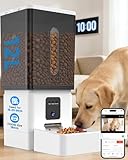
- Top Pick: Automatic Dog Feeder – 8L/34 Cups Large Capacity Automatic Cat Food Dispenser with LCD Screen, Large Food Tray, Battery Operated, Timed Cat Feeder, Up to 50 Portions 6 Meals Per Day, Keeps Fresh
- Best Value: Large Dog Automatic Feeder: 12L/50 Cups Food Capacity, HD 1080P Camera
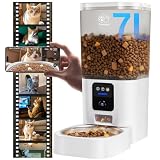
- Premium Choice: Frienhund Automatic Cat Feeder with 2K Camera: 5G WiFi Automatic Dog Feeder with Night Vision,Cat Food Dispenser with 7L Large Food Storage Container for Multiple Pet,Detachable for Easy Clean -29 Cup
📅 Last updated:
Choosing an automatic feeder capacity is not simply a matter of buying the biggest hopper available. A feeder that holds 50 cups may be excessive for one small cat, while a compact 5-cup model can leave a large dog without food during a weekend away. Capacity also affects freshness, counter space, cleaning, portion accuracy, and how often you need to refill the unit.
The most common mistake is confusing hopper capacity with the amount an animal actually eats. Another is assuming that “days of food” claims apply to every pet. Those estimates often use small portions, dry food with a particular kibble size, and one animal. Kibble density varies considerably, so measuring your own food is more reliable than relying on a product headline.
As an Amazon Associate we earn from qualifying purchases at no extra cost to you.


This guide explains how to choose an automatic feeder capacity in 2026, with practical numbers for single-pet homes, multi-pet households, travel, and different budgets.
📋 Table of Contents
- Decide These 3 Things First
- Size: Match Capacity to the Pet, Not the Marketing Claim
- Material: Prioritize Food Contact Areas and Cleaning
- Construction: Inspect the Chute, Lid, and Stability
- Comfort and Performance: Portion Control Matters More Than Maximum Volume
- Price Tiers: Spend on Reliability Before Smart Features
- Warranty: Protect the Motor and Electronics
- Delivery and Assembly: Plan for a Ready-to-Use Test
- Spec Checklist
- Red Flags
- FAQ
Decide These 3 Things First
- Calculate daily food use. Measure the total amount your pet eats in 24 hours. For example, a cat eating 1 cup daily needs about 7 cups for a week, while a 60-pound dog eating 3 cups daily needs 21 cups.
- Choose your refill interval. Decide whether you want to refill every three days, every week, or every two weeks. A feeder should not be filled to its advertised maximum if the food will sit stale before it is eaten.
- Check the kibble. Most automatic feeders work best with dry pieces roughly 1/4 to 3/4 inch across. Large, irregular, oily, or freeze-dried pieces may bridge inside the chute, regardless of hopper size.
A useful formula is: daily food amount × desired days between refills × 1.15. The extra 15 percent provides a modest buffer without encouraging you to store months of food in the hopper.
Size: Match Capacity to the Pet, Not the Marketing Claim
See also: How to Remove Litter Box Odor Buildup (2026): Step-by-Step • How to Fix a Jammed Automatic Feeder (2026): Step-by-Step
Automatic feeder capacity is commonly listed in cups or liters. One cup is approximately 0.24 liters, although the actual weight depends on kibble density. An 8-liter hopper may be advertised as holding 34 cups, while a 12-liter model may list 50 cups. Treat those figures as approximate volume, not guaranteed serving counts.
For one cat eating 1/2 to 1 cup per day, a 5- to 7-liter feeder can provide roughly one to two weeks of capacity. A 7-liter model marketed as about 29 cups is a practical middle ground for one cat or a small dog, particularly if you plan to refill weekly.
For one medium or large dog eating 2 to 4 cups daily, consider 8 to 12 liters. An 8-liter, approximately 34-cup feeder could last around eight to 17 days in theory. A 12-liter, approximately 50-cup unit may cover 12 to 25 days. In real use, the interval will be shorter if you use large kibble, allow for a reserve, or feed multiple meals.
For two pets, calculate their combined daily amount. Two cats eating 1.5 cups total per day need about 10.5 cups per week, so a 20- to 30-cup hopper is usually sufficient. Capacity does not solve food guarding, however. If pets compete, two separate feeders may be more useful than one extra-large unit.
Material: Prioritize Food Contact Areas and Cleaning
Look for a removable stainless-steel bowl or a food tray labeled for pet-food use. Stainless steel is generally easier to scrub and less likely to retain odors than porous plastic. A plastic hopper can still be practical, but it should be thick, smooth, and free from deep seams where oil and crumbs collect.
For daily use, aim for a bowl that holds at least two to three times the largest scheduled serving. A 1-cup portion needs a bowl with roughly 2 to 3 cups of usable space so food does not spill during dispensing or eating. Cats often prefer a wide, shallow tray around 6 to 8 inches across, while large dogs may need a 9- to 12-inch bowl or a separate elevated setup.
Check whether the hopper, chute, bowl, and lid can be removed without tools. Avoid assuming the entire electronic base is washable. Most powered components should be wiped with a damp cloth rather than submerged.
Construction: Inspect the Chute, Lid, and Stability
Capacity is only useful if the feeder can dispense consistently. A narrow chute may clog even when the hopper is half empty. If the manufacturer provides a kibble-size range, compare it with your food. A rotating wheel or auger-style dispenser is often preferable to a simple gravity opening because it can control portions more deliberately, but the design still needs to match the kibble.
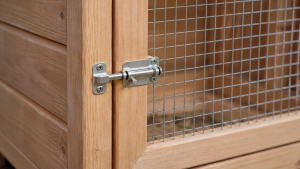
Choose a feeder with a locking or twist-lock lid if your pet is persistent. A 10-pound dog can tip a lightweight unit, so look for a broad base, rubber feet, or a design that can be secured against a wall. For large dogs, a feeder weighing approximately 5 to 10 pounds when empty may be more stable than a small 2- to 3-pound unit, though weight alone is not a guarantee.
Measure the opening where you plan to place it. Large-capacity feeders often stand about 15 to 20 inches tall and may occupy a footprint of 9 by 12 inches or more. Leave several inches around the lid if it opens upward.
Comfort and Performance: Portion Control Matters More Than Maximum Volume
A feeder should deliver portions small enough for your pet’s feeding plan. Look for adjustable servings, such as 1/8 cup or smaller increments, especially for cats, puppies, and pets on a weight-management plan. A listing that promises six meals per day is less useful if its minimum serving is too large.
Confirm how many meals can be scheduled and whether the unit can dispense a custom number of portions per meal. Some models advertise up to 50 portions and six meals daily, but “portion” may mean a small fixed rotation rather than a full measuring cup. Run a 24-hour test with your own kibble before trusting the schedule.
Battery backup is valuable during outages. A feeder may use wall power with battery support, or operate entirely on batteries. Check the manual for the battery type and expected replacement interval; do not assume a screen, camera, Wi-Fi connection, and motor will all run equally long on backup power. A low-food alert, jam notification, and manual feed button are more important for many households than a camera.
Price Tiers: Spend on Reliability Before Smart Features
Budget: $35 to $65. These feeders commonly offer 5 to 8 liters of storage, programmable meals, an LCD screen, and battery operation. A basic 8-liter model around $55.98 may suit one cat or a small dog. Expect simpler portion controls and fewer alerts.
Midrange: $65 to $100. This tier often includes 7- to 12-liter capacity, stronger construction, better seals, app connectivity, or a camera. Examples in the market include a 7-liter, approximately 29-cup Wi-Fi feeder near $59.99 and larger 12-liter models priced around $89.99 to $99.99. Compare the actual controls and cleaning design rather than paying solely for a camera.
Premium: $100 to $180 or more. Higher-priced models may add dual-band Wi-Fi, detailed feeding logs, better notifications, stainless-steel bowls, backup systems, or separate compartments. Premium pricing is worthwhile when you need remote monitoring, multiple schedules, or a particularly secure design. It is not automatically better for a pet that only needs two reliable meals daily.
Warranty: Protect the Motor and Electronics
Look for at least a one-year limited warranty covering the motor, control board, and power adapter. A two-year warranty is preferable for a feeder used several times each day. Read exclusions carefully: consumable parts, clogs caused by oversized kibble, water damage, and damage from chewing may not be covered.
Keep the receipt, packaging, model number, and purchase date. If the feeder connects to an app, check whether core scheduled feeding still works without an account or internet connection. A warranty is less useful if replacement support is difficult to reach or the company only offers app-based troubleshooting.
Delivery and Assembly: Plan for a Ready-to-Use Test
Most automatic feeders require little assembly: attach the hopper, fit the bowl, install batteries, and connect the power adapter. Allow 15 to 30 minutes for setup and testing. Camera-equipped or Wi-Fi models may take longer because you must pair the device, update software, and configure notifications.
Before placing the feeder in its permanent location, test at least 10 scheduled portions. Weigh or measure the output, check for jams, and observe whether your pet can move the unit. For a large feeder weighing 8 to 15 pounds when filled, confirm that the delivery area can support it and that the lid remains accessible for refills.
Spec Checklist
| Spec | Budget | Mid | Premium |
|---|---|---|---|
| Typical capacity | 5–8 L; about 20–34 cups | 7–12 L; about 29–50 cups | 8–15 L; about 34–63 cups |
| Best for | One cat or small dog | One large dog or multiple small pets | Multiple pets, frequent travel, or advanced monitoring |
| Meals per day | 3–6 | 4–10 | 6–12 or more, depending on model |
| Portion adjustment | Usually 1/8–1/4 cup increments | About 1/8 cup or smaller | Fine increments with logs or app controls |
| Power | Wall adapter or 3–4 D batteries | Wall power with battery backup | Wall power, backup battery, and outage alerts |
| Typical price | $35–$65 | $65–$100 | $100–$180+ |
Red Flags
- A capacity claim that does not state whether the number refers to cups, liters, weight, or a manufacturer-defined portion.
- No recommended kibble size, especially when the chute is visibly narrow.
- A lid that lifts easily or a tall, narrow body with no rubber feet.
- A minimum serving that is too large for your cat, puppy, or prescribed diet.
- Camera or Wi-Fi features with no clear explanation of whether scheduled feeding works offline.
- A food bowl that cannot be removed for washing.
- Promises of “20 days” or similar without stating the assumed daily serving size.
- No warranty length, customer-service contact, or replacement-parts information.
FAQ
How many cups should an automatic feeder hold?
Start with your pet’s daily amount and multiply it by the number of days between refills. Add about 15 percent for a buffer. A cat eating 1 cup daily and requiring weekly refills needs roughly 8 cups of practical capacity, while a dog eating 3 cups daily for one week needs about 24 cups.
Is a larger automatic feeder always better?
No. Larger hoppers take up more floor or counter space, can be harder to clean, and may let food sit long enough to lose freshness. Choose the smallest capacity that comfortably covers your refill schedule and allows a reserve.
Can one automatic feeder serve two pets?
It can if both pets eat the same dry food and do not compete. However, one dispenser cannot reliably prevent one pet from eating another’s portion. For unequal diets, food guarding, or weight-control needs, separate feeders or microchip-access models are safer.
What capacity is best for a weeklong trip?
Calculate the combined daily food amount, multiply by seven, and add 15 percent. A household using 3 cups per day needs about 24 cups of capacity for a week. Still arrange a human check-in, because a feeder cannot replace supervision if it jams, loses power, or becomes inaccessible.
Ready to decide? Our #1 pick for 2026 is the Typical capacity.
Live price & availability on Amazon.