- Top Pick: ANDOLL HOME Automatic Cat Feeder, 4L Cat Food Dispenser with 10s Voice Recorder, Pet Feeder up to 8 Meals per Day, Timed Dog Feeder with Dry Food Sealed Ring
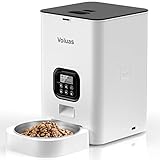
- Best Value: VOLUAS Automatic Cat Feeder, 4L Timed Dry Food Dispenser for Cats & Dogs
- Premium Choice: oneisall Automatic Cat Feeder for 2 Cats Pets, Timed Cat Food Dispenser
📅 Last updated:
Choosing an automatic feeder looks simple until you compare portion controls, hopper sizes, battery backup, cleaning requirements, and the way each model handles different kibble shapes. The most common mistake is buying the largest or cheapest dispenser without checking whether it can deliver the right amount of food reliably. A 5-liter hopper is not automatically better for a small cat, and a Wi-Fi connection is not useful if you only need meals dispensed on a fixed schedule.
This guide explains how to choose an automatic feeder based on the details that affect daily use: capacity, construction, portion accuracy, cleaning, power, price, and support. The best choice for 2026 is the one that fits your pet’s diet and your routine, not necessarily the model with the longest feature list.
As an Amazon Associate we earn from qualifying purchases at no extra cost to you.


📋 Table of Contents
Decide These 3 Things First
- What food will it dispense? Most automatic feeders are designed for dry kibble. Check the recommended food diameter, especially if your pet eats unusually large, round, triangular, or freeze-dried pieces. Wet food usually requires a refrigerated or ice-pack tray system, not a standard hopper dispenser.
- How many meals and how much food are needed? Write down your pet’s daily portion in cups or grams, then divide it among the meals you want. A cat eating 1/2 cup daily has very different capacity needs from a large dog eating 3 cups.
- How much supervision do you need? A basic timer works for predictable schedules. App control, low-food notifications, and camera features cost more but may be worthwhile if you travel, manage multiple pets, or need remote adjustments.
Size and Capacity
See also: How to Remove Litter Box Odor Buildup (2026): Step-by-Step • How to Fix a Jammed Automatic Feeder (2026): Step-by-Step
Capacity determines how often you refill the feeder, but the advertised volume is only a starting point. A 4-liter hopper may hold roughly 16 to 20 cups of dry food, depending on kibble density and shape. A 5-liter unit may hold approximately 20 to 25 cups. Treat those figures as estimates; the manufacturer’s stated food weight is more useful when it is provided.
For one cat, a 2- to 4-liter hopper is usually practical. A small dog may also do well with 3 to 5 liters, while a large dog or a multi-pet household may need 5 liters or more. If the feeder dispenses several meals per day, calculate capacity using the actual number of days between refills. For example, a pet eating 2 cups daily will use about 14 cups in one week.
Measure the space before buying. Many countertop-style feeders are approximately 8 to 12 inches wide, 8 to 12 inches deep, and 12 to 16 inches tall. Leave at least 2 inches above a removable lid and 3 inches behind the unit for a power cable. A narrow feeder can fit beside a cabinet, but a wider base is often harder for a determined pet to tip.
Material and Food Safety
Look for a stainless-steel or removable food-contact bowl when possible. Stainless steel is generally easier to clean and less likely to retain odors than soft plastic. A plastic hopper is common and can be perfectly serviceable, but it should be smooth, crack-free, and easy to remove.
Check whether the bowl, lid, and food chute are dishwasher-safe or hand-wash only. A dishwasher-safe bowl saves time, but do not assume the entire feeder can be immersed. Electronic bases should be wiped with a damp cloth rather than submerged.
For routine hygiene, wash the bowl at least every few days and clean the hopper and chute about once a week, or more often if food dust builds up. Avoid designs with deep, inaccessible corners where oil from kibble can collect. If your pet has a food allergy, choose a feeder that can be fully emptied and cleaned between foods.
Construction and Stability
A reliable feeder needs more than a sealed lid. Examine the base, feet, hinge, chute, and bowl connection. A weighted or wide-bottom design is harder for pets to push across the floor. Rubber feet help prevent sliding on tile or hardwood. If your cat knocks objects over, consider a feeder weighing at least 3 to 5 pounds when empty, or one that can be secured against a wall.
The lid should have a firm latch rather than simply resting on top. Some pets learn to pry up loose covers. A gasket or sealed ring can help limit air and moisture exposure, but it will not make ordinary dry food fresh indefinitely. Store food according to the food manufacturer’s directions and do not fill the hopper beyond its maximum line.
Inspect the dispensing path for a backup-release feature or jam guidance. Kibble dust and irregular pieces can interfere with small augers or rotating wheels. A transparent or partially transparent hopper also makes it easier to notice when food is running low.
Comfort and Performance
Portion control is the most important performance feature. Feeders commonly program meals by dispensing a number of portions rather than a measured cup. One portion may be a few teaspoons, but the amount varies by model and kibble. Weigh several dispenses on a kitchen scale before relying on the schedule. If one portion weighs 8 grams, a 32-gram meal requires four portions.
Look for a schedule that supports at least four meals per day if your pet benefits from smaller servings. Some models offer up to eight or 10 meals daily. A manual-feed button is useful for an occasional extra meal, but it should not be easy for a pet to activate.
Noise matters for cautious animals. Motors and rotating mechanisms can make a brief whirring sound at mealtime. Place the feeder away from a sleeping area and run a test cycle before committing it to a schedule. For pets that eat too quickly, prioritize a compatible slow-feed bowl or a feeder that releases smaller portions more frequently.
Battery backup is valuable during power interruptions. Look for a unit that can operate from batteries when the adapter is unplugged, and confirm whether batteries are included. Wi-Fi models should retain their schedule if the internet fails. A feeder that stops working whenever the app disconnects is a poor choice for essential meals.
Price Tiers
Budget: $25 to $45. Expect a basic timer, a 3- to 4-liter hopper, several scheduled meals, and a simple display or control panel. The ANDOLL HOME 4L example is listed at $29.99, while the VOLUAS 4L example is listed at $41.79. At this level, confirm portion size, battery backup, and cleaning access before paying for extras such as a voice recorder.
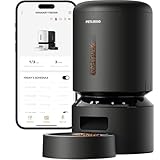
Midrange: $45 to $80. This tier commonly adds better scheduling, a more stable base, improved sealing, multi-pet features, or larger capacity. The oneisall two-pet example is listed at $49.99, and the PETLIBRO 5L Wi-Fi example is listed at $79.99. Compare the cost of replacement bowls, filters, and proprietary parts, not just the initial price.
Premium: $80 to $150 or more. Premium models may include app control, camera monitoring, food-level alerts, multiple-user access, backup power, and more adjustable dispensing. These features make sense when you need remote oversight. They are unnecessary if you simply want breakfast and dinner at fixed times.
Warranty and Customer Support
For a device used every day, look for at least a one-year limited warranty. Read what it covers: motor failure, control-board problems, battery faults, and dispensing jams may be treated differently. A warranty may exclude damage caused by improper cleaning, food blockage, or use with oversized kibble.
Check whether the manufacturer sells replacement bowls, lids, power adapters, rotors, and seals. A feeder that costs $40 but has no replacement parts may be less economical than a $70 model with an available bowl and adapter. Keep the receipt, packaging, and model number until the warranty period ends.
Delivery and Assembly
Most automatic feeders require little assembly, but “ready to use” usually means attaching the bowl, inserting batteries, and connecting the power adapter. Allow 10 to 20 minutes for setup, app pairing, schedule programming, and a test dispense.
Before ordering, confirm the package includes the hopper, bowl, adapter, instruction manual, and any required batteries. Check the return window and inspect the unit immediately for cracked plastic, a loose lid, or a damaged cable. If delivery will leave the box outdoors, choose a protected drop-off location; extreme heat or freezing temperatures can damage electronics or deform plastic components.
Spec Checklist
| Spec | Budget | Mid | Premium |
|---|---|---|---|
| Typical price | $25–$45 | $45–$80 | $80–$150+ |
| Hopper capacity | 3–4 liters | 4–5 liters | 5 liters or more |
| Meal scheduling | 3–6 meals daily | 4–8 meals daily | Up to 10 meals daily or more |
| Controls | Buttons or basic display | Display, voice recording, or improved programming | App, Wi-Fi, alerts, and remote controls |
| Power | Adapter; battery backup varies | Adapter plus battery backup on some models | Adapter, battery backup, and outage alerts on some models |
| Bowl and cleaning | Plastic bowl; removable parts vary | Removable bowl and easier-access chute | Stainless-steel option, sensors, and replaceable parts may be included |
Red Flags
- Vague portion claims: If the listing does not explain the approximate grams or volume per portion, test it with a scale before use.
- No manual override: You should be able to feed your pet immediately without deleting the programmed schedule.
- A loose or transparent lid: Clever pets may open it, and sunlight can accelerate food quality loss.
- Hard-to-clean food paths: Avoid narrow channels and sealed compartments that cannot be inspected.
- Wi-Fi dependence: The feeder should continue its saved schedule if the internet or app is unavailable.
- Unclear power information: Confirm voltage, adapter inclusion, battery type, and whether batteries run the motor or only preserve the clock.
- Oversized capacity for your pet: Food sitting for weeks can lose freshness, even in a sealed hopper.
FAQ
Are automatic feeders safe for cats and dogs?
They can be safe when used with the correct dry food, portion, and schedule. Introduce the feeder while you are home, watch for jamming, and keep normal water access available. An automatic feeder should not replace veterinary guidance for a pet with diabetes, swallowing problems, or a prescribed feeding plan.
How often should I refill an automatic feeder?
Refill it based on daily consumption and the food’s storage guidance. A 4-liter hopper may last a small cat several weeks, but filling it completely is not always ideal. Many owners get better freshness by adding three to seven days of food at a time.
Is a Wi-Fi automatic feeder worth the extra cost?
Wi-Fi is worthwhile if you need remote schedule changes, low-food notifications, or confirmation that a meal was dispensed. For a stable routine, a non-connected timer is simpler and avoids app setup and internet-related troubleshooting.
How do I choose an automatic feeder for two pets?
Look for separate bowls, controlled access, or a design that can identify individual pets. A single shared bowl cannot prevent one animal from eating both portions. Also compare the combined daily food amount with the hopper capacity and confirm that the base is heavy enough to resist pushing.
Ready to decide? Our #1 pick for 2026 is the Typical price.
Live price & availability on Amazon.