- Top Pick: BedStory Queen Mattress 14 Inch – Firm Hybrid Mattress with Orthopedic Spinal Support for Back Pain – 2.0mm Advanced Pocket Spring and Motion Isolation Technology, CertiPUR-US Certified
- Best Value: UniPon 14 inch Medium Firm Mattress Queen, Hybrid Mattress with Back and Lumbar Hip Support, Fiberglass Free, 365 Nights Trial, 10 Years Warranty
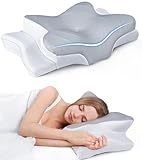
- Premium Choice: Ultra Pain Relief Cooling Pillow for Neck Support, Adjustable Cervical Pillow Cozy Sleeping, Odorless Ergonomic Contour Memory Foam Pillows, Orthopedic Bed Pillow for Side Back Stomach Sleeper
📅 Last updated:
Many shoppers make the same mistake when buying an “orthopedic” bed: they equate firm with supportive. A mattress can feel very hard and still fail to keep the spine in a neutral position. It can also feel plush on top while providing excellent support underneath. The goal is not to find the hardest mattress available—it is to find a sleep surface that holds up your hips and lower back without creating pressure points at your shoulders, ribs, or knees.
When learning how to choose an orthopedic bed firmness, start with your sleeping position, body weight, and current pain patterns. Then look past the marketing language. “Orthopedic,” “spinal support,” and “back support” are useful descriptions, but construction, materials, and fit matter more than the label alone. In 2026, a good-value hybrid mattress with independently wrapped coils and a pressure-relieving comfort layer can often be a more practical choice than an extra-firm all-foam model.
As an Amazon Associate we earn from qualifying purchases at no extra cost to you.



📋 Table of Contents
- Decide These 3 Things First
- Size: Give Your Body Enough Room to Stay Aligned
- Material: Match Pressure Relief to Support
- Construction: Look Beyond the Firmness Label
- Comfort and Performance: Balance Cushioning With Alignment
- Price Tiers: Spend on the Parts That Affect Longevity
- Warranty: Read the Sagging Standard
- Delivery and Assembly: Plan for the Full Setup
- Spec Checklist
- Red Flags
- FAQ
Decide These 3 Things First
- Your main sleeping position: Side sleepers usually need medium to medium-firm support, roughly a 4.5 to 6.5 on a 10-point firmness scale. Back sleepers often do best around 6 to 7.5. Stomach sleepers generally need a firmer, flatter surface around 7 to 8.5 to reduce excessive hip sink.
- Your body weight: Sleepers under 130 pounds may experience a mattress as firmer than advertised. Many people between 130 and 230 pounds do well with medium-firm designs. People over 230 pounds often need firmer comfort layers and stronger coil systems to prevent sagging and midsection sink.
- Where you feel discomfort: Lower-back discomfort can point to insufficient lumbar support or a mattress that sags at the hips. Shoulder and hip soreness, especially for side sleepers, often means the surface is too firm. Neck discomfort may require a pillow adjustment as much as a mattress change.
Size: Give Your Body Enough Room to Stay Aligned
See also: How to Remove Litter Box Odor Buildup (2026): Step-by-Step • How to Fix a Jammed Automatic Feeder (2026): Step-by-Step
Mattress size affects orthopedic comfort because restricted space encourages twisting, curling, and sleeping too close to an edge. A twin measures 38 by 75 inches, while a twin XL is 38 by 80 inches. For a single adult, a full mattress at 54 by 75 inches can feel limiting, particularly for taller sleepers.
A queen, at 60 by 80 inches, is the most versatile option for one person who moves frequently or a couple with average space needs. A king measures 76 by 80 inches and gives each partner 38 inches of width—roughly the width of a twin mattress. A California king measures 72 by 84 inches, making it useful for sleepers over 6 feet 2 inches tall, though it offers 4 fewer inches of width than a standard king.
For couples, choose a queen at minimum if the room permits. If one partner is over 230 pounds, has chronic back discomfort, or changes position frequently, a king can reduce motion disturbance and edge crowding. Measure the room before ordering: leave at least 24 inches of walking clearance on both usable sides and at the foot of the bed when possible.
Material: Match Pressure Relief to Support
Material determines how the mattress responds when you lie down. Memory foam conforms closely to the body and can reduce pressure at the shoulders and hips, but softer foams may allow heavier hips to sink too deeply. Look for a supportive foam core at least 6 to 8 inches thick in an all-foam mattress, rather than judging quality by the total height alone.
Latex is naturally springier than memory foam and tends to make repositioning easier. It can be a strong option for combination sleepers who want pressure relief without the deeply enveloping feel of traditional memory foam. Latex mattresses are often priced higher, commonly from $900 to $2,500 or more for a queen.
Hybrid mattresses combine foam or latex comfort layers with coils. For many people seeking orthopedic support, this is the most balanced construction: coils help stabilize the torso and hips, while the top layers cushion bony areas. Budget hybrid queens can start around $250 to $450, while better-built midrange models commonly fall between $600 and $1,300.
Do not overlook the pillow. A mattress cannot maintain full spinal alignment if your neck is angled sharply upward or downward. Adjustable or contoured cervical pillows are often available around $30 to $70 and can be useful for back and side sleepers when their loft suits their shoulder width.
Construction: Look Beyond the Firmness Label
Firmness is a feel; construction is what helps the mattress retain that feel. For hybrid mattresses, individually pocketed coils are preferable to connected coil systems for many buyers because each spring can respond more independently. This can improve motion isolation and contouring around the hips and shoulders.
For an orthopedic-focused hybrid, look for a mattress between 10 and 14 inches high. A 12- to 14-inch profile often allows room for a coil support unit plus 2 to 4 inches of comfort materials. More height is not automatically better, but a 14-inch mattress may be easier to get in and out of for some adults when paired with a 14- to 18-inch platform or foundation.
Pay attention to edge support if you sit on the mattress to dress, have mobility concerns, or share a bed. Reinforced perimeter coils or denser foam rails can make the usable surface feel larger. This feature is especially valuable on queen mattresses, where losing 3 to 4 inches of stable edge space on each side is noticeable.
Also check the foundation requirements. Most modern foam and hybrid mattresses work on a platform bed, adjustable base, or slatted frame. Slats should usually be no more than 3 to 4 inches apart; wider gaps can allow foam layers to sag and may affect warranty coverage.
Comfort and Performance: Balance Cushioning With Alignment
A medium-firm mattress is often the safest starting point for back pain concerns, but it is not universal. Side sleepers typically need enough surface cushioning to let the shoulder sink slightly while keeping the waist supported. Back sleepers need a flatter, more stable lumbar area. Stomach sleepers should avoid thick, ultra-soft pillow tops that allow the pelvis to dip below the rib cage.
Test comfort over time, not just for 5 minutes in a showroom or after one night at home. Give a new mattress at least 21 to 30 nights of normal use before making a final judgment, unless it is causing severe discomfort. Your body may need time to adjust when replacing an old, sagging bed.
Temperature is another performance issue. If you sleep hot, consider hybrids, ventilated latex, or foam mattresses with breathable covers. Cooling claims vary widely, so prioritize tangible features such as coil airflow, perforated foam, and a washable moisture-wicking cover over vague “ice” or “cooling” terminology.
Motion isolation matters for couples. All-foam beds usually absorb movement well, while pocket-coil hybrids can offer a useful middle ground between isolation and ease of movement. If one person gets up several times overnight, avoid very bouncy connected-coil mattresses.
Price Tiers: Spend on the Parts That Affect Longevity
Budget: $250 to $550 for a queen. At this range, expect basic foam mattresses or entry-level hybrids. A firm 14-inch hybrid with pocket springs can be a reasonable choice for a back or stomach sleeper, but inspect the trial period, weight limit, and return conditions carefully. Budget models may have simpler covers, thinner comfort layers, and less robust edge support.
Midrange: $600 to $1,300 for a queen. This is often the sweet spot for shoppers who need reliable spinal support. Look for zoned coils, 2 to 4 inches of pressure-relieving foam or latex, stronger perimeter support, and a trial period of at least 100 nights. These mattresses generally offer more choices in medium, medium-firm, and firm feels.
Premium: $1,400 to $3,000+ for a queen. Higher prices may bring natural latex, advanced coil zoning, removable covers, thicker comfort layers, or split-firmness options. Premium is worthwhile if you have a complex support need, sleep with a partner whose preferences differ sharply, or need a durable mattress for a higher body weight. It is not necessary simply because a mattress is marketed as orthopedic.
Warranty: Read the Sagging Standard
A 10-year warranty is common, while 15-year and lifetime warranties are also widely advertised. The length alone does not tell you how protected you are. Check the indentation threshold: many warranties cover visible sagging of 1.5 inches or more, while stronger terms may use a 1-inch threshold.
Understand that comfort preferences are not usually warranty claims. A mattress that feels too firm, too soft, or uncomfortable after the trial period generally will not qualify as defective. Keep your receipt, take photos if a problem develops, and use the recommended foundation. Stains can void coverage on many mattresses, so a fitted waterproof protector is a sensible addition.
Delivery and Assembly: Plan for the Full Setup
A queen mattress in a box commonly weighs 70 to 120 pounds, while a king may weigh 100 to 150 pounds. Arrange help if you need to carry it upstairs, through narrow hallways, or around tight corners. Measure stairwells, elevators, and doorways before delivery; a compressed box is easier to maneuver than a fully expanded mattress, but it can still be bulky.
Once unboxed, most foam and hybrid mattresses expand enough to sleep on within a few hours, though full expansion can take 24 to 72 hours. Place it directly on the intended base before opening it. Do not use a knife close to the fabric, as it is easy to cut the cover.
If you are replacing a painful old mattress, confirm whether old-mattress removal is included. White-glove delivery and removal can cost roughly $100 to $250 when not bundled. For shoppers with back problems or limited mobility, that service may be worth the expense.
Spec Checklist
| Spec | Budget | Mid | Premium |
|---|---|---|---|
| Queen price | $250–$550 | $600–$1,300 | $1,400–$3,000+ |
| Best firmness range | Medium-firm to firm, 6–8/10 | Multiple choices, 5–8/10 | Multiple or split firmness options |
| Typical construction | Basic foam or entry hybrid | Pocket-coil hybrid, foam, or latex blend | Latex, zoned coils, advanced hybrid |
| Ideal mattress height | 10–12 inches | 12–14 inches | 12–16 inches |
| Trial period to seek | 30–100 nights | 100–365 nights | 100–365 nights |
| Warranty to seek | 10 years | 10–15 years | 15 years or longer |
Red Flags
- A mattress described only as “orthopedic” with no details about layers, coil type, firmness, or foundation requirements.
- An ultra-firm mattress recommended for every type of back pain. Shoulder pressure and poor alignment can make pain worse.
- No sleep trial, unclear return shipping fees, or return terms requiring you to keep the mattress for an excessively long period.
- A warranty that sounds lengthy but covers indentations only deeper than 1.5 inches.
- Very thick pillow tops on a mattress intended for a stomach sleeper or heavier back sleeper.
- Claims that a mattress can diagnose, treat, or cure medical conditions. Persistent or worsening pain should be discussed with a qualified clinician.
FAQ
Is a firm mattress always best for lower-back pain?
No. Many people do well on medium-firm support because it balances lumbar stability with pressure relief. The best choice keeps your hips from sinking too far while allowing your shoulders and upper back to rest naturally.
What firmness should a side sleeper choose?
Most side sleepers should start around medium to medium-firm, approximately 4.5 to 6.5 out of 10. Lighter sleepers may prefer the softer end, while side sleepers over 200 pounds may need medium-firm support with a thicker pressure-relieving top layer.
Are hybrid mattresses good for orthopedic support?
Yes. A well-built hybrid can be an excellent orthopedic option because the coils support the torso and hips while foam or latex cushions pressure points. Look for pocketed coils, a stable edge, and a comfort layer suited to your sleep position.
How long should an orthopedic mattress last?
A useful lifespan is commonly 7 to 10 years, though materials, body weight, care, and construction all affect durability. Replace it sooner if you see visible sagging, wake with new stiffness, or find yourself sleeping better elsewhere.
Ready to decide? Our #1 pick for 2026 is the Queen price.
Live price & availability on Amazon.