📅 Last updated:
📋 Table of Contents
Quick answer: Our top pick in 2026 is the Basic hard-sided carrier for cats and small dogs — our #1 rated choice. See the full ranked comparison, alternatives and buying advice below.
The Short Answer
Usually, yes—but only when the carrier is correctly sized for your pet and secured inside the vehicle. A hard sided carrier offers better resistance to crushing, scratching, chewing, and sudden escape than most fabric carriers. However, it is not automatically crash-safe, and a poorly sized or unsecured carrier can still shift, tip, or injure a pet.
The honest answer to “is a hard sided carrier safer” is therefore “it depends.” For car trips, vet visits, moves, and anxious pets, hard plastic can provide a more protective shell. For long walks, public transit, or pets that need extra ventilation and flexibility, a soft carrier may be more comfortable and practical. The safest choice is the one that fits your pet properly, has secure closures, and can be restrained in the way your vehicle and carrier instructions recommend.
As an Amazon Associate we earn from qualifying purchases at no extra cost to you.

What You Actually Get
See also: How to Remove Litter Box Odor Buildup (2026): Step-by-Step • How to Fix a Jammed Automatic Feeder (2026): Step-by-Step
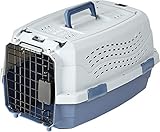
A hard sided carrier is generally made from molded plastic with a wire, plastic, or metal door and ventilation openings on multiple sides. Its rigid walls preserve the carrier’s shape, so the interior is less likely to collapse onto a cat or small dog when the carrier is set down or pressed against another item.
That structure also makes loading more predictable. A top-opening design can be useful for cats that resist being pushed through a front door, while a front-opening door may be easier for a dog that walks willingly inside. Some models offer both. The Amazon Basics 2-Door Top-Load Hard-Sided Pet Travel Carrier, for example, measures 19 inches long by 12.6 inches wide by 10 inches high and is listed at $33.48. Those dimensions make it a small-pet option, not a general-purpose carrier for medium or large dogs.
At the other end of the size range, the Skudo by MidWest 42-Inch Travel Carrier is listed for pets up to 80 pounds and costs $385.42. A carrier this large is intended for substantially bigger animals, but buyers still need to compare the interior measurements with the pet’s actual height and length. A listed weight limit alone does not guarantee a comfortable fit.
Before buying, measure your pet from the floor to the top of the head or ears, depending on how the manufacturer defines height, and from the nose to the base of the tail. Your pet should be able to stand without hunching, turn around, and lie down in a natural position. For trips lasting more than a quick appointment, allow room for a thin, secure pad without making the interior cramped.
Pros
- Better escape resistance: Rigid doors and hard plastic walls are more difficult for many pets to claw, bite, or push through than fabric mesh.
- More consistent protection: The shell helps block casual bumps, dropped objects, and contact with luggage or other items. It is not a substitute for a certified crash-tested restraint.
- Easier to clean: Plastic can usually be wiped and disinfected after accidents, motion sickness, or muddy paws. Remove any bedding first and follow the manufacturer’s cleaning guidance.
- Stable shape: The carrier stays open while you load the pet and is less likely to fold inward during handling.
- Useful for nervous pets: Solid panels can reduce visual stimulation, especially when the carrier includes ventilation on the sides and back without leaving the pet fully exposed.
- Stacking and storage flexibility: Some hard carriers can be stacked or partially disassembled, although you should not stack them in a way that blocks ventilation or puts weight on a pet.
Cons
- Heavier and bulkier: Plastic walls take up more storage space and can be awkward on stairs, buses, and long walks.
- Not automatically safer in a crash: Many everyday pet carriers are not independently tested for vehicle collisions. Do not assume a rigid shell has the same protection as a purpose-built, crash-tested restraint system.
- Can become a projectile: An empty or occupied carrier that is loose in a car may slide or tip during sudden braking. Place it where the manufacturer recommends and secure it only as instructed.
- Ventilation varies: A dark, enclosed carrier can become hot quickly in direct sun or a parked vehicle. Never leave a pet unattended in a car, even when the carrier has ventilation openings.
- Hard surfaces can be uncomfortable: A thin pad may not provide enough cushioning for a long journey, but thick bedding can reduce usable space and affect stability.
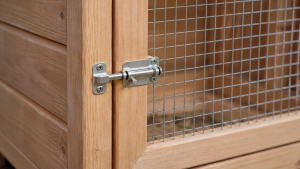
- Door hardware needs inspection: Latches, hinges, bolts, and wire doors can loosen or break. Test every closure before each trip rather than relying on appearance alone.
Who Should Buy It
Choose a hard sided carrier if your pet is an escape artist, scratches at mesh, or needs a contained space for veterinary visits. It is also a sensible choice for owners who prioritize easy cleanup, rigid support, and protection from everyday bumps.
It can work especially well for cats and small dogs traveling by car. A compact model such as the 19-by-12.6-by-10-inch Amazon Basics carrier may be convenient for a small animal that fits those dimensions comfortably. Measure first; a low price is not a bargain if your pet cannot stand or turn around.
Large-dog owners may prefer a heavy-duty model with stronger doors, ventilation, and a more substantial frame. The 42-inch Skudo by MidWest, listed for pets up to 80 pounds, illustrates the price difference: larger travel carriers can cost several hundred dollars. Consider the carrier’s empty weight as well as your pet’s weight, since you may need to lift the combination.
Who Should Skip It
Skip a hard carrier if you need something lightweight for frequent walking, if your storage space is extremely limited, or if your pet becomes distressed in an enclosed plastic shell. A soft-sided carrier may be easier to carry and may fit beneath some seats, though dimensions and transportation rules vary.
You should also skip any carrier that is too small, has a questionable latch, lacks adequate ventilation, or cannot be secured appropriately for your travel method. For air travel, do not buy based only on a product description. Check the current airline’s rules for dimensions, construction, ventilation, door design, absorbent bedding, and pet size before purchasing.
Cheaper Alternatives
| Option | Cost | Trade-off |
|---|---|---|
| Basic hard-sided carrier for cats and small dogs | $25–$50 | Affordable rigid protection, but limited interior space and fewer features. A model such as the 19-inch Amazon Basics carrier fits only appropriately sized small pets. |
| Standard soft-sided carrier | $30–$90 | Lighter and easier to store, but mesh can be clawed or chewed and fabric offers less resistance to crushing. |
| Used hard-sided carrier | $10–$60 | Can save money, but inspect the shell, door, hinges, screws, and ventilation openings. Avoid cracked plastic or missing hardware. |
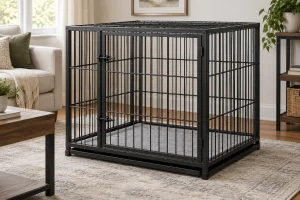
| Wire crate with a fitted vehicle restraint | $50–$180 | Provides airflow and room for some dogs, but it is less enclosed and may not offer the same escape resistance or impact protection as a solid carrier. |
| Heavy-duty large hard carrier | $200–$450 | More room and stronger construction for large dogs, but costly, bulky, and difficult to lift. The 42-inch Skudo example is listed at $385.42. |
FAQ
Is a hard sided carrier safer than a soft carrier in a car?
It can be safer for preventing escape and resisting everyday crushing or contact with loose items. It is not automatically safer in a collision. The carrier must fit the pet, remain ventilated, and be secured according to the carrier and vehicle instructions. For serious crash protection, look for a product with clearly stated, independently verified testing rather than assuming all hard carriers meet the same standard.
Should a pet be able to stand inside a carrier?
Yes. Your pet should generally be able to stand, turn around, and lie down naturally. Measure the pet and compare those measurements with the carrier’s interior dimensions, not merely its exterior size. A carrier that is technically long enough may still be too low or narrow.
Is a hard carrier better for cats?
Often, yes. Many cats benefit from a stable carrier that does not collapse and can be cleaned after an accident. A top-loading door can also make gentle loading easier. Covering part of the carrier with a breathable towel may reduce visual stress, but never block ventilation.
How do I make a hard sided carrier safer?
Check the latch before every trip, add a thin non-slip pad, remove collars or harnesses that could catch on openings, and keep the carrier out of direct heat. In a vehicle, position and secure it as the manufacturer recommends. Never place heavy luggage on top, and never leave your pet unattended in a parked car.
Ready to decide? Our #1 pick for 2026 is the Basic hard-sided carrier for cats and small dogs.
Live price & availability on Amazon.