📅 Last updated:
Controlling litter-box odor starts with the box itself, not just a stronger fragrance. Many shoppers make the same mistakes: choosing a box that is too small, buying a covered model that traps moisture without adequate ventilation, or focusing on scent instead of waste removal. Others overlook the litter’s depth, the location of the box, and whether a cat can comfortably turn around inside it.
This litter box buying guide for odor control in 2026 focuses on the features that actually affect smell: enough interior space, easy access for daily scooping, leak-resistant construction, good airflow, and a setup your cat will consistently use. Deodorizers can help, but they should support—not replace—frequent scooping and regular washing.
As an Amazon Associate we earn from qualifying purchases at no extra cost to you.



📋 Table of Contents
- Decide These 3 Things First
- Size: Buy for the Cat, Not the Room
- Material: Choose Surfaces That Do Not Hold Odor
- Construction: Prioritize Access and Airflow
- Comfort and Performance: Make the Right Behavior Easy
- Price Tiers: Spend on Cleanability Before Extras
- Warranty: Check What Is Actually Covered
- Delivery and Assembly: Measure Before the Box Arrives
- Spec Checklist
- Red Flags
- FAQ
Decide These 3 Things First
- How many cats will use it? A single cat can usually share a large box, but odor control is easier with one box per cat plus one extra. For two cats, plan on three boxes if your home has the space.
- Where will it go? A well-ventilated laundry room, bathroom, or quiet utility area is preferable to a sealed closet. Avoid placing it beside food and water, in a busy hallway, or next to a loud appliance.
- What cleaning routine is realistic? If you can scoop twice daily, an open box may be the best-smelling option. If you need more privacy or want to contain tracking, choose a covered box with a wide entry and removable top that can be washed easily.
Size: Buy for the Cat, Not the Room
See also: How to Remove Litter Box Odor Buildup (2026): Step-by-Step • How to Fix a Jammed Automatic Feeder (2026): Step-by-Step
The most important measurement is usable interior length. A practical rule is to choose a box at least 1.5 times your cat’s body length, measured from the nose to the base of the tail. For an average adult cat, that usually means an interior around 22 to 26 inches long and 16 to 20 inches wide. Large cats may need 30 inches of length or more.
Height matters, too. A 5- to 7-inch wall is suitable for many kittens and older cats, while a 10- to 12-inch wall helps contain urine spray and kicked litter. For high-sided boxes, look for a lowered entry of approximately 5 to 7 inches. Senior, arthritic, or mobility-impaired cats may need an entry closer to 3 to 5 inches.
Covered boxes often advertise the exterior dimensions, which can be misleading. A hood, filter housing, or sloped wall may reduce the usable interior by several inches. Check the inside dimensions and door opening before buying.
Material: Choose Surfaces That Do Not Hold Odor
Nonporous plastic is the standard because it is lightweight, inexpensive, and easy to rinse. Look for thick, smooth polypropylene or similarly durable plastic with no deep texture. A glossy or lightly satin interior is generally easier to clean than a heavily pebbled surface, where urine residue and litter dust can collect.
Stainless steel is more expensive but resists absorption and scratching. A stainless pan weighing roughly 4 to 8 pounds is less likely to retain odor than thin plastic after years of use. It can also be a good choice for cats that scratch aggressively. Check that the edges are folded or covered so there are no sharp exposed seams.
Avoid boxes with damaged interiors, flaking coatings, or complicated fabric liners if odor is the primary concern. Fabric and porous materials can absorb liquid and become difficult to deodorize. Rubber mats and liners should be removable and washable rather than permanently glued into place.
Construction: Prioritize Access and Airflow
For odor control, the best construction is the one that makes waste removal quick. An open pan gives you immediate visibility, while a hood can contain some odor and litter scatter but may also concentrate ammonia inside the enclosure. If you choose a covered box, favor a model with a removable top, a generous entry, and ventilation openings near the upper rear or sides.
A top-mounted carbon filter may reduce some airborne odor, but it is not a substitute for scooping. Filters commonly need replacement every 30 to 90 days, depending on the manufacturer and how many cats use the box. Avoid buying a covered model if the replacement filters are proprietary, difficult to find, or priced close to the cost of a new box.
Seams deserve special attention. Two-piece boxes should have a secure overlap or gasket that keeps urine and litter from escaping. Latches should close without excessive force and should not create narrow crevices that are difficult to scrub. For self-cleaning models, inspect the waste drawer, rake path, and corners for places where clumps could accumulate.
Comfort and Performance: Make the Right Behavior Easy
A box cannot control odor if a cat avoids using it. Most cats prefer enough room to turn around, dig, and posture without touching the walls. Provide at least 2 to 3 inches of litter for standard clumping formulas, unless the litter manufacturer specifies otherwise. Too little litter allows urine to reach the bottom; too much increases tracking and makes scooping less efficient.
Entry design is especially important. A doorway approximately 8 to 10 inches wide suits many adult cats, while larger cats may need 10 to 12 inches. Kittens and senior cats benefit from a low step-in height. If you use a top-entry box, confirm that your cat can comfortably jump in and out; it may be unsuitable for kittens, older cats, or cats with joint problems.
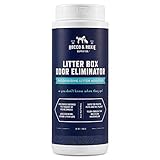
Performance also depends on the litter. Unscented clumping litter is often a practical starting point because it allows urine and feces to be removed before odor builds. If you add a deodorizer, follow its label directions and use a light amount. Products such as ARM & HAMMER Cat Litter Deodorizer Double Duty, Rocco & Roxie Litter Box Odor Eliminator, Nature’s Miracle Cat Litter Box Odor Deodorizer Powder, and Fresh Step Cat Litter Crystals Deodorizer represent different deodorizing formats, but compatibility and your cat’s tolerance matter more than fragrance strength.
Price Tiers: Spend on Cleanability Before Extras
Budget: $15–$35. Expect a basic open plastic pan, a low-entry tray, or a simple high-sided design. This tier can control odor well when it has a large footprint and smooth interior. Plan to spend another $5–$15 on a scoop and $5–$12 on a deodorizer if needed.
Midrange: $35–$90. These boxes commonly add taller walls, a removable hood, better latches, a stainless pan, or a more effective scatter-control design. A good midrange box is often the best value for a single-cat household because it improves cleaning without introducing unnecessary electronics.
Premium: $90–$250 or more. This range includes stainless-steel boxes, furniture-style enclosures, and automatic or self-cleaning systems. Premium pricing is worthwhile only if the unit is large enough, replacement parts are available, and the cleaning cycle genuinely fits your routine. Consumables can add $5–$30 per month for filters, liners, or specialty litter.
Warranty: Check What Is Actually Covered
A basic pan may have little or no meaningful warranty, while premium automatic boxes may offer one to three years of coverage. Read whether the warranty covers the motor, sensor, electrical components, and waste-drawer mechanism—or only manufacturing defects in the shell.
Also check registration requirements, return windows, and exclusions for using non-brand litter. A one-year warranty is less useful if replacement parts are unavailable after six months. For electronic models, look for a stated operating temperature range, washable components, and a support contact based in the United States.
Delivery and Assembly: Measure Before the Box Arrives
Measure the intended location, including door clearance and room to scoop. Allow at least 24 inches of open space in front of the entry and approximately 3 inches around a covered unit for removing the lid. Furniture-style enclosures may weigh 20 to 50 pounds; automatic systems can weigh 20 to 35 pounds before litter is added.
Most standard pans need no assembly. Covered models may take 5 to 15 minutes, while furniture enclosures can take 30 to 90 minutes. Before ordering, confirm whether the package includes the scoop, filter, ramp, power adapter, liners, and starter litter. A low product price can become expensive when required accessories are sold separately.
Spec Checklist
| Spec | Budget | Mid | Premium |
|---|---|---|---|
| Usable interior length | 20–24 in. | 24–30 in. | 26–36 in. |
| Usable interior width | 15–18 in. | 17–22 in. | 20–24 in. |
| Wall height | 5–9 in. | 8–12 in. | 10–16 in., often adjustable |
| Entry height | 4–7 in. | 4–8 in. | 3–8 in., depending on design |
| Typical box price | $15–$35 | $35–$90 | $90–$250+ |
| Typical weight | 2–5 lb. | 4–12 lb. | 10–35 lb. |
| Electrical requirement | None | Usually none | Typically 5–50 watts, model dependent |
| Best for | Simple, frequent scooping | Better containment and cleanability | Special features or reduced manual scooping |
Red Flags
- Small interior with oversized exterior dimensions: Hood thickness and filter compartments may leave your cat with less than 20 inches of usable length.
- Strong fragrance marketed as odor elimination: Scent covers smells temporarily and may discourage sensitive cats.
- Unclear replacement-part pricing: Check the cost and availability of filters, liners, rakes, sensors, and waste containers before purchasing.
- Hard-to-clean seams: Deep grooves, fixed liners, and inaccessible corners can hold urine residue.
- Automatic cycles with no safety information: Look for motion detection, weight sensing, cycle delays, and a manual-use option.
- No low-entry option: A tall doorway can exclude kittens, elderly cats, and cats with mobility issues.
- Claims without details: Phrases such as “odor-proof” or “100% odor-free” are not substitutes for dimensions, filter instructions, or a cleaning schedule.
FAQ
Does a covered litter box reduce odor?
It can contain some odor and litter scatter, but it does not remove the source. A covered box may actually smell stronger inside if waste is not scooped promptly. Choose a ventilated, removable-top model and clean the hood, filter area, and pan regularly.
How often should I scoop for odor control?
Scoop at least once daily, and twice daily when possible—especially in a multi-cat home. Remove clumps and solid waste promptly, top up litter as needed, and wash the box with mild unscented soap every one to four weeks. Replace the box when scratches, cracks, or persistent odor remain after washing.
Are litter deodorizers safe for cats?
Use only products labeled for litter boxes, follow the package amount, and introduce them gradually. Avoid adding heavily scented products if your cat shows sneezing, avoidance, or changes in bathroom habits. Never use household cleaners containing bleach, ammonia, or strong essential oils in or around the box.
What is the best box for a large or older cat?
Choose a box with at least 26 to 30 inches of usable length, 18 to 22 inches of width, and a low entry around 3 to 5 inches. A roomy open pan is usually easier to enter and clean than a compact top-entry or enclosed model. Add a nonslip mat outside the entrance to improve footing and catch scattered litter.
Ready to decide? Our #1 pick for 2026 is the Usable interior length.
Live price & availability on Amazon.