📅 Last updated:
As an Amazon Associate, All Ears Pet Care earns from qualifying purchases. This article contains affiliate links — if you buy through them we may earn a small commission at no extra cost to you. We only recommend products we believe in.
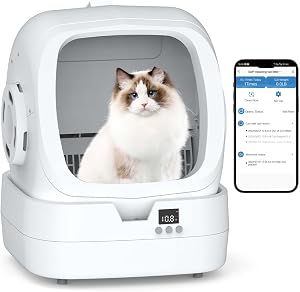
TL;DR: A multi cat litter box with automatic self-cleaning removes waste after every use, eliminating the territorial tension and disease risk that come from shared boxes in multi-cat homes. The best models handle high-traffic cycles without jamming and track usage per cat.
As an Amazon Associate we earn from qualifying purchases at no extra cost to you.


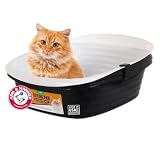
Best Multi Cat Litter Box: Self-Cleaning Options That Handle High-Traffic Homes
The rule of thumb in feline behavior science is one litter box per cat, plus one extra. For a three-cat household, that’s four boxes — a logistical and odor management challenge most owners don’t want to live with. A quality multi cat litter box with automatic self-cleaning addresses this by cycling waste within minutes of each use, keeping the box effectively “fresh” throughout the day and reducing the territorial anxiety that shared boxes trigger in high-density cat households.
This guide breaks down how multi-cat automatic units work, what separates the durable models from the ones that jam under heavy use, and which features are actually worth the premium price.
🛒 Best Price Today on Amazon
Prime members get fast, free shipping on everything above, plus member-only deals. New members get a 30-day free trial — cancel anytime.
📋 Table of Contents
- Top Multi Cat Automatic Litter Box Pick
- Why Standard Litter Boxes Fail Multi-Cat Homes
- Automatic Litter Box Feature Comparison
- What to Look for in a High-Traffic Automatic Unit
- Litter Type and Volume for Multi-Cat Setups
- Managing Territorial Anxiety Around the Litter Area
- FAQ: Multi Cat Litter Box
- Final Verdict
- Related Guides
- Frequently Asked Questions
- Related Articles
- Related Guides
Top Multi Cat Automatic Litter Box Pick
Why Standard Litter Boxes Fail Multi-Cat Homes
See also: Washable Kitten Bed With Removable Cover: 7 Easy-Wash Picks • Cat House for Outdoor Cats: Insulated Shelters and Straw Bedding
In single-cat homes, a standard box scooped once or twice daily is adequate. Add a second or third cat and the math changes dramatically. Cats are instinctively clean animals — they’ll avoid boxes they perceive as soiled, which forces them to either hold elimination (leading to urinary health problems) or find alternative locations (your carpet, laundry, plant pots).
Beyond hygiene, litter box areas are territorial flashpoints. A dominant cat may guard access, forcing subordinate cats to eliminate under stress — which contributes directly to chronic urinary tract issues in anxious or low-status cats. An automatic unit that cleans continuously removes the territorial incentive because there’s no “prize” (a clean box) to guard.
Automatic Litter Box Feature Comparison
| Feature | Entry-Level Auto | Mid-Range Auto | Premium Multi-Cat |
|---|---|---|---|
| Cats Supported | 1–2 | 2–3 | 3–5 |
| Cycle Trigger | Timer only | Motion sensor | Weight + motion sensor |
| Health Monitoring | None | Basic alerts | Per-cat usage tracking |
| Waste Capacity | Small drawer | Medium bin | Large sealed bin |
| App Control | No | Limited | Full app integration |
| Odor Control | Basic | Carbon filter | Sealed + deodorizer |
| Jamming Risk | Higher | Moderate | Lower (sensor-based stop) |
What to Look for in a High-Traffic Automatic Unit
Not all automatic litter boxes are engineered for multi-cat throughput. A unit designed for a single cat will fail under the mechanical stress of 8–12 cleaning cycles per day. Here’s what separates durable multi-cat units from inadequate ones:
- Motor torque rating — higher torque handles clumped litter more reliably without the rake stalling mid-cycle. Look for units that advertise commercial-grade or heavy-duty motor specs.
- Weight-based entry detection — timer-based units often cycle while a cat is still inside; weight sensors prevent this safety hazard entirely.
- Waste bin volume — a small waste compartment fills within days in a multi-cat home. Units with large-capacity bins (or continuous-drain bag systems) require far less owner intervention.
- Litter compatibility — most automatics require clumping litter; some work only with proprietary substrate. Proprietary litter lock-in significantly increases long-term cost.
- Health monitoring dashboard — premium units track visit frequency and duration per registered cat, allowing early detection of urinary straining or avoidance behavior that signals veterinary intervention.
Litter Type and Volume for Multi-Cat Setups
Most automatic units specify a litter depth requirement — typically 3–4 inches of clumping litter for optimal rake performance. Under-filling causes incomplete clump capture; over-filling stresses the rotation mechanism. For clumping performance in high-traffic units, fine-grain sodium bentonite litters consistently outperform coarse-grain or plant-based alternatives in mechanical compatibility tests.
Dust level matters more in multi-cat homes because more cats mean more litter disturbance per day. Low-dust formulas reduce respiratory irritation, particularly for cats with asthma or brachycephalic airway profiles (flat-faced breeds like Persians and Exotic Shorthairs).
Managing Territorial Anxiety Around the Litter Area
Even with a high-capacity automatic unit, some cats in multi-cat households develop elimination anxiety rooted in inter-cat conflict rather than box cleanliness. If one cat is blocking access or another is refusing to use the box despite it being clean, address the territorial dynamic directly. Pairing an automatic litter box with a cat pheromone diffuser in the same room is a veterinary-endorsed combination — the diffuser reduces territorial signaling while the automatic unit eliminates the soiled-box trigger. For large homes where the litter area is behind a door or room divider, a retractable pet gate gives cats access control without permanently blocking the space from human use.
FAQ: Multi Cat Litter Box
How many cats can one automatic litter box actually support?
Most manufacturers rate premium multi-cat units for 3–5 cats, but that rating assumes average-sized cats with normal elimination frequency. For large cats (over 15 lbs), very senior cats with frequent urination, or households where cats are fed wet food (which increases urination), a conservative maximum of 3 cats per unit is more reliable. A 4-cat household is better served by two mid-range units than one premium unit pushed to its capacity limit.
Will my cats be scared of the automatic cleaning mechanism?
Noise and movement are the primary adjustment barriers. Most units have a post-use delay (typically 5–20 minutes, adjustable via app) that ensures the box doesn’t cycle while a cat is nearby. Introduce the unit turned off for 3–5 days so cats habituate to its presence and smell before the motor activates. Gradual introduction with positive reinforcement (treats placed near and then inside the unit) dramatically improves acceptance rates compared to cold-switching from a traditional box.
Are automatic litter boxes worth the cost for multi-cat homes?
The calculation shifts decisively toward yes when you factor in time savings and behavioral health benefits. A household with 3 cats scooping twice daily represents roughly 45 minutes of labor per week. More importantly, the behavioral impact — reduced territorial conflict, lower urinary disease risk, fewer inappropriate elimination incidents — delivers real value that’s harder to quantify but well-documented in feline behavioral literature. The upfront cost of a premium unit is typically recovered within a year versus disposable liner and box replacement costs.
What litter works best in automatic multi-cat units?
Fine-grain clumping litter (sodium bentonite base) is the universal best performer in rake-style automatics. The clumps form quickly and hold together during the rake cycle rather than crumbling and contaminating the clean litter bed. Avoid crystal litter unless the unit is specifically designed for it, and avoid non-clumping litter entirely — it renders the automatic mechanism ineffective and produces significantly more odor per cycle.
How do I clean an automatic litter box without disrupting my cats’ routine?
Premium units are designed for minimal-disruption cleaning. The waste drawer or bag system can typically be removed and replaced in under two minutes without exposing the litter bed. Full deep-cleaning (recommended monthly) requires temporarily relocating the unit — always keep a backup traditional box available during maintenance periods so cats are never without access. If a cat has previously shown elimination anxiety, deep-cleaning days may increase stress; use this as a cue to assess whether pheromone diffuser coverage in the litter area is adequate.
Final Verdict
A well-chosen multi cat litter box with automatic self-cleaning is one of the highest-impact upgrades a multi-cat household can make. It directly addresses the two primary failure modes of shared litter areas — inadequate cleanliness and territorial guarding — while reducing daily owner workload. Invest in a unit rated for your cat count with weight-based entry detection, large waste capacity, and app-based health monitoring. Introduce it gradually, pair it with environmental enrichment, and treat it as core infrastructure rather than an optional upgrade.
Related Guides
Frequently Asked Questions
How many cats can one automatic litter box handle?
Most self-cleaning units are marketed for up to three or four cats, but the standard guidance of one box per cat plus one extra still applies for behavioral reasons. Cats guard resources, and a single box creates a bottleneck where a confident cat can block a timid one. If you use an automatic box, keep at least one conventional box available in a separate area.
Is an automatic box safe for kittens or very large cats?
Check the weight sensor minimum, since kittens under about five pounds may not trigger the safety cutoff that pauses the cleaning cycle. Very large cats need a wide entry and a spacious drum or tray so they can turn around and dig comfortably. Keep kittens on a plain open box until they reliably exceed the sensor threshold and understand the routine.
How often do I still need to clean it?
The waste drawer typically needs emptying every few days in a multi-cat home, sooner than single-cat marketing suggests. Plan on a full teardown clean every two to four weeks: remove the litter, wash the tray and rake with warm soapy water, wipe the sensors gently since dust causes false readings, and dry everything before refilling. Sensor and rake maintenance is what keeps the unit reliable.
How do I get a nervous cat to use it?
Place the new unit beside the existing box, leave it powered off for several days so the cat accepts the shape and smell, and use the same litter it already likes. Then enable cleaning but set a long delay so the motor never runs while the cat is nearby. Never force a cat inside, and keep the old box available until the new one is used consistently.
What litter box changes mean a vet visit?
Automatic boxes that track visits can flag problems early. Contact your veterinarian for straining, frequent small urinations, blood, crying in the box, or a cat that stops using it altogether, since urinary blockage is a medical emergency in male cats. A sharp increase in urine volume also warrants testing for kidney disease or diabetes. This is general information and not veterinary advice.