📅 Last updated:
📋 Table of Contents
Quick answer: Our top pick in 2026 is the Large uncovered litter pan — our #1 rated choice. See the full ranked comparison, alternatives and buying advice below.
The Short Answer
Yes—automatic litter boxes can be worth the cost if your main priority is reducing daily scooping and you are willing to keep up with maintenance. They are not a complete replacement for cleaning, and the least expensive models may require more hands-on attention than their marketing suggests.
For a budget-conscious buyer, an open-top self-cleaning model priced around $99.99 can be a reasonable trial. It may help remove waste more consistently than a traditional pan, but it will not necessarily provide the quietest operation, the largest waste drawer, or the most reliable odor control. The value depends less on the word “automatic” and more on whether the box fits your cat, your litter, and the space available in your home.
As an Amazon Associate we earn from qualifying purchases at no extra cost to you.

What You Actually Get
See also: How to Remove Litter Box Odor Buildup (2026): Step-by-Step • How to Fix a Jammed Automatic Feeder (2026): Step-by-Step
An automatic litter box typically uses a motorized rake, rotating drum, conveyor, or sifting mechanism to separate clumps from clean litter. A sensor or timer starts the cleaning cycle after your cat leaves. Waste then moves into a covered or semi-covered receptacle that you empty periodically.
At the $99.99 price point, you are generally buying a basic appliance rather than a fully automated pet-care system. The package may include the box, a waste container, a power adapter, and instructions. Some models require a specific litter type, while others work best with firm-clumping clay. Check the product details before buying; a box that cannot handle your preferred litter may cost more over time than its purchase price suggests.
Space is another practical consideration. Many automatic boxes occupy approximately 20 to 30 inches in length and width, with heights ranging from about 18 to 30 inches. Open-top designs may feel less confining to cats, but they also provide less odor containment and can allow litter to scatter. Leave several inches of clearance around the unit so you can remove the waste drawer and clean the moving parts.
Electricity use is usually modest. Small motors commonly operate in the rough range of 3 to 10 watts while running, so the power bill is rarely the deciding expense. Consumables matter more: litter, liners if required, odor filters on some models, and replacement parts. A household with one cat may empty a waste drawer every few days; a household with multiple cats may need to empty it daily, even when the box is advertised as “multiple cat.”
Pros
- Less daily scooping. The biggest benefit is convenience. Instead of removing clumps two or more times a day, you can let the mechanism handle routine sifting and focus on emptying the drawer.
- Cleaner litter between full changes. Frequent removal of urine and feces can leave more usable litter in the pan, provided the machine forms firm clumps and does not break them apart.
- Useful for busy households. Owners who work long hours, travel occasionally, or have mobility limitations may find the reduced bending and scooping especially valuable.
- Potentially better odor control. Removing waste soon after use can reduce odor compared with a box that is scooped only once daily. Open-top units, however, may still allow smells to spread.
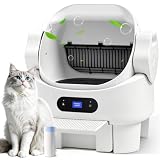
- A relatively low-cost entry point. A $99.99 unit, such as a Self Cleaning Litter Box with an open-top design or the OneBug Self Cleaning Open Top Automatic Multiple Cat Litter Box, White, can be less expensive than premium models that cost several hundred dollars.
- More consistent cleanup. Automation can be helpful when chores are easy to postpone. A machine does not eliminate cleaning, but it can make waste removal more regular.
Cons
- It still needs supervision. You must check for jams, refill litter, empty the waste drawer, wipe sensors, and wash the interior. Plan on a quick inspection every day or two and a more thorough cleaning at least every few weeks.
- Not every cat will use one. Noise, vibration, a high entry, a moving rake, or an unfamiliar shape can cause a cat to avoid the box. A nervous cat may need a gradual transition with a conventional pan kept nearby.
- Capacity varies considerably. A compact box may work well for one average-size cat but become inconvenient with two cats. Large cats may also find a small interior uncomfortable, even if the machine technically operates.
- Mechanical failures are possible. Motorized parts can jam with oversized clumps, litter dust, toys, or excess moisture. A conventional pan has fewer components that can fail.
- Noise and litter tracking remain issues. A motor may wake light sleepers, and an open-top model can scatter litter outside the unit. A mat and careful placement are still necessary.
- Odor control is not guaranteed. Waste drawers, seals, and filters differ by design. An open-top $99.99 box may reduce the time waste sits in the pan without containing odors as effectively as a more enclosed model.
- The long-term cost can exceed the sticker price. Replacement liners, filters, proprietary accessories, or a second box can make a low-cost purchase less inexpensive over several years.
Who Should Buy It
An automatic litter box makes the most sense for a one- or two-cat household that wants to reduce scooping without spending several hundred dollars. It is particularly useful for someone with a demanding schedule, limited mobility, or a strong preference for keeping waste out of sight between cleanings.
Look for an entry that is easy for your cat to access, a waste drawer you can remove without disassembling the machine, and a cleaning cycle that matches the litter you already use. For a large cat, measure the usable interior rather than relying on the outside dimensions. A box should allow the cat to turn around comfortably; if the interior appears cramped, choose a larger model or keep a traditional pan available.
Budget models priced from about $90 to $150 can be worthwhile when expectations are realistic. The best value is not necessarily the model with the most features; it is the one your cat uses consistently and that you can clean without frustration.
Who Should Skip It
Skip an automatic model if your cat is highly sensitive to sound or changes in routine, unless you are prepared for a slow transition. It may also be a poor choice if you cannot monitor the box regularly. An automatic unit can hide the presence of waste, a jam, or a full drawer, creating an unpleasant problem if left unattended.
Households with several cats should be cautious about relying on one budget machine. Even a model labeled for multiple cats may need frequent emptying, and veterinary behavior experts commonly recommend providing multiple litter locations rather than forcing every cat to share one box. If your cats have different litter preferences, health issues, or a history of avoiding enclosed spaces, traditional pans may be simpler and more dependable.
Cheaper Alternatives
| Option | Cost | Trade-off |
|---|---|---|
| Large uncovered litter pan | $10–$30 | Lowest upfront cost, but requires manual scooping and offers little odor containment. |
| High-sided or top-entry pan | $20–$50 | Reduces litter scatter, but can be harder for kittens, senior cats, or cats with mobility problems. |
| Manual sifting litter box | $25–$60 | Speeds up cleanup without electricity, but you still lift, shake, and empty the sifter by hand. |
| Two standard boxes with a scoop | $30–$80 | Provides more capacity and redundancy, but takes more floor space and daily labor. |
| Budget automatic litter box | $90–$150 | Reduces routine scooping, but adds motor noise, maintenance, and possible repair costs. |
FAQ
How often do you still need to clean an automatic litter box?
Most owners should inspect it every day or two, empty the waste drawer as needed, and perform a deeper wash every two to four weeks. The exact schedule depends on the number of cats, the waste drawer size, the litter used, and how well the machine separates clumps. Automation changes the chore; it does not remove it.
Are $99.99 automatic litter boxes worth buying?
They can be, especially as an affordable introduction to automatic cleanup. At this price, expect basic controls, an open or partly open design, and more hands-on maintenance than premium models. Confirm the return policy, replacement-part availability, compatible litter, and interior dimensions before ordering.
Will my cat use an automatic litter box?
There is no guarantee. Introduce it while it is turned off and place it beside the old pan. Add a small amount of used litter so it smells familiar, then run the cleaning cycle only after your cat is comfortable using it. Keep the old box available until the new one is being used reliably.
Is one automatic litter box enough for multiple cats?
Often, no. A multi-cat household may fill the waste drawer quickly and create competition for access. Start with the manufacturer’s capacity guidance, but also consider your cats’ habits and the available space. Providing an additional conventional box can improve reliability and gives your cats another option if the automatic unit jams or is temporarily unplugged.
Ready to decide? Our #1 pick for 2026 is the Large uncovered litter pan.
Live price & availability on Amazon.